
ether.fi vs MetaMask
Side-by-side comparison of ether.fi and MetaMask crypto cards. Data sourced from official issuer documentation and verified by SpendNode.
Comparing 2 Cards
Side-by-side comparison of features and benefits
| Attribute |  | 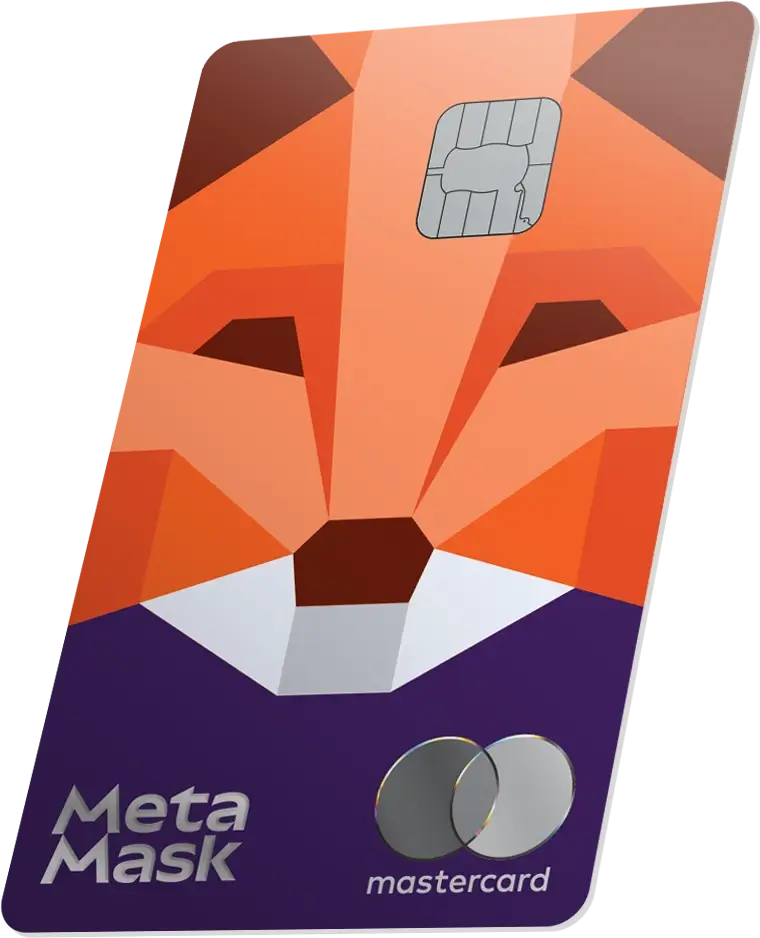 |
|---|---|---|
| Max Cashback | 3%Highest | 3%Highest |
| Annual Fee | FreeBest | TBD |
| FX Fee | 1% | 0% |
| Custody Model | Custodial | Custodial |
| Network | VISA | MASTERCARD |
| Regions | GLOBALUSUKEEA | USEEAUKGLOBAL |
| Supported Assets | 4+ assets USDCETHeETHweETH | 9+ assets USDCUSDTwETHEUReGBPemUSDamUSDaUSDCaBasUSDC |
| Cashback | Yes | Yes |
| Staking | Yes | No |
| Points | Yes | Yes |
| Airdrops | No | Yes |
| Lounge access | No | No |
| Subscription rebates | No | No |
| Metal card | No | Yes |
| Virtual Cards | Yes | No |
| Physical Cards | Yes | No |
| Visa | No | No |
| Mastercard | No | No |
| Apple Pay | Yes | Yes |
| Google Pay | Yes | Yes |
| Self-custody spend | Yes | Yes |
| Stablecoin spend | Yes | No |
| No annual fee | Yes | No |
| No FX fee | No | Yes |
| ATM free allowance | No | No |
| No KYC | No | Yes |
| Virtual vs Physical | Yes | No |
| Debit vs Prepaid | No | No |
| Best For | Best for Cashback | Best for Cashback |
Note: All data verified as of February 2026. Rewards and fees may vary based on your spending tier and region. Check each card's detailed page for complete terms.
ether.fi vs MetaMask: Key Differences
The two most globally accessible [self-custodial](/crypto-cards/self-custody/) crypto cards, built on fundamentally different spending architectures. [ether.fi](/crypto-cards/ether-fi-core-card/) uses a credit-line model against liquid-staked ETH - your collateral earns [staking](/crypto-cards/staking/) yield, EigenLayer restaking rewards, and ETHFI points while you spend with a flat 3% [cashback](/crypto-cards/cashback/). [MetaMask](/crypto-cards/metamask-virtual-card/) uses a debit model directly from your wallet with 1% cashback (3% Metal, waitlist), zero fees across the board, and [airdrop](/crypto-cards/airdrops/) eligibility via Rewards points. Both serve 50+ countries including the US. Both maintain true self-custody. The question is whether you want yield stacking with ETH exposure or fee-free simplicity with airdrop optionality.
The right choice depends on your priorities: cashback rates, regional availability, custody model, and which ecosystem you already use. Below, we break down who should choose each card.
Both Self-Custodial, Different Spending Models
Unlike most card comparisons where custody is the dividing line, both cards keep your funds in your personal wallet until the moment of purchase. Neither requires depositing into a centralized exchange. Both eliminate counterparty risk. This rare overlap shifts the comparison to economics, features, and spending architecture.
ether.fi uses a credit-line model. You collateralize eETH or weETH and borrow against it. Your collateral keeps earning Ethereum staking yield (approximately 4% APY), EigenLayer restaking rewards, and ETHFI Membership Points. No crypto is sold at point of sale - you spend borrowed value. This means no taxable disposal in most jurisdictions. Four tiers: Core (free, 3% cashback, 3 virtual cards), Luxe (metal card, conference lounges, 65% hotel discounts), Pinnacle (10 virtual cards, $200K limits), VIP (invite-only, 0% FX). All tiers share the same flat 3% cashback.
MetaMask uses a debit model. The card connects to your existing MetaMask wallet and spends directly from on-chain balances on Linea, Base, or Solana L2s. Funds (USDC, USDT, wETH, EURe) are converted at point of sale. Virtual tier: 1% cashback, $10,000/month limit. Metal tier: 3% cashback, $50,000/month limit (waitlist). Both earn 1 Rewards point per $1 spent. Season 1 distributed $LINEA tokens to active cardholders.
Tax treatment is the structural difference. ether.fi's credit model borrows without selling - no disposal, no capital gains trigger. MetaMask's debit model sells assets at point of sale, creating a taxable event on every transaction. For a holder with $40,000 in appreciated crypto (50% unrealized gains) spending $3,000/month at a 20% capital gains rate, MetaMask's debit spending creates approximately $3,600/year in tax liability. ether.fi's credit model creates $0. For stablecoin-only spenders (USDC, USDT), the tax difference is negligible since stablecoins carry minimal capital gains.
Net Returns After All Fees
ether.fi charges 1% FX on cross-currency spending and 2% ATM. MetaMask charges 0% on everything (Virtual) or 0% FX with 2% ATM (Metal).
| Scenario | ether.fi (3%, same-currency) | ether.fi (3%, cross-currency) | MetaMask Virtual (1%, 0% fees) | MetaMask Metal (3%, 0% fees) |
|---|---|---|---|---|
| Casual ($1,000/mo) | $30 | $20 | $10 + points | $30 + points |
| Active ($2,000/mo) | $60 | $40 | $20 + points | $60 + points |
| Power ($3,000/mo) | $90 | $60 | $30 + points | $90 + points |
| Annual ($3,000/mo) | $1,080 | $720 | $360 + points | $1,080 + points |
According to SpendNode's side-by-side data, on same-currency spending ether.fi and MetaMask Metal are identical at 3% ($1,080/year). MetaMask's Rewards points add speculative value on top: Season 1's $LINEA distribution proved the airdrop mechanism is real, and future seasons may distribute tokens from Base, Solana, or partner ecosystems. Any non-zero airdrop value makes MetaMask Metal's total return higher than ether.fi's on same-currency cashback alone.
On cross-currency spending, MetaMask wins clearly. ether.fi's 1% FX fee reduces net returns to 2% ($720/year at $3,000/month). MetaMask maintains the full rate: $1,080/year (Metal) or $360/year (Virtual). For a European nomad spending across EUR, GBP, USD, and CHF, MetaMask's zero-FX model saves $360/year versus ether.fi on the same 3% headline rate.
MetaMask Virtual at 1% is strictly lower than ether.fi on cashback ($360 vs $1,080/year). But Virtual is immediately available with no waitlist, no staking requirement, and low KYC. For users who want to start spending from their wallet today, MetaMask Virtual delivers instant value while MetaMask Metal's waitlist creates uncertainty.
The FX fee context: ether.fi's 1% FX applies only to cross-currency transactions. A US user spending in USD, or a German user spending in EUR, pays 0% FX. The fee impacts travelers, online shoppers buying in foreign currencies, and digital nomads spending across borders. ether.fi VIP tier (invite-only) eliminates the FX fee entirely.
Yield Stacking: ether.fi's Defining Advantage
ether.fi's credit architecture creates a triple-income stream that no debit card can match:
- Card cashback: 3% on all spending ($1,080/year at $3,000/month)
- ETH staking yield: approximately 4% APY on collateral ($800/year on $20,000)
- EigenLayer restaking rewards: additional variable yield on the same collateral
Combined annual returns for a user with $20,000 ETH collateral spending $3,000/month:
- ether.fi: $1,080 cashback + $800 staking + variable restaking = approximately $1,880+/year
- MetaMask Virtual: $360 cashback + $0 yield + points (speculative) = $360+/year
- MetaMask Metal: $1,080 cashback + $0 yield + points (speculative) = $1,080+/year
With yield included, ether.fi's total ($1,880+) exceeds MetaMask Metal's cashback ($1,080) by $800/year - and that is before EigenLayer restaking rewards. The staking yield is passive and continuous. MetaMask's USDC or USDT balance sits idle until spent (though Aave-wrapped variants like aUSDC earn DeFi yield, partially closing this gap for users who manage their positions actively).
The trade-off is liquidation risk. ether.fi's credit model carries the risk that a significant ETH price decline could trigger collateral liquidation. MetaMask's debit model has zero liquidation risk - you spend your stablecoin balance directly. For risk-averse users who want to avoid any exposure to collateral calls, MetaMask eliminates this concern entirely.
Premium Perks and Practical Differences
ether.fi at Luxe tier and above offers conference lounge access, 65% hotel discounts, travel insurance, and baggage coverage. These are premium travel perks unprecedented for a self-custodial card. For frequent travelers, the lounge access alone (valued at $35-50 per visit) can add hundreds in annual value.
MetaMask offers no lounges, no travel insurance, and no premium perks. Its advantages are practical: 0% ATM fees (Virtual), 9 spendable assets across 3 chains (Linea, Base, Solana), Aave-wrapped yield-bearing tokens (aUSDC, aBasUSDC), Google Pay support, and no-waitlist availability for Virtual.
ATM access: MetaMask Virtual charges 0% ATM. ether.fi charges 2% on all ATM withdrawals. For a user withdrawing $500/month in cash, MetaMask Virtual costs $0 while ether.fi costs $120/year. MetaMask Metal charges 2% ATM ($1,000/day, $5,000/month cap), matching ether.fi.
Asset support: MetaMask supports 9 assets (USDC, USDT, wETH, EURe, GBPe, mUSD, amUSD, aUSDC, aBasUSDC) across Linea, Base, and Solana. ether.fi supports 4 (USDC, ETH, eETH, weETH). MetaMask's multi-chain, multi-asset approach means users can spend from whichever stablecoin they hold without pre-converting.
ether.fi operates on Visa. MetaMask operates on Mastercard. Both support Apple Pay and Google Pay. Both serve 50+ countries including the US, EEA, and UK.
Common Pitfalls
Choosing ether.fi for the 3% rate without accounting for the 1% FX fee on cross-currency spending. A European digital nomad spending $3,000/month across 4 currencies pays 1% FX on every non-home-currency transaction. If 80% of spending is cross-currency, ether.fi nets $792/year (2.2% effective) versus MetaMask Metal's $1,080/year (3% clean). The $288/year FX cost is invisible until you check your statements. With yield, ether.fi still wins on total returns ($1,592 vs $1,080), but the cashback-only comparison flips to MetaMask. How to avoid it: Calculate what percentage of your spending is in your home currency. If 80%+ is same-currency (US user spending in USD, German spending in EUR), the 1% FX rarely triggers and ether.fi's 3% is effectively 3%. If you spend heavily cross-currency, factor in the 1% reduction. ether.fi VIP tier (invite-only) eliminates FX entirely.
Dismissing MetaMask Virtual's 1% as uncompetitive against ether.fi's 3% without valuing the Rewards points. At face value, MetaMask Virtual ($360/year) earns 3x less than ether.fi ($1,080/year) on $3,000/month spending. But MetaMask Rewards points (36,000/year at $3,000/month) carry proven airdrop value - Season 1 distributed $LINEA tokens. If future seasons deliver $0.02/point, the airdrop adds $720/year, bringing MetaMask Virtual's total to $1,080 - matching ether.fi's cashback without staking yield or liquidation risk. At $0.05/point, MetaMask Virtual's total ($2,160) would exceed ether.fi's yield-included total. How to avoid it: Do not value MetaMask points at zero. The rational approach is to estimate a range: at $0/point, ether.fi wins by 3x on cashback. At $0.02/point, they match. At $0.05/point, MetaMask wins. Your expected value assessment of the points should drive the decision - along with whether you want ETH yield exposure or zero-fee simplicity.
Which One to Pick
For ETH holders wanting maximum total returns: ether.fi Core with 3% cashback plus staking yield. Combined returns exceed $1,880/year on $3,000/month spending with $20,000 collateral. Tax-efficient credit model avoids disposals.
For cross-currency spenders and international travelers: MetaMask Metal at 3% with 0% FX beats ether.fi on pure cashback for multi-currency spending. No FX fee means the 3% headline rate is the actual rate, everywhere.
For users who want immediate self-custodial access with no waitlist: MetaMask Virtual at 1% with Rewards points. Available today, zero fees, 50+ countries, 9 assets, proven airdrop mechanism.
For premium travelers: ether.fi Luxe adds conference lounges, 65% hotel discounts, and travel insurance on top of 3% cashback - perks MetaMask does not offer at any tier.
For risk-averse users avoiding liquidation: MetaMask's debit model has zero liquidation risk. ether.fi's credit model carries the risk that an ETH price decline triggers collateral calls.
Outlook: Both cards represent the frontier of self-custodial spending. ether.fi's yield-stacking credit model appeals to ETH-native DeFi users, while MetaMask's zero-fee multi-chain approach captures the broader Web3 wallet audience. The key variables for 2026: MetaMask Metal expanding beyond the waitlist (giving 3% cashback to its 30M+ user base globally), MetaMask Rewards Season 2 distribution (which could quantify the per-point value and transform the comparison), and ether.fi potentially reducing its 1% FX fee at non-VIP tiers (which would make it unambiguously superior for same-region spending). If MetaMask Metal becomes widely available at 3% with 0% FX plus meaningful airdrop value, it would challenge ether.fi's position as the top self-custodial card for non-ETH-holders.
Fee Breakdown
| Fee | ether.fi | MetaMask |
|---|---|---|
| FX Fee | 1% | 0% |
| Annual Fee | Free | TBD |
| ATM Fee | 2% | 2% |
Fees pulled from issuer documentation. Verify on the official site before applying.
Who Should Choose ether.fi
The ether.fi Core Card is best suited for users who:
- Want up to 3% cashback on spending
- Prefer a card with no annual fee
- Are based in GLOBAL, US, UK, EEA
Who Should Choose MetaMask
The MetaMask Metal Card is best suited for users who:
- Want up to 3% cashback on spending
- Need zero FX fees for international transactions
- Are based in US, EEA, UK, GLOBAL
Our Verdict
**Based on SpendNode's full comparison, ether.fi delivers the highest total return of any self-custodial card for ETH holders - but MetaMask offers the cleanest fee structure and broader practical accessibility.** On same-currency spending at $3,000/month, both ether.fi and MetaMask Metal return 3% ($1,080/year). But ether.fi's collateral simultaneously earns approximately 4% staking APY - adding $800/year on $20,000 ETH collateral for a combined $1,880+/year that MetaMask cannot match. On cross-currency spending, MetaMask's [0% FX](/crypto-cards/no-fx-fee/) beats ether.fi's 1% FX fee, delivering $1,080/year versus $720 - a $360/year advantage. Add MetaMask's 0% ATM fees (Virtual), Rewards points with proven airdrop distributions, 9 spendable assets versus 4, and no-waitlist availability, and the comparison becomes genuinely competitive. The deciding factor: ether.fi for ETH holders who want yield-while-you-spend and tax-efficient credit-line spending. MetaMask for everyone else who wants the simplest zero-fee self-custodial card with airdrop upside.
Frequently Asked Questions
Which has better cashback, ether.fi or MetaMask?
Both offer up to 3% cashback. The difference comes down to reward currency, spending caps, and eligibility.
Which card has lower fees?
MetaMask charges 0% FX fee vs ether.fi's 1%.
Is ether.fi or MetaMask better for self-custody?
Both use custodial models. If self-custody is important, consider providers like Gnosis Pay or ether.fi.
Which card is available in more regions?
Both are available in 4 regions. Check the issuer's website for current eligibility.