
ether.fi vs Gnosis Pay
Side-by-side comparison of ether.fi and Gnosis Pay crypto cards. Data sourced from official issuer documentation and verified by SpendNode.
Comparing 2 Cards
Side-by-side comparison of features and benefits
| Attribute |  | 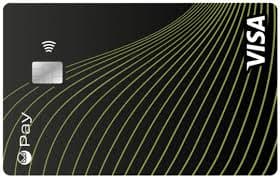 |
|---|---|---|
| Max Cashback | 3% | 5%Highest |
| Annual Fee | FreeBest | FreeBest |
| FX Fee | 1% | 0% |
| Custody Model | Custodial | Custodial |
| Network | VISA | VISA |
| Regions | GLOBALUSUKEEA | EEAUK |
| Supported Assets | 4+ assets USDCETHeETHweETH | 1+ assets EURe |
| Cashback | Yes | Yes |
| Staking | Yes | Yes |
| Points | Yes | No |
| Airdrops | No | No |
| Lounge access | No | No |
| Subscription rebates | No | No |
| Metal card | No | No |
| Virtual Cards | Yes | No |
| Physical Cards | Yes | No |
| Visa | No | No |
| Mastercard | No | No |
| Apple Pay | Yes | No |
| Google Pay | Yes | No |
| Self-custody spend | Yes | Yes |
| Stablecoin spend | Yes | Yes |
| No annual fee | Yes | Yes |
| No FX fee | No | Yes |
| ATM free allowance | No | No |
| No KYC | No | No |
| Virtual vs Physical | Yes | No |
| Debit vs Prepaid | No | No |
| Best For | Best for Airdrops | Best for Cashback |
Note: All data verified as of February 2026. Rewards and fees may vary based on your spending tier and region. Check each card's detailed page for complete terms.
ether.fi vs Gnosis Pay: Key Differences
The two most credible [self-custodial](/crypto-cards/self-custody/) cards in crypto, built on fundamentally different architectures. [ether.fi](/crypto-cards/ether-fi-core-card/) uses a credit-line model against liquid-staked ETH - your collateral earns [staking](/crypto-cards/staking/) yield, EigenLayer restaking rewards, and ETHFI points while you spend with 3% [cashback](/crypto-cards/cashback/). [Gnosis Pay](/crypto-cards/gnosis-pay-card/) uses an on-chain debit model through Safe smart contracts with up to 5% GNO cashback and zero fees across the board. Both are Visa, both support Apple Pay, but ether.fi serves global markets including the US while Gnosis Pay is limited to EEA and UK.
The right choice depends on your priorities: cashback rates, regional availability, custody model, and which ecosystem you already use. Below, we break down who should choose each card.
Both Self-Custodial, Different Architectures
Both cards keep your funds under your control until the moment of purchase. Neither requires depositing into a centralized exchange. But the self-custody implementations are architecturally distinct.
ether.fi uses a credit-line model against liquid-staked ETH. You collateralize eETH or weETH and borrow against it. Your collateral simultaneously earns Ethereum staking yield (approximately 4% APY), EigenLayer restaking rewards, and ETHFI Membership Points. No crypto is sold at point of sale - you are spending borrowed value, meaning no taxable disposal in most jurisdictions. Four tiers: Core (free, 3% cashback, 3 virtual cards), Luxe (metal card, conference lounges, 65% hotel discounts), Pinnacle (10 virtual cards, $200K limits), and VIP (invite-only, 0% FX). All tiers share the same flat 3% cashback rate.
Gnosis Pay uses an on-chain debit model through Safe smart contracts. Your spending account is a programmable Safe wallet on Gnosis Chain (Safe has $100B+ TVL). You fund with EURe (euro stablecoin) and every transaction settles on-chain with cryptographic proof. Cashback in GNO scales by holdings: 0 GNO = 1%, 1+ GNO = 2%, 10+ GNO = 3%, 100+ GNO = 4%, plus a 1% OG NFT boost (max 5%). Zero fees everywhere: no transaction fee, no FX fee, no gas fee (subsidized), no off-ramping fee. Powered by Monerium for EUR settlement. Personal IBAN for SEPA funding. ENS name printed on physical card.
Key architectural difference: ether.fi is a credit card (borrow against collateral, no disposal). Gnosis Pay is a debit card (spend EURe balance, disposal of EURe at POS). For tax purposes, ether.fi's credit model may avoid capital gains triggers that Gnosis Pay's debit model creates - though spending stablecoins (EURe) typically has minimal capital gains impact regardless.
Net Returns After All Fees
ether.fi charges 1% FX on cross-currency spending and 2% ATM. Gnosis Pay charges 0% on everything (only the Visa network exchange rate of 0.2-0.4% applies on non-EUR transactions).
| Scenario | ether.fi Core (3%, same-currency) | ether.fi Core (3%, cross-currency) | Gnosis Pay (1% base) | Gnosis Pay (3%, 10+ GNO) | Gnosis Pay (5%, 100+ GNO + OG) |
|---|---|---|---|---|---|
| Casual ($1,000/mo) | $30 | $20 (after 1% FX) | $10 | $30 | $50 |
| Active ($2,000/mo) | $60 | $40 | $20 | $60 | $100 |
| Power ($3,000/mo) | $90 | $60 | $30 | $90 | $150 |
| Annual ($3,000/mo) | $1,080 | $720 | $360 | $1,080 | $1,800 |
SpendNode tested both cards for fee impact: at the 10+ GNO tier (approximately $3,000 investment), Gnosis Pay matches ether.fi's 3% with zero fees. On same-currency EUR spending, both earn identically ($1,080/year at $3,000/month). On cross-currency spending, Gnosis Pay's zero-fee model pulls ahead: $1,080/year versus ether.fi's $720/year (after 1% FX).
At 100+ GNO with OG NFT, Gnosis Pay's 5% ($1,800/year) outperforms ether.fi by $720-1,080/year depending on currency. But 100 GNO represents approximately $30,000 in token exposure - a meaningful commitment.
At the base tier (no token holdings), ether.fi's 3% ($1,080/year) dramatically outperforms Gnosis Pay's 1% ($360/year). ether.fi requires no token commitment for its full 3% rate - the most accessible high-cashback self-custodial card available.
Yield Stacking: ether.fi's Defining Advantage
ether.fi's credit model creates a triple-income stream that no debit card can match:
- Card cashback: 3% on all spending
- ETH staking yield: approximately 4% APY on collateral (eETH/weETH)
- EigenLayer restaking rewards: additional variable yield on the same collateral
Combined annual returns for a user with $20,000 ETH collateral spending $3,000/month:
- ether.fi: $1,080 cashback + $800 staking yield + variable restaking = approximately $1,880+/year
- Gnosis Pay (1% base): $360 cashback + $0 yield = $360/year
- Gnosis Pay (3%, 10 GNO): $1,080 cashback + $0 yield = $1,080/year
- Gnosis Pay (5%, 100 GNO + OG): $1,800 cashback + $0 yield = $1,800/year
With yield included, ether.fi's total ($1,880+) exceeds even Gnosis Pay's maximum 5% tier ($1,800) for users with meaningful ETH collateral. The staking yield is passive and continuous - your collateral earns while you spend against it.
The trade-off is liquidation risk. ether.fi's credit model carries the risk that a significant ETH price decline could trigger collateral liquidation. Gnosis Pay's debit model has zero liquidation risk - you spend your EURe balance directly with no borrowing.
On-Chain Transparency: Gnosis Pay's Unique Feature
Gnosis Pay settles every transaction on Gnosis Chain, creating an on-chain receipt for each purchase. This provides:
Cryptographic proof of every transaction. Auditable, exportable, and integrable into accounting systems. For freelancers, DAOs, or anyone needing provable spending records, this is unique among all crypto cards.
Programmable spending via Safe smart contracts. A DAO treasury could issue cards with spending limits enforced by smart contract logic. A business could automate expense reporting. These are developer-oriented features that ether.fi's consumer-focused card does not target.
ether.fi transactions settle through traditional card rails with no on-chain visibility to the user. For users who value blockchain transparency in their spending, Gnosis Pay is the only card that delivers this.
Geographic Coverage and Practical Use
ether.fi: Available globally including the US, UK, and EEA - rare for any crypto card, exceptional for a self-custodial one. Supports USDC, ETH, eETH, and weETH. Apple Pay and Google Pay. Four tiers with increasing perks (lounges, hotel discounts, metal cards at Luxe+).
Gnosis Pay: EEA, UK, and Switzerland only. No US access. Supports only EURe (euro stablecoin on Gnosis Chain). Apple Pay only (no Google Pay listed). Single card with GNO-based cashback tiers. ENS name personalization on physical card. No ATM withdrawals supported. Personal IBAN for SEPA bank transfers.
For US users, ether.fi is the only self-custodial option between these two. For European users, both are available - but Gnosis Pay's EURe-only funding means every non-EUR transaction relies on Visa network conversion rates (typically 0.2-0.4%), while ether.fi's multi-asset support (USDC, ETH) gives broader funding flexibility.
Gnosis Pay's lack of ATM access is a notable limitation. ether.fi supports ATM withdrawals at 2% fee. For users who need cash access from their crypto card, ether.fi is the only option.
Common Pitfalls
Choosing ether.fi for 3% cashback without accounting for the 1% FX fee on cross-currency spending. A European user spending in non-local currencies (GBP in France, USD online) pays 1% FX on every cross-currency transaction, reducing effective cashback to 2% net. On $3,000/month cross-currency spending, ether.fi earns $720/year versus Gnosis Pay at 3% tier earning $1,080/year (zero fees). The 1% FX fee costs $360/year and eliminates ether.fi's cashback advantage against Gnosis Pay at matching tiers. How to avoid it: If most of your spending is in your home currency (EUR-denominated), the 1% FX fee rarely triggers and ether.fi's 3% is a clean 3%. If you frequently spend cross-currency (travel, online USD purchases), factor in the 1% FX reduction. At the Luxe tier and above, ether.fi's conference lounge access and hotel discounts can offset the FX cost for frequent travelers. VIP tier (invite-only) eliminates the FX fee entirely.
Holding 100+ GNO for the 4% tier without calculating the opportunity cost versus ETH staking. 100 GNO (approximately $30,000) held idle in a Gnosis Pay wallet earns 0% yield. The same $30,000 in ETH collateral on ether.fi earns approximately 4% staking APY ($1,200/year) plus restaking rewards. On $3,000/month spending, Gnosis Pay at 4% earns $1,440/year in cashback versus ether.fi's $1,080 in cashback plus $1,200 in yield ($2,280 total). The yield gap ($1,200) exceeds the cashback gap ($360) by 3.3x. How to avoid it: Compare total returns including yield, not just cashback rates. If you believe in ETH's staking ecosystem, ether.fi's yield-stacking model may outperform even Gnosis Pay's higher cashback tiers. If you are GNO-bullish and prefer zero-fee simplicity with no liquidation risk, Gnosis Pay's model is cleaner.
Which One to Pick
For US users wanting self-custody: ether.fi is the only option. 3% cashback with ETH staking yield and global availability.
For European ETH holders wanting yield stacking: ether.fi with 3% cashback plus 4%+ staking APY on collateral creates total returns that can exceed Gnosis Pay's maximum 5% cashback.
For European users wanting zero-fee self-custody: Gnosis Pay at 10+ GNO tier matches ether.fi's 3% with zero fees, zero liquidation risk, and on-chain transaction transparency.
For DAOs and developers: Gnosis Pay's Safe smart contract integration and on-chain settlement enable programmable spending that no other card offers.
For users without token holdings: ether.fi Core at 3% with no token requirement beats Gnosis Pay's 1% base tier by 3x. The most accessible high-cashback self-custodial entry point.
Outlook: Both cards represent the frontier of self-custodial spending. ether.fi's credit model and yield stacking appeal to the DeFi-native user base, while Gnosis Pay's zero-fee on-chain transparency appeals to the self-sovereignty-focused community. ether.fi's expansion to four tiers in 2025 shows active product development; Gnosis Pay's GNO cashback program launched more recently and may evolve with additional tiers or features. The key variable for 2026 is whether ether.fi reduces its 1% FX fee (which would make it unambiguously superior in same-region spending) and whether Gnosis Pay adds multi-asset support beyond EURe (which would broaden its appeal to non-EUR spenders).
Fee Breakdown
| Fee | ether.fi | Gnosis Pay |
|---|---|---|
| FX Fee | 1% | 0% |
| Annual Fee | Free | Free |
| ATM Fee | 2% | TBD |
Fees pulled from issuer documentation. Verify on the official site before applying.
Who Should Choose ether.fi
The ether.fi Core Card is best suited for users who:
- Want up to 3% cashback on spending
- Prefer a card with no annual fee
- Are based in GLOBAL, US, UK, EEA
Who Should Choose Gnosis Pay
The Gnosis Pay Card is best suited for users who:
- Want up to 5% cashback on spending
- Need zero FX fees for international transactions
- Prefer a card with no annual fee
- Are based in EEA, UK
Our Verdict
**SpendNode's ether.fi vs Gnosis Pay verdict: for European users choosing between self-custodial cards, Gnosis Pay offers higher maximum cashback (5% versus 3%) with zero fees, while ether.fi offers yield stacking and global access.** At the 10+ GNO tier (approximately $3,000 in GNO), Gnosis Pay matches ether.fi's 3% rate with no FX fee, no ATM fee, and no liquidation risk. At 100+ GNO with OG NFT, Gnosis Pay's 5% significantly exceeds ether.fi's flat 3%. But ether.fi's credit-line model means no crypto is sold at point of sale (potential tax advantage), and the underlying ETH collateral continues earning 4%+ staking yield - creating a triple-income model (cashback + staking + restaking) that Gnosis Pay cannot match. For US users, ether.fi is the only self-custodial option. The choice in Europe: zero-fee simplicity with GNO exposure (Gnosis Pay) versus yield-stacking with ETH exposure and 1% FX cost (ether.fi).
Frequently Asked Questions
Which has better cashback, ether.fi or Gnosis Pay?
Gnosis Pay offers up to 5% cashback compared to ether.fi's 3%. Actual rates depend on your spending tier and card variant.
Which card has lower fees?
Gnosis Pay charges 0% FX fee vs ether.fi's 1%. Neither charges an annual fee.
Is ether.fi or Gnosis Pay better for self-custody?
Both use custodial models. If self-custody is important, consider providers like Gnosis Pay or ether.fi.
Which card is available in more regions?
ether.fi is available in 4 regions (GLOBAL, US, UK, EEA) compared to Gnosis Pay's 2 regions (EEA, UK). Always verify eligibility on the issuer's website.