
Coinbase vs MetaMask
Side-by-side comparison of Coinbase and MetaMask crypto cards. Data sourced from official issuer documentation and verified by SpendNode.
Comparing 2 Cards
Side-by-side comparison of features and benefits
| Attribute | 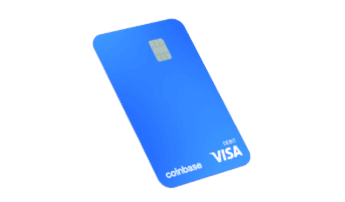 | 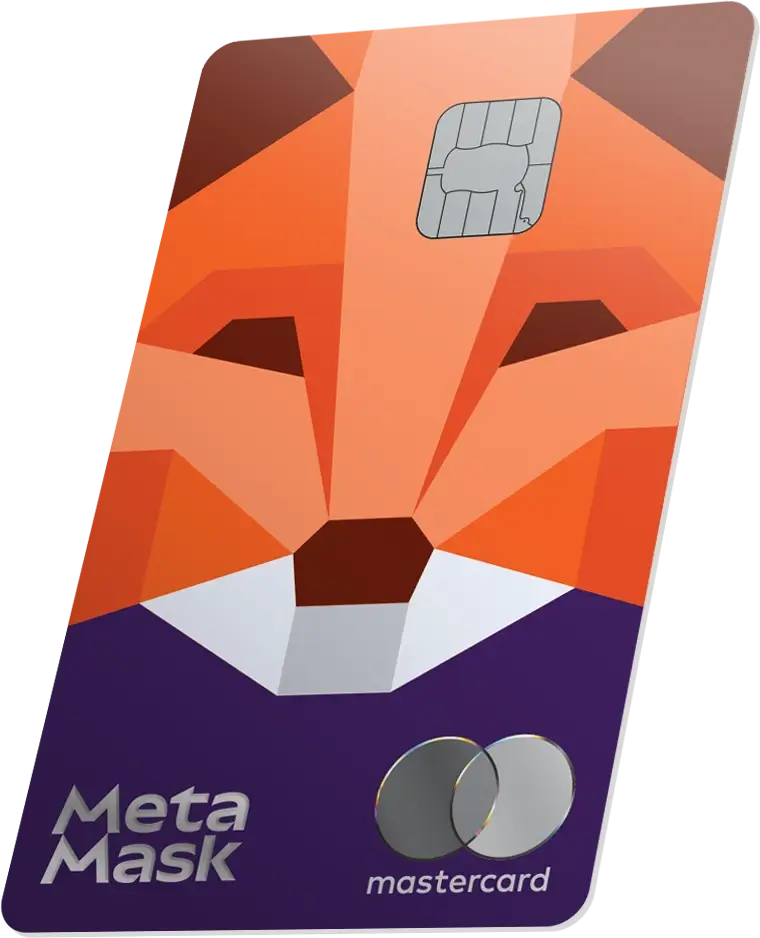 |
|---|---|---|
| Max Cashback | 4%Highest | 3% |
| Annual Fee | FreeBest | TBD |
| FX Fee | 0% | 0% |
| Custody Model | Custodial | Custodial |
| Network | VISA | MASTERCARD |
| Regions | US | USEEAUKGLOBAL |
| Supported Assets | 4+ assets USDCBTCETHSOL | 9+ assets USDCUSDTwETHEUReGBPemUSDamUSDaUSDCaBasUSDC |
| Cashback | Yes | Yes |
| Staking | No | No |
| Points | No | Yes |
| Airdrops | No | Yes |
| Lounge access | No | No |
| Subscription rebates | No | No |
| Metal card | No | Yes |
| Virtual Cards | No | No |
| Physical Cards | No | No |
| Visa | No | No |
| Mastercard | No | No |
| Apple Pay | No | Yes |
| Google Pay | No | Yes |
| Self-custody spend | No | Yes |
| Stablecoin spend | No | No |
| No annual fee | Yes | No |
| No FX fee | Yes | Yes |
| ATM free allowance | No | No |
| No KYC | No | Yes |
| Virtual vs Physical | No | No |
| Debit vs Prepaid | No | No |
| Best For | Best for Cashback | Best for Airdrops |
Note: All data verified as of February 2026. Rewards and fees may vary based on your spending tier and region. Check each card's detailed page for complete terms.
Coinbase vs MetaMask: Key Differences
Two of crypto's biggest brands with zero-fee cards that compete directly in the US. [Coinbase](/crypto-cards/coinbase-card/) offers custodial simplicity with FDIC-insured USD balances and up to 4% BTC [cashback](/crypto-cards/cashback/) via the Coinbase One Amex ($49.99/year membership, $300K+ assets). [MetaMask](/crypto-cards/metamask-virtual-card/) offers [self-custodial](/crypto-cards/self-custody/) spending from your own wallet with 1% cashback (3% Metal, waitlist), zero fees, and [airdrop](/crypto-cards/airdrops/) eligibility via Rewards points across 50+ countries. Both charge [0% FX](/crypto-cards/no-fx-fee/) and 0% conversion - making this one of the few comparisons where fees are irrelevant and the decision comes down to custody, rewards structure, and geography.
The right choice depends on your priorities: cashback rates, regional availability, custody model, and which ecosystem you already use. Below, we break down who should choose each card.
Both Zero-Fee: A Rare Comparison
Both cards charge 0% FX, 0% conversion, and 0% transaction fees. This eliminates the fee arbitrage that defines most crypto card comparisons. The headline cashback rate IS the take-home rate on both sides. The comparison is purely about rewards structure, custody model, and ecosystem value.
Coinbase operates on Visa (prepaid) and Mastercard (Amex via Coinbase One). US only. FDIC-insured USD balances up to $250,000 via Pathward. 0% ATM (in-network via Allpoint). Custodial.
MetaMask operates on Mastercard. 50+ countries including the US. Self-custodial via Linea/Base/Solana. Virtual: 0% ATM. Metal: 2% ATM. Low KYC onboarding.
Both support Apple Pay and Google Pay. Both have no annual fee at the base tier.
Net Returns: Pure Cashback Comparison
With zero fees on both sides, the comparison is entirely about cashback rates and access requirements.
| Scenario | Coinbase Visa (variable, rotating) | Coinbase One Amex (4%, $50/yr sub, $300K+ AOC) | Coinbase One Amex (2%, $50/yr sub, lower AOC) | MetaMask Virtual (1%) | MetaMask Metal (3%, waitlist) |
|---|---|---|---|---|---|
| Casual ($1,000/mo) | Variable ($10-40) | $36 (after $4.17/mo sub) | $16 (after sub) | $10 + points | $30 + points |
| Active ($2,000/mo) | Variable ($20-80) | $76 | $36 | $20 + points | $60 + points |
| Power ($3,000/mo) | Variable ($30-120) | $116 | $56 | $30 + points | $90 + points |
| Annual ($3,000/mo) | Variable ($360-1,440) | $1,390 (after $50 sub) | $670 (after $50 sub) | $360 + points | $1,080 + points |
Coinbase One Amex at 4% BTC ($1,390/year net after subscription) leads by a wide margin - but requires $300,000+ in assets on Coinbase AND the $49.99/year membership. At the 2% tier (lower assets on Coinbase), annual returns drop to $670 - still above MetaMask Virtual's $360 but below MetaMask Metal's $1,080.
MetaMask Virtual at 1% is the simplest entry point: flat 1% on everything, no categories, no tiers, no asset requirements, no subscription. Available immediately in 50+ countries. The Rewards points (1 per $1 spent) add speculative upside - Season 1 distributed $LINEA tokens.
The Coinbase Visa prepaid card offers rotating category cashback that can reach up to 4% on specific categories (dining, groceries) but varies monthly. Some months may offer 1% on general spending. The variability makes it harder to predict annual returns compared to MetaMask's consistent 1%.
MetaMask Metal at 3% with 0% fees closes the gap against Coinbase One Amex at 2% tier ($1,080 vs $670/year) and trails the 4% tier ($1,080 vs $1,390/year). The Metal card is currently waitlist-only.
Custody: FDIC Insurance vs Self-Sovereignty
The fundamental divide in this comparison.
Coinbase is fully custodial with institutional protections. USD balances are FDIC insured up to $250,000 via Pathward - the same deposit protection as a traditional bank account. If you lose your phone, Coinbase support recovers your account. Crypto holdings are covered by Coinbase's insurance policies (though terms vary). The trade-off: Coinbase controls your assets and could freeze your account, restrict withdrawals, or be compelled by regulators to limit access.
MetaMask is fully self-custodial with no safety net. Your funds remain in your personal wallet on Linea, Base, or Solana until purchase. No third party holds your keys. If MetaMask's card program shuts down, your crypto is safe in your wallet. The trade-off: if you lose your seed phrase, your funds are gone permanently. No customer support can recover them. You are your own bank - for better and worse.
For traditional finance users entering crypto, Coinbase's FDIC insurance and account recovery provide familiar institutional protections. For DeFi-native users who distrust centralized custody after FTX (November 2022), MetaMask's self-sovereign model eliminates all counterparty risk.
Airdrop Potential vs Defined Rewards
SpendNode tested both cards for airdrop value. MetaMask earns 1 Rewards point per $1 spent in addition to cashback. Season 1 distributed $LINEA tokens to active cardholders. Future seasons may distribute tokens from Base, Solana, or other partner ecosystems. On $3,000/month spending, MetaMask generates 36,000 points/year at zero cost. If future distributions value points at $0.02 each, the airdrop adds $720/year - effectively tripling MetaMask Virtual's total return to $1,080 (matching Coinbase One Amex at 3%).
Coinbase offers no airdrop or points program through its card. Coinbase's value proposition is purely defined: known cashback rates paid in BTC (Amex) or various crypto (Visa). Coinbase Learn rewards exist but are not card-specific.
The airdrop question shapes the comparison at lower tiers. MetaMask Virtual at 1% + speculative airdrop value could match or exceed Coinbase's 2-3% tiers if distributions are meaningful. But airdrop value is unpredictable - Coinbase's 4% BTC is guaranteed.
Common Pitfalls
Assuming the 4% Coinbase One Amex rate is available to all Coinbase users. The 4% BTC tier requires both the $49.99/year Coinbase One membership AND $300,000+ in assets on the Coinbase platform. Most Coinbase users do not maintain $300K on the exchange. At lower asset tiers, the Amex rate drops to 2-3% BTC. A user who subscribes to Coinbase One expecting 4% but holds $50,000 on the platform receives 2% ($670/year after subscription) - still above MetaMask Virtual's $360 but below MetaMask Metal's $1,080. How to avoid it: Check your current Coinbase asset balance before evaluating the 4% rate. If you are below $300,000, compare your actual tier (2% or 3%) to MetaMask's rates. At 2%, MetaMask Metal (3%) is the better economic choice if available. At 3%, the comparison is closer.
Choosing MetaMask Virtual over Coinbase at face value (1% vs 4%) without considering the airdrop component. MetaMask Virtual's 1% cashback appears to lose badly against Coinbase One Amex's 4%. But MetaMask Rewards points (36,000/year at $3,000/month) carry proven value - Season 1 distributed real tokens. If future seasons deliver $0.01/point, the airdrop adds $360/year (totaling $720). At $0.03/point, it adds $1,080 (totaling $1,440 - matching Coinbase's 4%). The correct comparison includes the expected value of airdrops, which makes MetaMask more competitive than the 1% headline suggests. How to avoid it: Do not value MetaMask points at zero or at maximum. Estimate a range: at $0/point, Coinbase wins decisively. At $0.01/point, Coinbase still leads. At $0.03/point, they match at the 4% tier. Your assessment of MetaMask's airdrop trajectory should influence the decision.
Which One to Pick
For US users with $300K+ on Coinbase: Coinbase One Amex at 4% BTC with FDIC insurance delivers the highest defined cashback of any zero-fee card. $1,390/year net on $3,000/month.
For US users wanting self-custody: MetaMask Virtual at 1% + Rewards points. Self-custodial, airdrop potential, no asset requirements. If MetaMask Metal (3%) becomes available, it matches Coinbase's lower tiers.
For users outside the US: MetaMask is the only option. Coinbase's card is US-only.
For US users without Coinbase One: Compare the rotating Coinbase Visa prepaid (variable, can be 1-4% by category) to MetaMask Virtual's flat 1% + points. If you spend heavily in high-reward Visa categories, Coinbase may win some months.
Outlook: Both cards are positioned for growth in the US market. Coinbase's advantage is defined high cashback with institutional backing. MetaMask's advantage is self-custody with multi-chain ecosystem value. Key variables: MetaMask Metal availability expanding (giving 3% to all users), MetaMask Rewards Season 2 distributions (quantifying per-point value), and Coinbase potentially expanding its card outside the US (which would create global competition with MetaMask). If Coinbase launches internationally, the zero-fee head-to-head becomes the most important card comparison in crypto.
Fee Breakdown
| Fee | Coinbase | MetaMask |
|---|---|---|
| FX Fee | 0% | 0% |
| Annual Fee | Free | TBD |
| ATM Fee | 0% | 2% |
Fees pulled from issuer documentation. Verify on the official site before applying.
Who Should Choose Coinbase
The Coinbase Card (Prepaid Visa) is best suited for users who:
- Want up to 4% cashback on spending
- Need zero FX fees for international transactions
- Prefer a card with no annual fee
- Are based in US
Who Should Choose MetaMask
The MetaMask Metal Card is best suited for users who:
- Want up to 3% cashback on spending
- Need zero FX fees for international transactions
- Are based in US, EEA, UK, GLOBAL
Our Verdict
**SpendNode's 2026 comparison confirms Coinbase delivers the highest defined cashback for US users who qualify for the Coinbase One Amex: 4% BTC on $3,000/month earns $1,440/year (after $50 subscription).** This exceeds MetaMask Virtual's $360/year by 4x and MetaMask Metal's $1,080/year by 33%. But the 4% rate requires $49.99/year membership AND $300,000+ in assets on Coinbase - a high barrier. At lower asset tiers (2-3%), Coinbase is still competitive with MetaMask Metal. MetaMask wins on self-custody (no exchange counterparty risk), global reach (50+ countries vs US only), and airdrop potential (proven $LINEA distributions). For users outside the US, MetaMask is the only option. For US users choosing between FDIC-insured custodial 4% and self-custodial 1% + airdrops, the decision is custody philosophy versus raw cashback.
Frequently Asked Questions
Which has better cashback, Coinbase or MetaMask?
Coinbase offers up to 4% cashback compared to MetaMask's 3%. Actual rates depend on your spending tier and card variant.
Which card has lower fees?
Both charge 0% FX fee.
Is Coinbase or MetaMask better for self-custody?
Both use custodial models. If self-custody is important, consider providers like Gnosis Pay or ether.fi.
Which card is available in more regions?
MetaMask is available in 4 regions (US, EEA, UK, GLOBAL) compared to Coinbase's 1 region (US). Always verify eligibility on the issuer's website.