
COCA vs Ready
Side-by-side comparison of COCA and Ready crypto cards. Data sourced from official issuer documentation and verified by SpendNode.
Comparing 2 Cards
Side-by-side comparison of features and benefits
| Attribute |  | 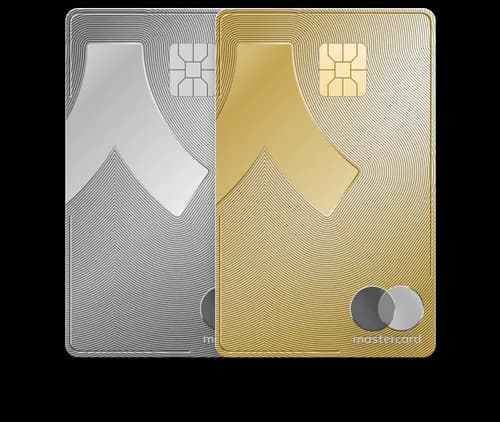 |
|---|---|---|
| Max Cashback | 8%Highest | 3% |
| Annual Fee | FreeBest | $120 |
| FX Fee | 1% | 0% |
| Custody Model | Custodial | Custodial |
| Network | VISA | MASTERCARD |
| Regions | EEAUKAPACLATAMGLOBAL | EEAUK |
| Supported Assets | 4+ assets USDCUSDTETHBTC | 1+ assets USDC |
| Cashback | Yes | Yes |
| Staking | Yes | No |
| Points | No | No |
| Airdrops | Yes | No |
| Lounge access | No | No |
| Subscription rebates | Yes | No |
| Metal card | No | Yes |
| Virtual Cards | No | Yes |
| Physical Cards | No | Yes |
| Visa | No | No |
| Mastercard | No | No |
| Apple Pay | No | No |
| Google Pay | No | Yes |
| Self-custody spend | Yes | Yes |
| Stablecoin spend | No | Yes |
| No annual fee | Yes | No |
| No FX fee | No | Yes |
| ATM free allowance | No | Yes |
| No KYC | Yes | No |
| Virtual vs Physical | No | Yes |
| Debit vs Prepaid | No | No |
| Best For | Best for Cashback | Best for ATM Access |
Note: All data verified as of February 2026. Rewards and fees may vary based on your spending tier and region. Check each card's detailed page for complete terms.
COCA vs Ready: Key Differences
Two [self-custodial](/crypto-cards/self-custody/) debit cards built on different smart contract architectures. [COCA](/crypto-cards/coca-card/) delivers 1-8% [cashback](/crypto-cards/cashback/) with 0-1% FX (0% on direct stablecoin pairs, 1% on indirect), 6% APY, 50% subscription [rebates](/crypto-cards/rebates/), IBAN banking, and coverage in 54 countries on Visa via ERC-4337. [Ready](/crypto-cards/ready-metal-card/) (formerly Argent) offers 0.5-3% cashback in STRK with 0-1% FX fees, Starknet self-custody, USDC-only funding, and availability exclusively in EEA and UK on Mastercard. Both keep your funds in a smart contract wallet you control. COCA wins on economics, features, and reach. Ready wins on simplicity and Starknet ecosystem integration.
The right choice depends on your priorities: cashback rates, regional availability, custody model, and which ecosystem you already use. Below, we break down who should choose each card.
Architecture: ERC-4337 vs Starknet
Both cards use smart contract wallets for genuine self-custody, but on different chains.
COCA - Non-custodial Visa debit, Wirex issuer. Privy smart wallet (ERC-4337/EIP-7702) with biometric recovery. Six tiers by COCA token holding (no staking): Starter (0, 1%) through Elite (30K, 8%). 0% FX on direct stablecoin pairs (EURC to EUR, USDC to USD), 1% on indirect pairs. $0 annual, $250/month ATM. 6% APY on stablecoins. 50% off subscriptions. IBAN + SEPA. 54 countries. Assets: USDC, USDT, ETH, BTC.
Ready - Self-custodial Mastercard debit, formerly Argent. Starknet smart contract wallet with co-signer model. Two tiers: Lite (free, 0.5% STRK, 1% FX) and Metal (120 USDC/year, 3% STRK, 0% FX, 16g metal, $800/month ATM). USDC-only. EEA + UK. Google Pay (Apple Pay coming). Cashback capped at $150/month in STRK ($1,800/year).
Net Returns Comparison
| Scenario | COCA Starter (1%, free) | COCA Standard (3%, 300 COCA) | COCA Premium (5%, 3K COCA) | Ready Lite (0.5%, free, 1% FX) | Ready Metal (3%, $120/yr, 0% FX) |
|---|---|---|---|---|---|
| Domestic $1K/mo | $10 | $30 | $50 | -$5 (0.5% CB - 1% FX) | $26 (after $10/mo fee amort.) |
| Cross-curr. $2K/mo | $20 | $60 | $100 | -$30 (0.5% - 1% FX) | $50 (after fee amort.) |
| Annual $3K/mo | $360 | $1,080 | $1,800 | -$180 (net loss) | $960 (after $120 annual) |
Based on SpendNode's full comparison, Ready Lite is a net-negative card on cross-currency spending. The 0.5% cashback minus 1% FX fee = -0.5% net loss on every international transaction. Ready Metal eliminates FX fees and earns 3% - matching COCA Standard on rate but losing on total value once COCA's APY and subscription savings are added.
Ready Metal's $150/month cashback cap matters at higher volumes. On $5,000/month spending (the cap), Metal earns $150/month = $1,800/year. Above $5,000/month, additional spending earns 0%. COCA Standard has caps too (above tier cap, spending earns 1%), but COCA's higher tiers (5-8%) extend the earning range further.
Feature Gap
COCA has that Ready does not:
- 6% APY on stablecoin balances ($300-600/year on $5K-10K)
- 50% off five subscription services (approximately $240/year)
- Personal IBAN with SEPA bank transfers
- Multi-asset support (USDC, USDT, ETH, BTC vs USDC only)
- 54 countries (vs EEA/UK only)
- Six progressive tiers (vs two)
- Higher cashback ceiling (8% vs 3%)
Ready has that COCA does not:
- Starknet-native architecture (for Starknet ecosystem users)
- No ecosystem token required for the card (USDC-only funding, STRK received as cashback)
- 16g metal card at $120/year (COCA's physical card pricing varies by tier)
- Established brand (formerly Argent, since 2017)
- 4.5 App Store rating (2,293 reviews) vs COCA (no App Store listing)
- Partner perks (Ramp, Layerswap, Koinly, NordVPN discounts)
Mistakes to Avoid
Using Ready Lite for cross-currency European spending when the FX fee makes it a net-loss card. Ready Lite charges 1% FX on non-domestic transactions. With only 0.5% cashback, the net return on cross-currency spending is -0.5% per transaction. A European traveler spending $2,000/month across currencies loses $120/year. Even COCA Starter (free, 1%, 0-1% FX) earns $240/year on the same spending. The gap is $360/year between two free cards. How to avoid it: If you use Ready Lite internationally, upgrade to Metal (0% FX, 3%) for positive returns. If the $120/year fee is too much, COCA Starter (free, 1%, 0-1% FX) delivers more value with zero commitment.
Dismissing Ready Metal because COCA has more features, without considering the simplicity advantage. COCA requires buying and holding COCA tokens for tiers above 1%. Ready Metal requires only $120/year in USDC - no token purchase, no price monitoring, no ecosystem bet. For users who want a straightforward self-custodial card at 3% with no token exposure beyond receiving STRK as cashback, Ready Metal is the simpler product. The $120 annual fee is predictable and denominated in USDC (no volatility). COCA's 3% tier requires holding 300 COCA tokens whose dollar value fluctuates. How to avoid it: Compare total risk-adjusted returns. If the COCA token maintains value, COCA Standard offers more total value. If you prefer zero token risk and pure simplicity, Ready Metal's $120/year for 3% + 0% FX + metal + self-custody is a strong package.
Quick Verdict
For maximum returns from self-custodial spending: COCA at Standard (3%) or above. Higher cashback ceiling, 6% APY, subscription savings, and IBAN banking deliver $600+ more annual value than Ready Metal.
For simple, no-token self-custodial spending in Europe: Ready Metal at $120/year. 3% STRK cashback, 0% FX, metal card, and no ecosystem token required. Clean and predictable.
For free self-custodial entry: COCA Starter (1%, 0-1% FX, 54 countries) versus Ready Lite (0.5%, 1% FX, EEA/UK). COCA still wins on cashback rate and geographic reach, though both now charge 1% FX on indirect pairs.
For Starknet ecosystem users: Ready integrates natively with Starknet. If you hold STRK or build on Starknet, Ready keeps you within the ecosystem.
Outlook: COCA's feature density at zero subscription cost puts pressure on Ready's simpler two-tier model. If Ready expands beyond EEA/UK, adds more assets (ETH, BTC), or increases cashback tiers, it becomes more competitive. If COCA builds Starknet support or Ready-style simplicity, the geographic and feature gaps narrow. Watch for Ready's expansion roadmap and COCA's app reliability as the key variables. For European users, both cards work well as a pair: Ready for daily USDC spending simplicity, COCA for cashback optimization and banking.
Fee Breakdown
| Fee | COCA | Ready |
|---|---|---|
| FX Fee | 1% | 0% |
| Annual Fee | Free | $120 |
| ATM Fee | 0% | 2% |
Fees pulled from issuer documentation. Verify on the official site before applying.
Who Should Choose COCA
The COCA Visa Card is best suited for users who:
- Want up to 8% cashback on spending
- Prefer a card with no annual fee
- Are based in EEA, UK, APAC, LATAM, GLOBAL
Who Should Choose Ready
The Ready Metal Card is best suited for users who:
- Want up to 3% cashback on spending
- Need zero FX fees for international transactions
- Are based in EEA, UK
Our Verdict
**SpendNode compared both self-custodial cards: COCA delivers 2-3x more cashback, adds APY and subscription savings, covers 10x more countries, and charges 0-1% FX - making it the stronger financial choice at every tier.** On $3,000/month spending, COCA Standard (3%, 0-1% FX) earns $1,080/year with no subscription. Ready Metal (3%, 0% FX, 120 USDC/year) earns $1,080/year minus $120 = $960/year net (capped at $150/month STRK = $1,800/year max). At the uncapped comparison, both earn 3% - but COCA adds 6% APY ($300/year on $5K), 50% subscription savings ($240/year), and IBAN banking that Ready cannot match. Total annual value: COCA approximately $1,620 versus Ready approximately $960. Ready's advantages are narrow but real: Starknet-native architecture for users already in that ecosystem, USDC-only simplicity (no token purchase needed for the card itself), and a 16g metal card at $120/year. For EEA/UK users who want the simplest self-custodial card with no ecosystem token required, Ready Metal is a clean choice. For maximum value, COCA wins.
Frequently Asked Questions
Which has better cashback, COCA or Ready?
COCA offers up to 8% cashback compared to Ready's 3%. Actual rates depend on your spending tier and card variant.
Which card has lower fees?
Ready charges 0% FX fee vs COCA's 1%. COCA has no annual fee while Ready charges $120.
Is COCA or Ready better for self-custody?
Both use custodial models. If self-custody is important, consider providers like Gnosis Pay or ether.fi.
Which card is available in more regions?
COCA is available in 5 regions (EEA, UK, APAC, LATAM, GLOBAL) compared to Ready's 2 regions (EEA, UK). Always verify eligibility on the issuer's website.