
COCA vs MetaMask
Side-by-side comparison of COCA and MetaMask crypto cards. Data sourced from official issuer documentation and verified by SpendNode.
Comparing 2 Cards
Side-by-side comparison of features and benefits
| Attribute |  | 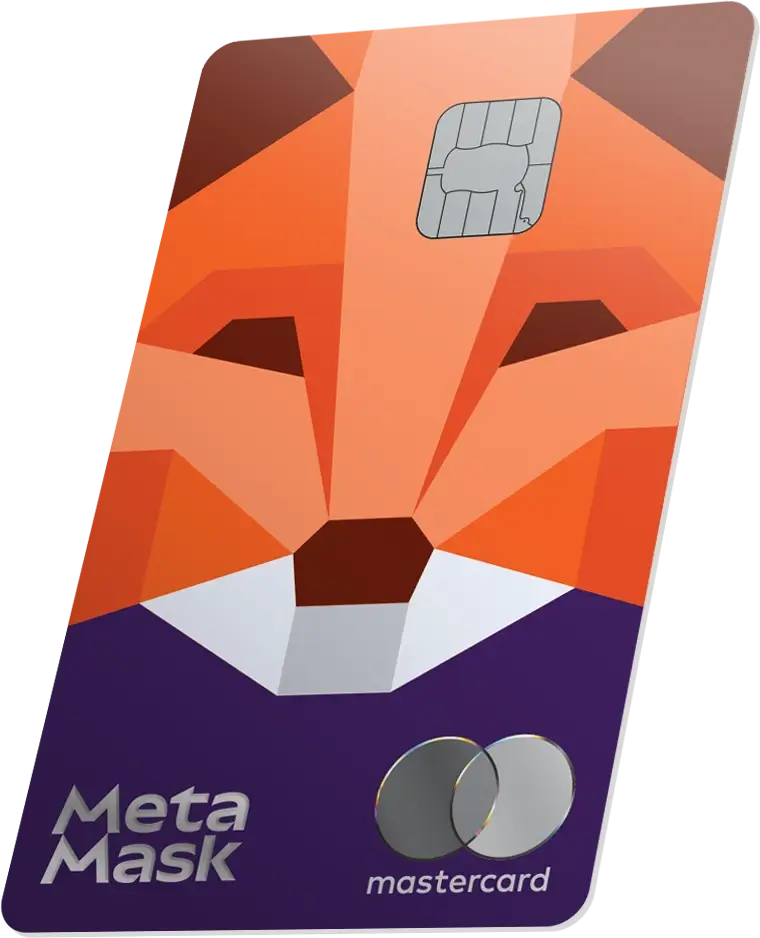 |
|---|---|---|
| Max Cashback | 8%Highest | 3% |
| Annual Fee | FreeBest | TBD |
| FX Fee | 1% | 0% |
| Custody Model | Custodial | Custodial |
| Network | VISA | MASTERCARD |
| Regions | EEAUKAPACLATAMGLOBAL | USEEAUKGLOBAL |
| Supported Assets | 4+ assets USDCUSDTETHBTC | 9+ assets USDCUSDTwETHEUReGBPemUSDamUSDaUSDCaBasUSDC |
| Cashback | Yes | Yes |
| Staking | Yes | No |
| Points | No | Yes |
| Airdrops | Yes | Yes |
| Lounge access | No | No |
| Subscription rebates | Yes | No |
| Metal card | No | Yes |
| Virtual Cards | No | No |
| Physical Cards | No | No |
| Visa | No | No |
| Mastercard | No | No |
| Apple Pay | No | Yes |
| Google Pay | No | Yes |
| Self-custody spend | Yes | Yes |
| Stablecoin spend | No | No |
| No annual fee | Yes | No |
| No FX fee | No | Yes |
| ATM free allowance | No | No |
| No KYC | Yes | Yes |
| Virtual vs Physical | No | No |
| Debit vs Prepaid | No | No |
| Best For | Best for Cashback | Best for No FX Fees |
Note: All data verified as of February 2026. Rewards and fees may vary based on your spending tier and region. Check each card's detailed page for complete terms.
COCA vs MetaMask: Key Differences
Feature-dense self-banking super app versus the most recognized wallet brand in crypto. [COCA](/crypto-cards/coca-card/) delivers 1-8% tiered [cashback](/crypto-cards/cashback/), 6% APY on stablecoins, 50% subscription [rebates](/crypto-cards/rebates/), a personal IBAN, and [self-custody](/crypto-cards/self-custody/) across 54 countries with 0-1% FX on Visa. [MetaMask](/crypto-cards/metamask-virtual-card/) offers 1% cashback (3% on waitlist-only Metal), 0% fees, [no-KYC](/crypto-cards/no-kyc/) onboarding, MetaMask Rewards points with potential airdrop value, and the trust of 30M+ wallet users on Mastercard across 50+ countries. Both are self-custodial. MetaMask charges 0% FX; COCA charges 0% on direct stablecoin pairs (EURC to EUR, USDC to USD) and 1% on indirect pairs. COCA wins on economics at every tier. MetaMask wins on brand recognition, ecosystem integration, and airdrop potential.
The right choice depends on your priorities: cashback rates, regional availability, custody model, and which ecosystem you already use. Below, we break down who should choose each card.
Product Overview
COCA - Non-custodial Visa debit issued by Wirex. Smart contract wallet (Privy, ERC-4337). Six tiers by COCA token holding (no staking/lock-ups): Starter (0, 1%), Standard (300, 3%), Standard+ (1K, 4%), Premium (3K, 5%), Premium+ (10K, 6%), Elite (30K, 8%). Above monthly tier cap, spending earns 1%. 0% FX on direct stablecoin pairs (EURC to EUR, USDC to USD), 1% on indirect pairs. $0 annual fee, $250/month free ATM. 6% APY on stablecoin balances. 50% off Netflix/Spotify/ChatGPT/Amazon Prime/Apple Music. Personal IBAN with SEPA. Apple Pay. 54 countries. Assets: USDC, USDT, ETH, BTC.
MetaMask - Self-custodial Mastercard debit via Baanx. Funds stay in your MetaMask wallet until purchase. Two variants: Virtual (instant, free, 1%, $10K/month limit) and Metal (waitlist, 3%, metal physical card, $50K/month limit). 0% FX (Mastercard mid-market rate). $0 annual fee. No-KYC for Virtual. 1 MetaMask Rewards point per $1 spent. Apple Pay and Google Pay. Linea, Base, and Solana network support. 50+ countries. Assets: USDC, USDT, wETH, EURe, GBPe, and Aave yield-bearing tokens.
Net Returns Comparison
| Scenario | COCA Starter (1%) | COCA Standard (3%) | COCA Premium (5%) | MetaMask Virtual (1%) | MetaMask Metal (3%) |
|---|---|---|---|---|---|
| Casual ($1K/mo) | $10 | $30 | $50 | $10 | $30 |
| Active ($2K/mo) | $20 | $60 | $100 | $20 | $60 |
| Power ($3K/mo) | $30 | $90 | $150 | $30 | $90 |
| Annual ($3K/mo) | $360 | $1,080 | $1,800 | $360 | $1,080 |
According to SpendNode's side-by-side data, at the free tier COCA and MetaMask are identical: 1% cashback, $0 fees, $360/year on $3,000/month. The comparison diverges immediately above free. COCA Standard (300 COCA) triples to 3% with no subscription. MetaMask stays at 1% unless you secure a waitlist Metal slot (3%).
If MetaMask Metal is available to you, it matches COCA Standard at 3%. Both earn $1,080/year on $3,000/month. But COCA Standard+ (1,000 COCA, 4%) and above still outperform Metal. And COCA adds 6% APY + 50% subscription savings that Metal cannot match.
MetaMask's Rewards points add uncounted value. At $3,000/month spending, a user accumulates 36,000 MetaMask Rewards points per year. The future value of these points is unknown - they could be worth $0 or they could translate to a significant token distribution through the Consensys/Linea ecosystem. This is pure speculation, but the MetaMask wallet's 30M+ user base makes any token event potentially valuable.
Feature Gap: COCA's Breadth vs MetaMask's Ecosystem
Features COCA has that MetaMask does not:
- 6% APY on stablecoin balances ($300/year on $5K, $600/year on $10K)
- 50% off five subscription services (approximately $240/year savings)
- Personal IBAN with SEPA bank transfers
- ATM access ($250/month free, $850/day limit)
- Six progressive tiers (1-8%) versus MetaMask's two
Features MetaMask has that COCA does not:
- No-KYC onboarding (Virtual card, instant activation)
- MetaMask Rewards points (1 per $1 spent, speculative future value)
- Aave yield-bearing token support (aUSDC, aBasUSDC - earn Aave yield while holding)
- Multi-chain flexibility (Linea, Base, Solana - three L2/L1 options)
- 30M+ wallet user base and Mastercard partnership credibility
- Metal physical card (waitlist) with premium construction
The no-KYC onboarding is a significant differentiator for privacy-conscious users or those in regions with complex identity verification requirements.
Token Exposure: COCA vs Ecosystem Points
COCA requires holding COCA tokens for higher tiers. No staking, no lock-ups - you can sell at any time with a 30-day grace period. But you need to acquire and hold a specific token, which introduces price risk. COCA is a newer token with limited exchange listings (MEXC, BitMart, DEXs). At the Standard tier (300 COCA), the dollar value of this commitment depends on COCA's market price.
MetaMask requires no token commitment. The 1% Virtual card is available to anyone with no token, no stake, no subscription. The 3% Metal card is gated by waitlist, not tokens. MetaMask Rewards points accrue automatically with no additional investment. For users who refuse to hold any specific token, MetaMask is the zero-commitment option.
This is MetaMask's strongest structural advantage: you earn 1% cashback plus points without buying into any token ecosystem. COCA's higher rates require COCA token exposure. Whether that exposure is worth the higher returns depends on your conviction in the COCA token's stability.
Mistakes to Avoid
Choosing MetaMask for 1% cashback when COCA Standard (3%) is available with a minimal token commitment. On $3,000/month spending, MetaMask Virtual earns $360/year. COCA Standard earns $1,080/year - $720 more. Add COCA's APY ($300/year on $5K) and subscription savings ($240/year), and the gap reaches $1,260/year. Over 3 years, MetaMask earns $1,080 while COCA earns $4,740 - a $3,660 difference. The only cost is holding 300 COCA tokens. If those tokens maintain value, the return on that token commitment is massive. If COCA loses significant value, the token loss could eat into the cashback advantage. How to avoid it: If you are comfortable holding 300 COCA tokens and the dollar value is reasonable relative to your spending volume, COCA Standard delivers dramatically more value than MetaMask Virtual. If you refuse to hold any token, MetaMask's 1% with zero commitment is the cleaner choice.
Dismissing MetaMask because the headline cashback is lower, without accounting for Rewards points and airdrop potential. MetaMask Rewards accumulate at 1 point per $1 spent. On $3,000/month, that is 36,000 points per year. If MetaMask or Consensys launches a token with point-based distribution (similar to historical DeFi airdrops), early card users with high point balances could receive significant value. Previous major airdrops (Uniswap, Optimism, Arbitrum) delivered $1,000-10,000+ to active users. The 30M+ MetaMask wallet base makes any such event high-profile. This is speculative, but the option value is real. How to avoid it: Consider MetaMask Rewards as free call options. You earn 1% guaranteed cashback (the floor) plus points that could be worth significantly more (the ceiling). If you believe in the Consensys ecosystem's token trajectory, MetaMask's total expected value may exceed COCA's certain returns.
Quick Verdict
For maximum certain returns with self-custody: COCA at Standard (3%) or above. Higher cashback, 6% APY, subscription savings, and IBAN banking deliver $1,000+ more per year than MetaMask at every comparable level.
For zero-commitment self-custodial spending: MetaMask Virtual with 1% cashback, no token required, no KYC, and instant activation. The lowest friction self-custody card available.
For airdrop-focused users: MetaMask with Rewards points accumulation. If the Consensys ecosystem launches a token distribution weighted by card activity, early adopters benefit.
For European banking needs: COCA with personal IBAN and SEPA transfers. MetaMask does not offer banking features.
Outlook: MetaMask Metal (3%) at scale would directly match COCA Standard on cashback. If Metal removes the waitlist and becomes generally available, MetaMask becomes competitive on returns while maintaining its ecosystem advantage. COCA's path to matching MetaMask's ecosystem play would require building equivalent brand recognition and wallet integration - a harder moat to breach. Watch for MetaMask Metal's general availability timeline and any MetaMask/Consensys token announcements as the two key signals for this comparison.
Fee Breakdown
| Fee | COCA | MetaMask |
|---|---|---|
| FX Fee | 1% | 0% |
| Annual Fee | Free | TBD |
| ATM Fee | 0% | 2% |
Fees pulled from issuer documentation. Verify on the official site before applying.
Who Should Choose COCA
The COCA Visa Card is best suited for users who:
- Want up to 8% cashback on spending
- Prefer a card with no annual fee
- Are based in EEA, UK, APAC, LATAM, GLOBAL
Who Should Choose MetaMask
The MetaMask Metal Card is best suited for users who:
- Want up to 3% cashback on spending
- Need zero FX fees for international transactions
- Are based in US, EEA, UK, GLOBAL
Our Verdict
**SpendNode's winner by category: COCA outearns MetaMask on cashback by 3-8x at mid-to-top tiers, but MetaMask's Rewards points and airdrop potential add speculative value that could close the gap.** On $3,000/month domestic spending, COCA Standard (3%, 300 COCA) earns $1,080/year. MetaMask Virtual (1%) earns $360/year. The $720/year gap widens at COCA Premium (5%, $1,800/year) and Elite (8%, $2,880/year). Add COCA's 6% APY ($300/year on $5,000) and 50% subscription savings (approximately $240/year), and the total value gap reaches $1,260-2,760/year depending on COCA tier. MetaMask's counter is speculative: 1 Rewards point per $1 spent, with future utility tied to the MetaMask/Consensys ecosystem. If MetaMask Rewards translate to a meaningful airdrop or token distribution, the accumulated points could exceed COCA's cashback advantage in a single event. For users who want certain, immediate value, COCA wins. For users betting on MetaMask's ecosystem play, the 1% cashback is the floor, not the ceiling.
Frequently Asked Questions
Which has better cashback, COCA or MetaMask?
COCA offers up to 8% cashback compared to MetaMask's 3%. Actual rates depend on your spending tier and card variant.
Which card has lower fees?
MetaMask charges 0% FX fee vs COCA's 1%.
Is COCA or MetaMask better for self-custody?
Both use custodial models. If self-custody is important, consider providers like Gnosis Pay or ether.fi.
Which card is available in more regions?
COCA is available in 5 regions (EEA, UK, APAC, LATAM, GLOBAL) compared to MetaMask's 4 regions (US, EEA, UK, GLOBAL). Always verify eligibility on the issuer's website.