
Binance vs Bitget
Side-by-side comparison of Binance and Bitget crypto cards. Data sourced from official issuer documentation and verified by SpendNode.
Comparing 2 Cards
Side-by-side comparison of features and benefits
| Attribute | 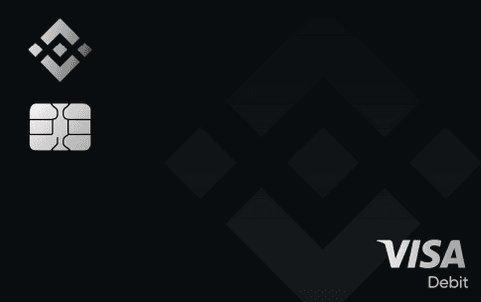 | 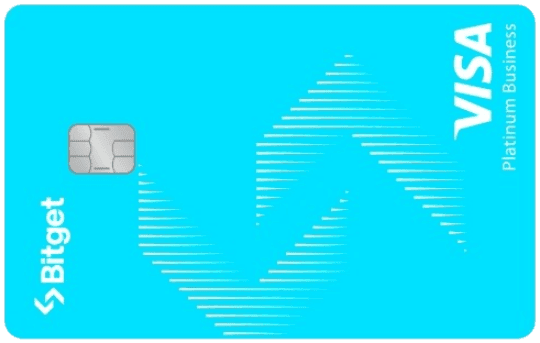 |
|---|---|---|
| Max Cashback | 2% | 8%Highest |
| Annual Fee | FreeBest | FreeBest |
| FX Fee | 2% | 0% |
| Custody Model | Custodial | Custodial |
| Network | MASTERCARD | VISA |
| Regions | Brazil | EEAAPAC |
| Supported Assets | 10+ assets BNBBTCETHUSDTUSDCFDUSDSOLADALINKXRP | 1+ assets USDT |
| Cashback | Yes | Yes |
| Staking | Yes | No |
| Points | No | No |
| Airdrops | No | No |
| Lounge access | No | No |
| Subscription rebates | No | No |
| Metal card | No | No |
| Virtual Cards | Yes | Yes |
| Physical Cards | Yes | No |
| Visa | No | No |
| Mastercard | No | No |
| Apple Pay | Yes | No |
| Google Pay | Yes | Yes |
| Self-custody spend | No | No |
| Stablecoin spend | No | No |
| No annual fee | Yes | Yes |
| No FX fee | No | Yes |
| ATM free allowance | No | No |
| No KYC | No | No |
| Virtual vs Physical | Yes | Yes |
| Debit vs Prepaid | No | No |
| Best For | Best for Yield | Best for Cashback |
Note: All data verified as of February 2026. Rewards and fees may vary based on your spending tier and region. Check each card's detailed page for complete terms.
Binance vs Bitget: Key Differences
Two exchange cards that once competed in Europe now serve entirely different markets. [Binance](/crypto-cards/binance-card/) retreated to Brazil-only in October 2025 with a Mastercard prepaid offering 2% BNB [cashback](/crypto-cards/cashback/) capped at 250 BRL/month (approximately $45). [Bitget](/crypto-cards/bitget/) split into two products: a Visa exchange Card with up to 8% BGB cashback (0.9% transaction fee, EEA/APAC) and a Mastercard Wallet Card for [stablecoin spending](/crypto-cards/stablecoin/) with a $400/month zero-fee quota (EEA/UK/LATAM/APAC). Zero geographic overlap between Binance and either Bitget product.
The right choice depends on your priorities: cashback rates, regional availability, custody model, and which ecosystem you already use. Below, we break down who should choose each card.
Two Bitget Products vs One Binance Card
Bitget restructured its card lineup in 2025, creating two separate products with different issuers and use cases.
Bitget Card (Visa debit): Linked directly to the Bitget exchange account. Spends USDT only with 0.9% transaction fee and 0% FX. BGB-tiered cashback from 0.5% (no BGB) to 8% (20,000+ BGB). Available in EEA and APAC. Spending limits scale from $50,000/month (Level 1) to $3,000,000/month (Level 4) based on VIP status.
Bitget Wallet Card (Mastercard prepaid): Spends USDC and USDT from the Bitget Wallet. $400/month zero-fee quota (FX and conversion fees fully refunded within quota). Beyond $400/month, 1.7% FX fee on non-USD transactions. No cashback. Available in EEA, UK, LATAM, and APAC.
Binance Card (Mastercard prepaid): Single product serving Brazil only. 10 spendable assets. 0.9% conversion fee plus 1-2% FX on foreign currency. Up to 2% BNB cashback capped at 250 BRL/month. Unique ability to spend directly from Flexible Earn positions while continuing to accrue yield (up to 6.05% APR).
Net Returns After All Fees
| Scenario | Binance (domestic BRL) | Binance (international) | Bitget Card (0.5% base) | Bitget Card (2% tier) | Bitget Card (8% max) | Bitget Wallet Card |
|---|---|---|---|---|---|---|
| Casual ($400/mo) | $4.40 (1.1% net) | -$3.60 (net loss) | -$1.60 (-0.4% net) | $4.40 (1.1% net) | $28.40 (7.1% net) | $0 (fee-free, no cashback) |
| Moderate ($1,000/mo) | $11 (1.1% net) | -$9 (net loss) | -$4 (net loss) | $11 (1.1% net) | $71 (7.1% net) | -$10.20 (1.7% FX on excess) |
| Active ($2,000/mo) | $22 (near cap) | -$18 (net loss) | -$8 (net loss) | $22 (1.1% net) | $142 (7.1% net) | -$27.20 |
| Power ($3,000/mo) | $22 (cap hit) | -$38 (net loss) | -$12 (net loss) | $33 (1.1% net) | $213 (7.1% net) | -$44.20 |
| Annual ($2,000/mo) | $264 (capped) | -$216 (net loss) | -$96 (net loss) | $264 | $1,704 | -$326 (net loss) |
SpendNode's fee breakdown shows the Bitget Card loses money on every transaction at the base tier (0.5%) - the 0.9% fee exceeds the 0.5% cashback by 0.4%. A user spending $2,000/month at base tier loses $96/year. Users need at least a 1% BGB tier to break even, and a 2% tier (1.1% net) to match Binance's domestic rate.
Binance's 1.1% domestic net is reliable for low-to-moderate BRL spending but caps at 250 BRL/month. Above approximately $2,250/month in spending, Binance stops earning additional cashback. The Bitget Card at 2%+ tier has no published cap, so it scales linearly - $33/month at $3,000/month versus Binance's capped $22.
At Bitget's maximum 8% tier (7.1% net after 0.9% fee), annual returns reach $1,704 on $2,000/month spending - more than 6x Binance's capped $264. But this requires holding 20,000+ BGB tokens.
The Bitget Wallet Card is not a cashback product. It is a zero-fee stablecoin off-ramp under $400/month. Beyond that quota, the 1.7% FX fee with no rewards makes it one of the most expensive cards for higher spending. Its value is narrow: fee-free small stablecoin purchases only.
Binance's international spending produces net losses. The 2% cashback minus 2.9% total fees (0.9% conversion + 2% FX) yields -0.9% net on every cross-currency transaction. For Brazilian users traveling internationally, the Binance card is a money-losing proposition.
Token Exposure Risk: BGB vs BNB
Both exchange cards pay rewards in proprietary tokens with inherent price risk.
Bitget Card rewards in BGB. The top 8% tier requires holding 20,000+ BGB tokens. At BGB prices in early 2026, this represents a meaningful capital commitment. If BGB declines 20%, the capital loss on 20,000 BGB at $4/token is approximately $16,000 - wiping out over six years of 8%-tier cashback on $3,000/month spending ($2,556/year). The token commitment creates a leveraged bet: high cashback rate but concentrated exchange-token exposure.
Binance rewards in BNB. The 2% rate does not require BNB holdings, but rewards are paid in BNB. With the 250 BRL/month cap, maximum annual BNB exposure is approximately $540 - far less risky than Bitget's tier-required holdings. Binance's unique advantage: spending directly from Flexible Earn positions (up to 6.05% APR on BNB, BTC, ETH, and stablecoins) without transferring funds first. Idle assets earn yield continuously until the moment of purchase.
Asset Support and Practical Differences
Asset diversity:
- Binance: 10 assets (BNB, BTC, ETH, SOL, ADA, LINK, XRP, USDT, USDC, FDUSD)
- Bitget Card: 1 asset (USDT only)
- Bitget Wallet Card: 2 assets (USDC, USDT)
Binance's 10-asset support is a clear advantage for users holding diverse portfolios. Bitget Card's USDT-only limitation means all other holdings must be converted to USDT before spending, creating additional exchange steps and potentially taxable events.
ATM access:
- Binance: 2 free withdrawals/month, then $1.50 each. Approximately $540/day limit.
- Bitget Card: 2% + $0.65 per withdrawal. No published daily limit from JSON.
- Bitget Wallet Card: No ATM data published.
Network and payments:
- Binance: Mastercard, Apple Pay, Google Pay
- Bitget Card: Visa, Google Pay
- Bitget Wallet Card: Mastercard, Apple Pay, Google Pay, WeChat Pay, Alipay
The Bitget Wallet Card's WeChat Pay and Alipay integration is notable for APAC users. The Bitget exchange Card does not support Apple Pay.
Banned countries: Binance is banned in Malaysia and Philippines. Bitget is banned in France (AMF blacklist) and Philippines. French EEA users can use Binance's Brazil card (if they have Brazilian residency) but not Bitget's exchange card.
Both cards use custodial models. Every transaction creates a taxable disposal event. The tax treatment is identical.
Common Mistakes When Choosing
Activating the Bitget Card without BGB holdings and using it for daily spending. At the base 0.5% tier, the 0.9% transaction fee exceeds the cashback, producing a -0.4% net loss per purchase. A user spending $2,000/month loses $96/year by using a "free" card. Even at the 1% tier, the net is 0.1% ($24/year on $2,000/month) - barely worth the effort. You need at least a 2% BGB tier (1.1% net) for the card to deliver meaningful returns. How to avoid it: Check your BGB holding tier before relying on the Bitget Card for daily spending. If your tier is below 2%, consider the Bitget Wallet Card for under $400/month fee-free spending, or look at zero-fee cards from other vendors that do not require token holdings.
Using the Binance card for international purchases from Brazil. The 2% cashback minus 2.9% total fees (0.9% conversion + 2% FX) produces a -0.9% net loss on every foreign-currency transaction. A Brazilian user spending $1,000/month internationally loses $108/year. The card is designed for domestic BRL spending only. How to avoid it: Reserve the Binance card exclusively for domestic BRL purchases. For international or travel spending, use a separate no-FX-fee card like RedotPay or Gate.io.
Decision Shortcut
In Brazil: Binance is your only option between these vendors. The 1.1% domestic net is reliable for moderate BRL spending, and spending from Flexible Earn (up to 6.05% APR) adds unique yield integration. Keep spending under the 250 BRL/month cap and avoid international purchases.
In the EEA or APAC as an exchange trader with BGB: The Bitget Card at 2%+ tier delivers uncapped cashback that outscales Binance's capped returns. At the 8% tier, annual returns can exceed $1,700 on moderate spending.
In the EEA, UK, or APAC as a casual stablecoin spender: The Bitget Wallet Card works for under $400/month in fee-free stablecoin purchases. Above that threshold, look at alternatives with zero FX fees and actual cashback programs.
Outlook: Binance has not announced plans to expand beyond Brazil, and its European exit in December 2023 appears permanent. Bitget is actively growing its card ecosystem - the dual-card strategy targets both traders and casual spenders. The key variable is Bitget's BGB tier rollout: if the 8% tier becomes fully available across all regions, it would position Bitget as one of the highest-paying exchange cards in Europe. Watch for Bitget France availability changes (currently AMF-blacklisted) and potential Binance expansion to additional LATAM markets through 2026.
Fee Breakdown
| Fee | Binance | Bitget |
|---|---|---|
| FX Fee | 2% | 0% |
| Annual Fee | Free | Free |
| ATM Fee | 0% | 2% |
Fees pulled from issuer documentation. Verify on the official site before applying.
Who Should Choose Binance
The Binance Mastercard is best suited for users who:
- Want up to 2% cashback on spending
- Prefer a card with no annual fee
- Are based in Brazil
Who Should Choose Bitget
The Bitget Card is best suited for users who:
- Want up to 8% cashback on spending
- Need zero FX fees for international transactions
- Prefer a card with no annual fee
- Are based in EEA, APAC
Our Verdict
**Geography eliminates the choice for most users: Binance serves Brazil, Bitget serves Europe and Asia-Pacific.** SpendNode's Binance vs Bitget verdict: Bitget's exchange Card offers a higher cashback ceiling (8% versus 2%) with no monthly cap, but the base tier (0.5%) loses money after the 0.9% transaction fee. Binance's 1.1% domestic net is reliable but caps at approximately $45/month. For a Brazilian user, Binance is the only option. For a European or APAC user, the Bitget Card at 2%+ BGB tier (1.1% net after fees) matches Binance's domestic rate without a cap. The Bitget Wallet Card serves a completely different purpose - fee-free [stablecoin](/crypto-cards/stablecoin/) off-ramp under $400/month with no cashback at all. The right Bitget product depends on whether you are an exchange trader (Bitget Card) or a moderate stablecoin spender (Wallet Card).
Frequently Asked Questions
Which has better cashback, Binance or Bitget?
Bitget offers up to 8% cashback compared to Binance's 2%. Actual rates depend on your spending tier and card variant.
Which card has lower fees?
Bitget charges 0% FX fee vs Binance's 2%. Neither charges an annual fee.
Is Binance or Bitget better for self-custody?
Both use custodial models. If self-custody is important, consider providers like Gnosis Pay or ether.fi.
Which card is available in more regions?
Bitget is available in 2 regions (EEA, APAC) compared to Binance's 1 region (Brazil). Always verify eligibility on the issuer's website.