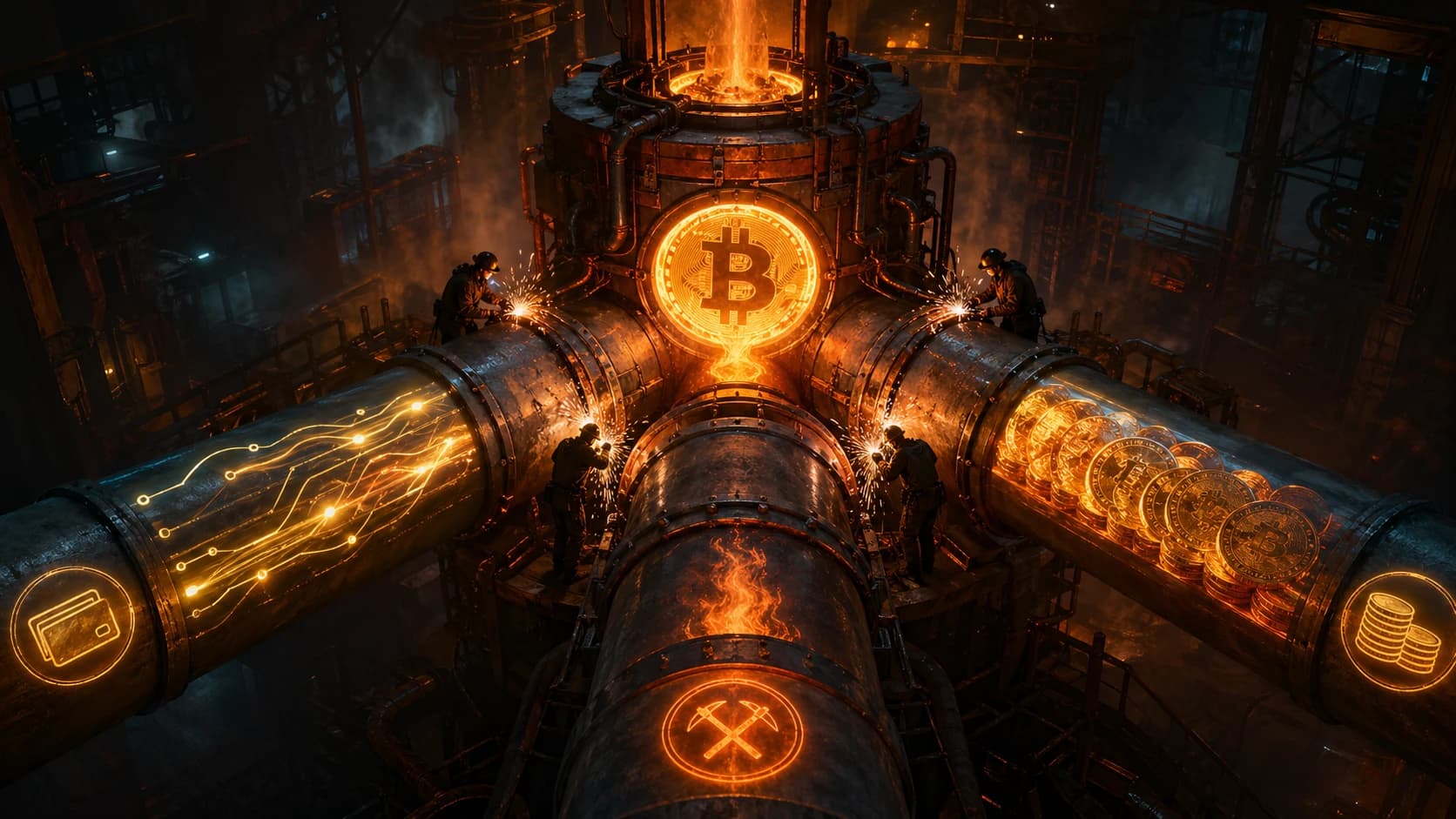
Tether Investments has formally proposed merging Twenty One Capital with Bitcoin financial services firm Strike and Bitcoin miner Elektron Energy into a single entity, according to a CoinMarketCap report flagged on April 30, 2026. The pitch would consolidate three separate Bitcoin-native businesses, treasury, payments, and mining, under one roof, with Tether as the connective shareholder.
Bitcoin traded at $76,428 with the broader market in a Neutral 40 reading on the Fear and Greed index at the time of the announcement. The proposal landed during a quiet macro session and immediately drew attention because of who is involved on each side of the deal.
A merger of three different business models
The merger would combine three companies with very different business models. Twenty One Capital is a Bitcoin treasury vehicle, modeled on the Strategy playbook, capitalized through SPAC backing from Tether, SoftBank, and Cantor Fitzgerald. Strike is Jack Mallers' company, a Bitcoin payments and lending platform with a US consumer footprint. Elektron Energy is a Bitcoin miner with energy infrastructure assets.
Tether already holds a position in all three. Folding them into a single equity creates a Bitcoin-native conglomerate that owns the coins, mints new ones, and runs the rails for spending and lending against them. The closest analogue is Marathon Digital plus Strategy plus a payments business, all under one ticker.
The transaction structure has not been disclosed publicly. CoinMarketCap reported the proposal as a Tether Investments pitch, which means the terms are still subject to board approval at each entity and likely shareholder votes given Twenty One's SPAC structure.
A single equity capturing three layers of the Bitcoin stack
Tether has spent the last two years moving from a stablecoin issuer into a holding company. The USDT business throws off billions in annual reserve income, most of it parked in US Treasuries. That cash has been recycled into Bitcoin mining, AI compute, agriculture in Latin America, and now Bitcoin financial services.
Merging Twenty One, Strike, and Elektron into one vehicle gives Tether a single public equity that captures three layers of the Bitcoin stack: the asset, the production cost base via mining, and the consumer distribution layer via Strike. If Bitcoin appreciates, the treasury benefits. If transaction volume rises, Strike benefits. If hash rate economics improve, Elektron benefits. A vertically integrated structure lets the same shareholder capture all three without having to time three separate public offerings.
There is also a defensive read. Strategy currently dominates the public-equity Bitcoin proxy trade with over $40 billion in BTC on its balance sheet. A merged Twenty One vehicle gives Tether a competing instrument that institutional buyers can use without going through Saylor.
Strike's Role and Jack Mallers
Strike is the smallest of the three by balance sheet but the most important for distribution. Mallers built Strike around Lightning Network payments and has expanded into Bitcoin-backed lending and consumer banking features. The company has not been public, and a merger into Twenty One would give Strike a public listing without running its own IPO process.
For Tether, owning Strike outright through a merged Twenty One stake means controlling a US-licensed Bitcoin financial services platform. That matters in a year when stablecoin legislation is forcing issuers to choose between a federal trust charter, a state license, or running offshore. Tether has chosen offshore for USDT itself, but holding a US-regulated subsidiary through Strike provides domestic optionality.
The signals that decide whether the merger closes
Three signals will determine whether the merger gets done.
The first is the exchange ratio. Twenty One Capital's SPAC pricing already values the entity at a premium to the Bitcoin it holds. Strike and Elektron will need third-party valuations, and any haircut to existing shareholders, especially SoftBank and Cantor on the Twenty One side, could block approval.
The second is regulatory. A merger creating a single entity that mines Bitcoin, holds Bitcoin, and processes US Bitcoin payments will draw scrutiny from the SEC, FinCEN, and state money transmitter regulators in parallel. Strike's existing licenses will need to be reaffirmed under new ownership.
The third is the Tether parent overhang. Tether Investments sits inside the same corporate structure as the USDT issuer. US prosecutors have probed Tether on and off for years. Merging US-domiciled entities with offshore Tether ownership creates a compliance surface that lawyers will want clean before any deal closes.
Overview
Tether Investments has proposed combining Twenty One Capital, Strike, and Elektron Energy into a single Bitcoin-native conglomerate covering treasury, payments, and mining. The pitch reflects Tether's broader move from stablecoin issuer to vertically integrated holding company. Approval depends on exchange ratios, regulatory clearance, and how cleanly US-domiciled assets can sit under offshore Tether ownership.