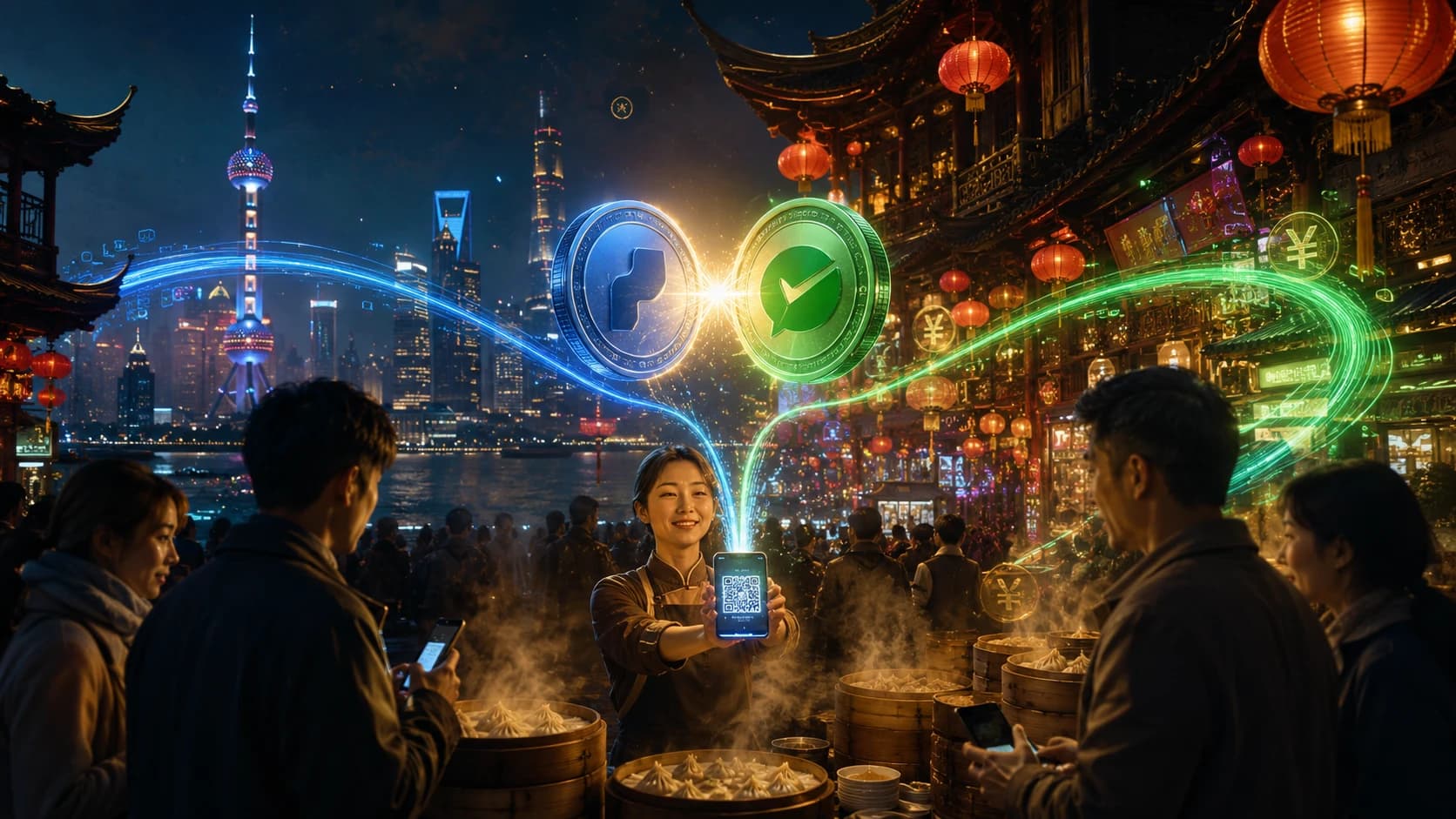
Tencent has connected PayPal to WeChat Pay's QR-code merchant rails, opening the Chinese domestic payment network to US PayPal users for the first time. Cointelegraph reported the integration on May 28, 2026, citing Tencent.
The link routes a PayPal account through the same QR codes Chinese shoppers already use for nearly every offline purchase, from street stalls to taxi fares. A US tourist with a US PayPal balance can scan a WeChat Pay merchant code, and the transaction settles cross-border without the user holding a Chinese bank account or a yuan wallet.
A foreign card workaround that just got faster
Foreign visitors to China have spent the past three years struggling with payments. The country runs on QR codes tied to WeChat Pay and Alipay, and most shops, taxis, and small restaurants no longer accept cash or foreign cards in any reliable way. Visa and Mastercard issued outside China can technically clear at some merchants, but coverage is patchy and rejection rates have been high.
Alipay opened a similar workaround in 2023 by letting foreign Visa and Mastercard holders top up an Alipay wallet directly. The PayPal route is structurally different. Instead of asking the visitor to load a separate Chinese-side wallet, it pipes a US PayPal balance straight into the WeChat Pay scan flow.
The mechanics matter for fees
Cointelegraph's reporting does not yet detail the fee schedule, settlement currency, or whether merchants see a different acceptance code on their side. Those details will determine how the integration competes with crypto-rail alternatives.
Existing cross-border tourist payments through Visa and Mastercard in China typically carry a 3% foreign exchange spread plus a 1 to 3% merchant network fee, and many issuers add their own 1 to 3% FX markup on top. A traveler from the US can pay 5 to 7% in stacked fees on a $100 dinner.
If PayPal's WeChat Pay route lands inside that range, it is a convenience play. If it lands materially below, it pressures both card networks and the small but growing pool of zero foreign exchange markup crypto cards that travelers have been quietly using in Asia. SpendNode tracks how that fee stack has been a recurring complaint among readers comparing options for trips to China and Hong Kong.
Tencent gets western users, PayPal gets a beachhead
For Tencent, the integration adds inbound transaction volume to WeChat Pay without requiring foreign users to sign up for a Chinese product. It is the same model Alipay used to grow its inbound tourism payments after pandemic borders reopened.
For PayPal, the deal is its first real merchant footprint inside China's domestic acceptance network. The company has had a payment processor license in China since 2021 through its GoPay acquisition, but until now it had no path into the consumer scan-to-pay flow that defines daily Chinese commerce.
The combined network reach is large. WeChat Pay's domestic merchant base is in the tens of millions of points of acceptance. PayPal's US user base is around 200 million accounts.
Stablecoins still have the structural opening
The PayPal-WeChat Pay link does not move the cross-border payments story into a settled equilibrium. It sharpens it.
Tencent and PayPal are connecting two custodial wallets through a bilateral arrangement. The transaction still rides traditional clearing and settlement rails on the back end, and the FX is intermediated by both companies. Pricing transparency for the end user depends on what those two firms choose to disclose.
Stablecoin rails operate differently. A USDC or USDT transfer settles on a public ledger, in seconds, with no bilateral approval needed and a fee that is denominated in basis points rather than percentage points. The reason WeChat Pay and PayPal can do this deal at all is because they have already built closed-loop balances that look a lot like stablecoins from the user's perspective. The question is whether their version stays cheaper than the open one.
For now, the practical takeaway for travelers is narrower: anyone heading to China this summer with a PayPal balance has a new payment option that did not exist a week ago.
Overview
Tencent has connected PayPal to WeChat Pay's QR-code merchant network in China, letting US PayPal users pay at Chinese stores by scanning the same codes locals use. The announcement, reported by Cointelegraph on May 28, 2026, is PayPal's first real entry into China's domestic acceptance flow. Fee terms and settlement details have not been disclosed, and the cross-border crypto-rail thesis remains intact until they are.