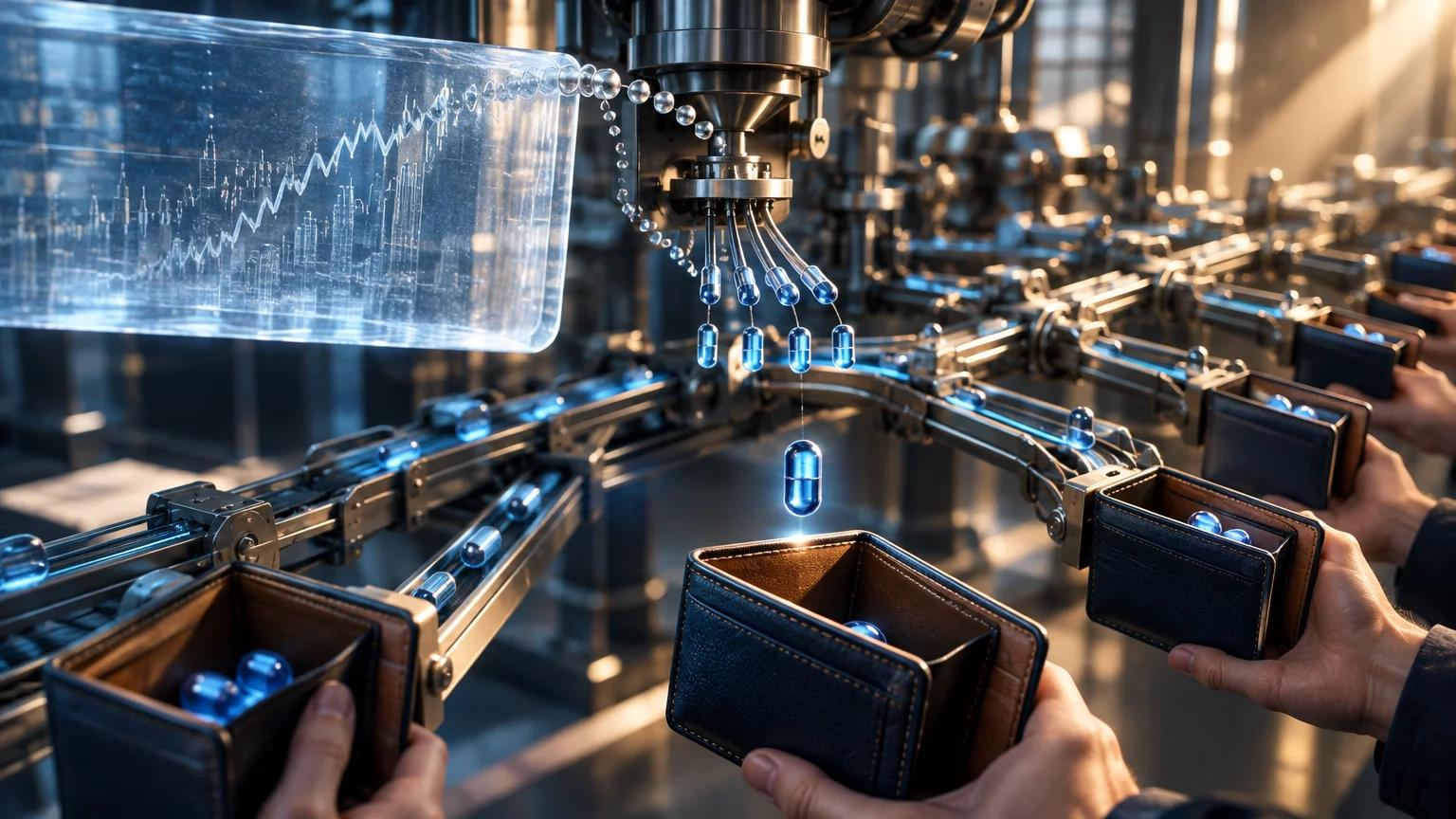
Securitize has processed its first onchain dividend for tokenized Apple stock, paying holders in USDC directly into their wallets, according to a November 20 report from Cointelegraph. The reported payment brings a specific part of equity ownership—receiving dividend income—into the same wallet environment as the tokenized investment.
The “first” refers to Securitize's reported Apple distribution, not an industry-wide first or Apple itself adopting USDC payments.
For Securitize, the development tests the delivery of shareholder economic benefits attached to its product. Its tokenized stock proposition includes income from the underlying investment. A dividend arriving in a wallet gives that promise a concrete outcome.
An equity holding produces a separate wallet payment
The distinctive detail is the payment asset. Cointelegraph reported a distribution in USDC directly to holders' wallets. Investors therefore received income separately from their tokenized Apple position.
That separation is useful when assessing the product. Selling an investment converts some or all of the position into another asset. A dividend distributes income associated with holding it. The reported transaction concerns the latter.
For a wallet user, the result is straightforward: the investment remains a stock position, while its payout arrives as a stablecoin balance. SpendNode's guide to stablecoin spending options covers a separate use case for that type of balance. Using the dividend through a payment product would require a connection between that product and the investment wallet.
The connection between the two assets shows how tokenization carries an investment's economic benefits through to its holder. Here, the reported payout provides an example of that process reaching the wallet.
The brokerage relationship remains behind the token
Securitize's October 8 launch announcement described its stock tokens as backed one for one by underlying shares. They represent security entitlements held through Securitize Markets. Holders become registered shareholders of the underlying issuer only if they convert through an available conversion route.
The company also said the underlying issuers had not sponsored or endorsed the products. For an Apple-branded investment, the roles are worth understanding: Securitize supplies the tokenized stock structure, while Apple is the company whose shares underpin the entitlement.
Access is subject to onboarding, identity checks and jurisdictional eligibility. At launch, Securitize named Solana as the network and USDC as the settlement asset, with trading through its registered broker-dealer.
Together, those terms describe a wallet interface supported by a brokerage relationship. Holding the token in a wallet leaves the investor dependent on the arrangements connecting it to the backing share. The dividend payment illustrates one function of those arrangements: passing an economic benefit from the investment to its holder.
The practical custody question is therefore specific. An investor needs to understand both access to the wallet and the claim represented by the token. Control of the wallet addresses one part of that relationship.
A completed payout tests the product beyond trading
Securitize's third-quarter presentation described its convertible entitlement tokens as carrying applicable economic benefits, including dividends and voting rights. It also set out a conditional conversion mechanism: when an issuer adopts tokenization, holders can convert into shares recorded on the issuer's register.
Those are different functions. Dividend delivery concerns income from the investment. Conversion concerns the form in which ownership is recorded. The reported USDC distribution is evidence of the payment function operating.
A completed distribution is more informative than a statement that a token is designed to carry dividend rights. It gives holders an outcome they can recognize: a payment in their wallets. It also makes the distinction between equity exposure and income delivery easier to assess without treating every tokenized product as interchangeable.
The choice of USDC gives this story a direct connection to crypto users. The proceeds arrive in an asset used within wallet-based finance. Any later decision to transfer, exchange or spend that balance is a separate transaction, with its own requirements.
Overview
Cointelegraph reported that Securitize completed its first onchain dividend distribution for tokenized Apple stock, paying holders USDC directly into their wallets.
The payout offers a concrete example of Securitize's tokenized equity structure delivering dividend income through wallet payment rails. The stock entitlement and the payment remain separate assets, connected through Securitize's investment infrastructure.