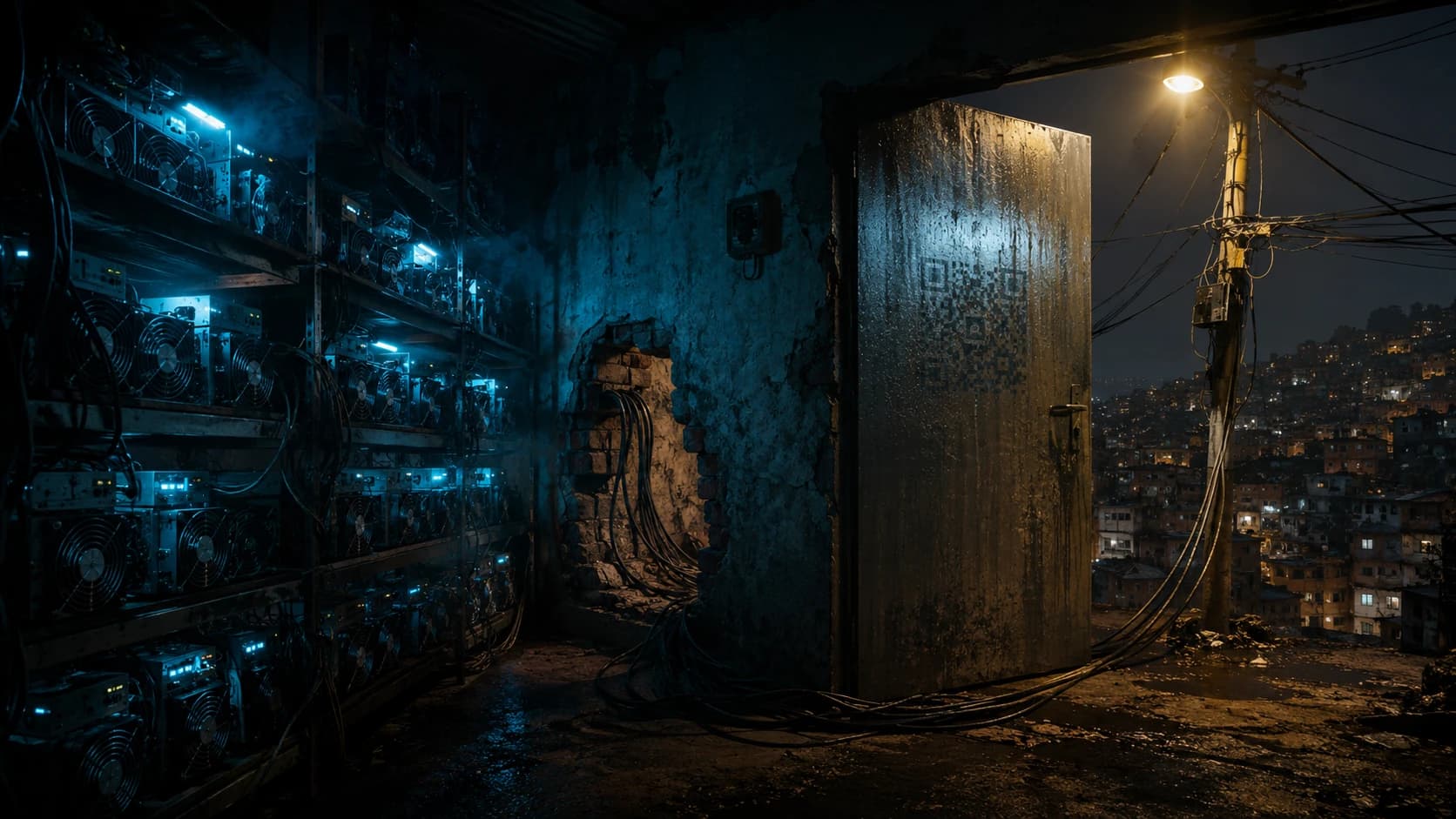
Rio de Janeiro Civil Police carried out an operation against a cell of Comando Vermelho, one of Brazil's largest organized crime groups, that allegedly converted stolen electricity into cryptocurrency through clandestine mining rigs. The case, reported by CryptoSlate on May 23, 2026, points to a laundering pattern that bypasses the banking system entirely.
The operation targeted an operational nucleus of the faction, with investigators describing the scheme as a fresh model for turning a long-standing criminal habit, electricity theft from the public grid, into liquid digital assets. Instead of taxing local businesses or moving cash through informal channels, the cell allegedly fed pirated power into ASIC miners and pocketed the mined coins.
The Mechanics of the Scheme
Power theft in Brazilian favelas is not new. Utility losses from "gatos," informal grid splices, run into the billions of reais each year, and electricity providers have long absorbed the cost as part of doing business in territories controlled by armed groups. The novel piece here is the monetization layer. Rather than reselling power to households at a discount, the alleged operators used it as a free input cost for proof-of-work mining.
The economics are straightforward. Mining profitability is almost entirely a function of electricity price. If the input is effectively zero, even older or less efficient hardware can produce meaningful margins on Bitcoin or smaller proof-of-work coins. The output, mined coins delivered directly to a wallet under the group's control, sidesteps the cash-handling and bank-deposit chokepoints that traditional drug revenue runs into.
For Brazilian law enforcement, that is the part that matters. Cash businesses leave a paper trail of deposits, ATM activity, and reporting thresholds. A mining wallet does not. The proceeds can be moved through mixers, swapped on decentralized exchanges, or routed to over-the-counter desks in jurisdictions with looser controls.
Conditions That Make the Model Reproducible
Two conditions make the model reproducible. The first is unmetered or weakly metered grid access, which exists in pockets of dozens of countries, not just Brazil. The second is liquid crypto markets that accept newly minted coins without questions about origin. Both have been in place for years. The Comando Vermelho case is one of the first publicly documented instances of an established criminal organization fusing them into a single revenue stream.
There are precedents at smaller scale. Authorities in Malaysia, Russia, Kazakhstan, and the United States have all charged individuals over electricity theft tied to private mining operations. The Rio case is different in that the alleged operator is a structured criminal faction with territorial control, not a lone operator chasing miner margins. That changes the policing problem from utility fraud into organized crime financing.
Implications for Compliance and Card Issuers
Exchanges and on-ramps that touch Latin American flows now have another typology to screen for. Freshly mined coins coming from concentrated wallet clusters with no commercial mining footprint, paired with deposits routed through Brazilian VASPs or peer-to-peer markets, fit the profile. Travel-rule reporting and source-of-funds checks on larger withdrawals will likely catch the obvious cases. Smaller volumes broken across many wallets will not.
For the broader crypto cards and stablecoin ecosystem, the takeaway is narrower. Card issuers operating in Brazil already face FATF travel-rule scrutiny and Receita Federal reporting on stablecoin activity. The Rio case does not change that framework, but it does give regulators a concrete domestic example to point to when arguing for tighter source-of-funds rules on local on-ramps.
Overview
Rio's Civil Police raided a Comando Vermelho cell allegedly running crypto mining rigs on stolen grid power, treating mined coins as a clean substitute for cash drug revenue. The case formalizes a laundering pattern that combines two long-standing problems, electricity theft and unregulated crypto liquidity, into a single pipeline. It is likely to inform how Brazilian authorities and compliance teams approach mining-linked deposits going forward.