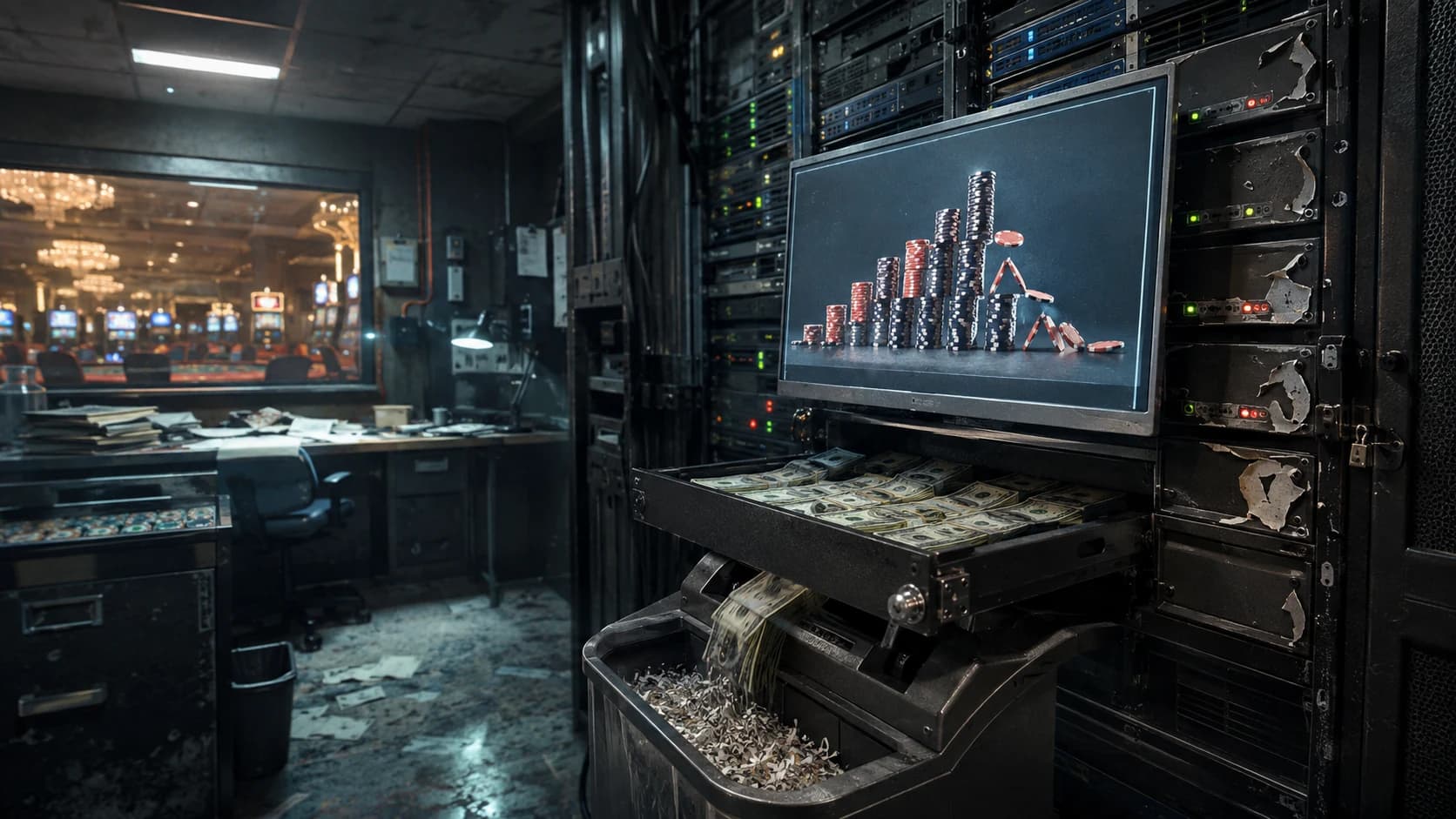
A federal jury in Las Vegas convicted a man of running a $24 million Ponzi scheme through his company Profit Connect, according to a case flagged by CoinMarketCap on August 25, 2026. The firm told investors their money would earn 15% to 30% a year from an "AI supercomputer" that traded and mined cryptocurrency. Prosecutors said the machine did not exist, and the returns came from other investors' deposits.
The verdict lands during one of the frothiest stretches of this market cycle. Bitcoin trades at $79,346 as of August 25, 2026, up 22.5% on the week, and CoinMarketCap's Fear and Greed Index sits at 81, or "extreme greed." Periods like this are when guaranteed-return pitches find the most buyers, and when the gap between a real yield product and a fraud is easiest to paper over with confident language.
The mechanics behind the pitch
Profit Connect sold a story that maps almost exactly onto what a lot of people now believe crypto can do: point enough computing power at the market, let an algorithm run, and collect double-digit returns without lifting a finger. The company put a number on it, 15% to 30% annually, and attached two of the most credible-sounding words available in 2026, "AI" and "mining."
Neither held up. Prosecutors described a classic Ponzi structure, where deposits from newer investors were routed to earlier ones to simulate the promised payouts, while a portion funded personal spending. No supercomputer generated the yield. The "AI-powered" framing was marketing wrapped around a cash-shuffling operation.
The tell was the guarantee itself. Real crypto mining revenue swings with hash rate, difficulty, energy costs, and the price of the coin being mined. Real trading strategies lose money on plenty of days. A fixed 15% to 30% floor, paid regardless of what markets do, is not a feature. It is the single most common red flag in investment fraud, and it predates crypto by a century.
AI as the new veneer on an old crime
Swap "AI supercomputer" for "high-frequency trading desk" and this is the Bernie Madoff template. Swap it for "arbitrage bot" and it is half the schemes that blew up in 2021 and 2022. The fraud does not change. Only the buzzword on the brochure does, and right now that buzzword is artificial intelligence.
That matters for anyone putting money into crypto today. The AI narrative gives operators a fresh way to explain returns that no legitimate strategy can promise. Most people cannot audit whether a company actually runs a trading model or mines at scale, so the claim becomes unfalsifiable at the point of sale. By the time the payouts stop, the money is gone.
This case is one of several fraud convictions moving through US courts this cycle. It arrives alongside broader enforcement, including Chainalysis-assisted investigations flagging thousands of crypto accounts and a widening DOJ hacking case now naming 17 defendants. The common thread is that the on-chain trail and the paper trail both tend to outlast the pitch.
The custody line between spending crypto and handing it over
A conviction like this is a reminder of the line between spending crypto and handing it to someone who promises to grow it. A crypto card does one narrow thing: it converts a balance you control into something you can spend at a merchant. It does not pay you a guaranteed yield, and any card that advertised a fixed 20% "return" on deposits would deserve the same skepticism Profit Connect earned.
The custody question is the sharper divide. Profit Connect took custody of investor funds, which is exactly what let it move new deposits to old investors without anyone seeing the flow. Cards and wallets that let you spend from your own wallet keep the assets under your keys until the moment of purchase. That does not make a self-custody product profitable, but it removes the specific failure mode at the center of this case: a third party quietly controlling and reassigning your balance.
For anyone weighing a yield pitch, the checks are unglamorous and effective. Confirm the entity is registered with the relevant regulator. Treat any guaranteed or "risk-free" return as disqualifying. Ask where the yield physically comes from and whether you can verify it independently. And be most cautious when the surrounding market is euphoric, because an 81 on the greed index is precisely when the pitch sounds most reasonable.
Overview
A federal jury convicted a Las Vegas man of running a $24 million Ponzi scheme through Profit Connect, which promised 15% to 30% annual returns from a nonexistent AI crypto-mining supercomputer while paying earlier investors with newer deposits. The case, flagged August 25, 2026, is a reminder that AI is the current veneer on a very old fraud, and that guaranteed returns plus third-party custody remain the two clearest warning signs. Spending tools that keep assets under your own keys sidestep the custody trap at the heart of the scheme.