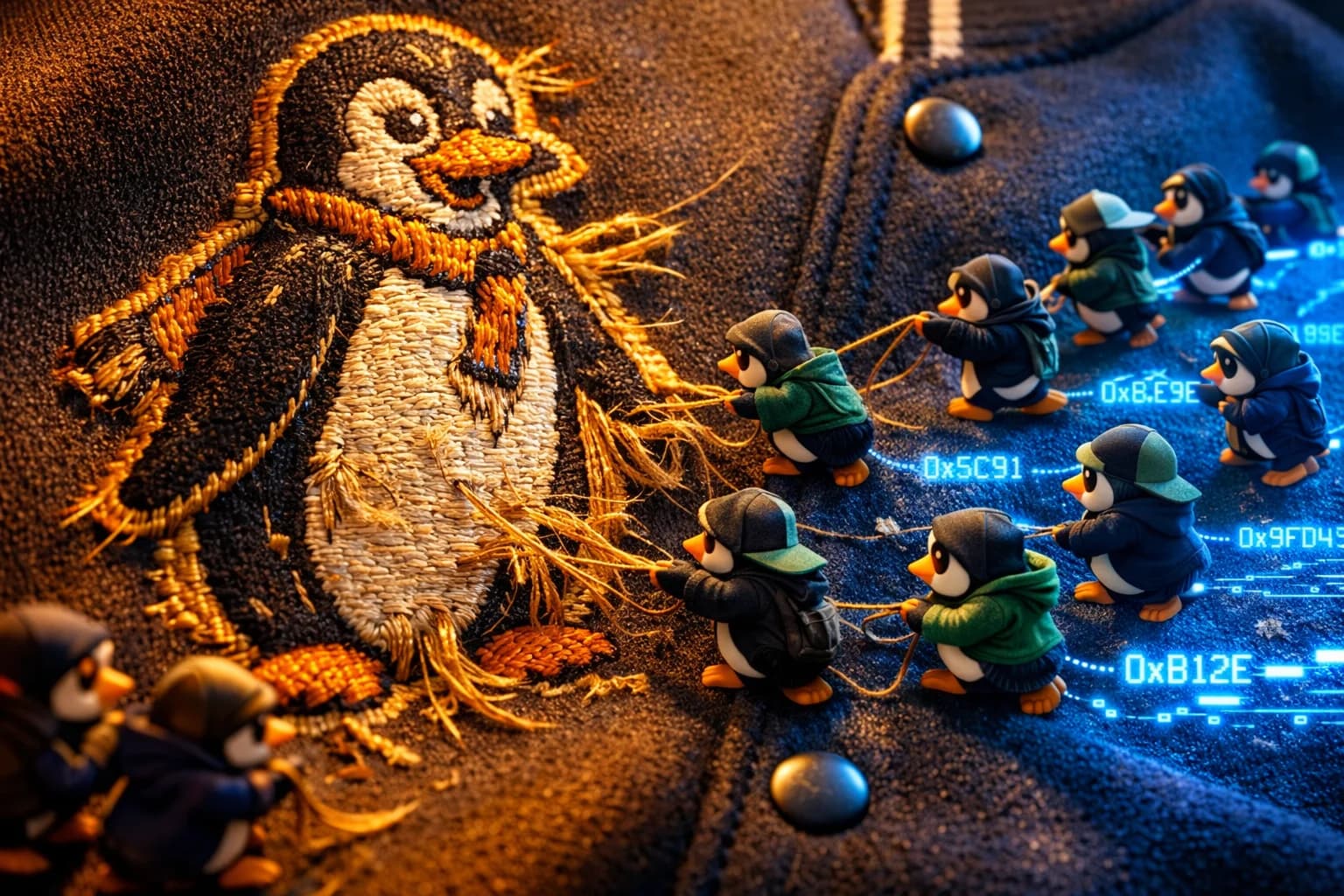
PEI Licensing, the company behind Original Penguin apparel, filed a trademark infringement and dilution lawsuit against Pudgy Penguins Inc. in the U.S. District Court for the Southern District of Florida on March 4, 2026. The complaint alleges that Pudgy Penguins, the Ethereum NFT brand turned physical merchandise empire, ignored a cease-and-desist letter sent in October 2023 and continued selling apparel under names like "Pudgy Penguins," "Pengu Nation," and "Forever Pudgy Penguins" that infringe on PEI's decades-old penguin trademarks.
PEI is requesting a jury trial and seeking all profits Pudgy Penguins received from sales tied to the allegedly infringing marks, plus damages.
A 70-Year Trademark Meets a Five-Year NFT Brand
Original Penguin is not a small brand with a thin claim. PEI Licensing, a subsidiary of Perry Ellis International, owns 22 registered penguin trademarks with the U.S. Patent and Trademark Office. The brand first stamped a penguin design on apparel in 1956 and has been using the "Penguin" word mark since 1967. The label's mascot, Pete the Penguin, was famously worn by Frank Sinatra, Dean Martin, Bob Hope, and Bing Crosby during the mid-century golf and lifestyle boom.
Pudgy Penguins launched in 2021 as an Ethereum NFT collection. Under CEO Luca Netz, the project pivoted from purely digital collectibles into physical consumer products starting in 2023, placing plush toys in over 2,000 Walmart stores and expanding into Target, Walgreens, and Amazon. Netz has publicly stated a goal of $50 million in annual revenue and ambitions to take the company public by 2027.
The friction started when Pudgy Penguins moved from toys into apparel: hoodies, hats, and sweatshirts bearing the brand's penguin imagery and names that PEI argues create a "likelihood of confusion" with its established marks.
The Paper Trail That Makes This Case Unusual
Most trademark disputes in crypto stay vague. This one has a documented paper trail that could work against Pudgy Penguins in court.
PEI sent its cease-and-desist on October 20, 2023. According to the complaint, Pudgy Penguins did not stop selling the products. PEI followed up in 2024 by filing opposition notices against at least two Pudgy Penguins trademark applications at the USPTO. Despite those oppositions, Pudgy Penguins continued using the marks in commerce and did not abandon its trademark applications.
Federal trademark law treats "willful infringement" differently from accidental infringement. If a court finds that Pudgy Penguins knowingly continued using marks after receiving formal notice, PEI could be entitled to enhanced damages up to three times the actual amount, plus attorney fees.
PEI has done this before. The company previously sued luxury designer Thom Browne over penguin designs used in his fall 2017 collection, arguing that Browne's use of a penguin motif (a profile penguin in black and white) diluted the Original Penguin brand. That case put fashion labels on notice that PEI actively enforces its penguin-related intellectual property.
What PEI Wants and What's at Stake
The complaint seeks monetary damages including "all profits received by Defendant from sales and revenues of any kind" connected to the infringing marks, plus "all damages sustained by PEI as a result of Defendant's actions." PEI is also requesting injunctive relief to stop Pudgy Penguins from using the contested names.
For Pudgy Penguins, the financial exposure could be significant. The brand's retail sales have exceeded $13 million through physical toy distribution alone, with apparel representing an additional undisclosed revenue stream. The company was targeting $50 million in total annual revenue for 2025, and a court-ordered disgorgement of profits on the apparel line would cut directly into that number.
The PENGU token, as of March 2026, trades at approximately $0.007 with a market capitalization around $440 million. While the token is a separate Solana-based asset from the corporate entity, negative outcomes in IP litigation have historically pressured token prices in NFT ecosystem projects.
What This Means for the KAST Pengu Card and Crypto Merchandise
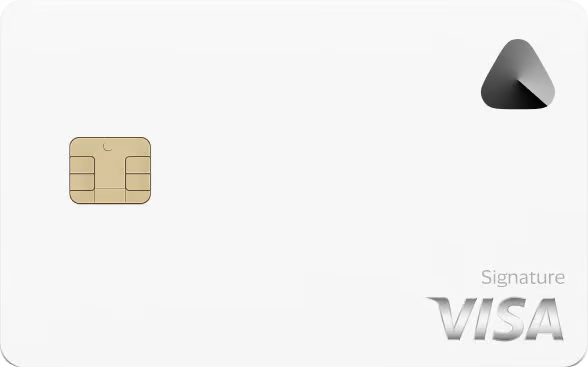
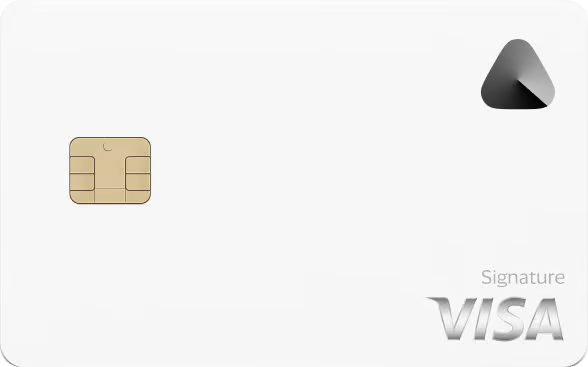
The lawsuit raises a practical question for crypto cardholders. KAST launched a co-branded Pengu Card collection in partnership with Pudgy Penguins, offering 6% to 12% cashback across three tiers: Standard, Premium, and Luxe. Those cards are branded with Pudgy Penguins imagery and are available in 170+ countries via Visa at over 150 million merchants.
If PEI obtains injunctive relief covering the use of the "Pudgy Penguins" and "Pengu" names on physical products, the scope of that injunction could theoretically extend to co-branded merchandise and card designs. That said, the complaint specifically targets apparel: hats, hoodies, and sweatshirts. It does not mention financial products or digital assets. Whether PEI would seek to expand its claims depends on how broadly the court interprets the marks at issue.
For now, KAST Pengu Cards remain available and functional. But holders should monitor the case. Trademark injunctions in federal court can move faster than expected once a motion for preliminary injunction is filed.
Beyond the KAST partnership, this case matters for every crypto project building a physical merchandise line. NFT brands have operated under a loose assumption that their digital-first names exist in a separate commercial lane from traditional trademark holders. PEI's lawsuit tests that assumption directly. A penguin is a penguin, PEI's filing essentially argues, whether it's on a 1956 golf shirt or a 2026 hoodie sold by an Ethereum NFT company.
A Canary PENGU ETF Is Under SEC Review at the Same Time
The timing adds another layer. Cboe BZX Exchange filed a Form 19b-4 with the SEC in June 2025 to list a Canary PENGU ETF. That application is likely still under regulatory review. An active trademark infringement lawsuit against the brand whose IP underpins the token could complicate the SEC's evaluation, particularly around questions of whether the asset is associated with a viable ongoing enterprise or one facing legal risk.
ETF approvals have historically been sensitive to litigation risk. The SEC flagged ongoing Ripple litigation for years as a reason to delay XRP-related product decisions. A federal trademark case alleging willful infringement would not help the Canary filing's prospects.
FAQ
Does this lawsuit affect the PENGU token directly? The lawsuit targets Pudgy Penguins Inc., the corporate entity, not the PENGU token. However, negative outcomes in IP litigation have historically pressured token prices in NFT-related projects because they threaten the brand's commercial viability and merchandising revenue.
Can PEI force Pudgy Penguins to stop selling all penguin-branded products? PEI would need to obtain an injunction from the court. The scope of any injunction would depend on the judge's interpretation of the trademark claims. The current complaint targets apparel specifically, not all products.
Has PEI Licensing won similar cases before? PEI previously sued Thom Browne over penguin designs used in fashion, demonstrating an active enforcement pattern. Perry Ellis also won an $8.3 million verdict in an unrelated trademark dispute, showing the company pursues damages aggressively.
Are KAST Pengu Cards affected? Not currently. The complaint targets clothing and apparel, not financial products. KAST Pengu Cards remain available and functional across all three tiers.
Overview
PEI Licensing, the owner of Original Penguin with 22 registered penguin trademarks dating back to 1956, has sued Pudgy Penguins Inc. in Florida federal court for trademark infringement and dilution. The complaint alleges that Pudgy Penguins ignored a 2023 cease-and-desist and continued selling hoodies, hats, and other apparel under names that create confusion with PEI's established marks. PEI is seeking all profits from infringing sales plus damages and a jury trial. The case arrives as Pudgy Penguins targets $50 million in revenue, a Canary PENGU ETF sits under SEC review, and co-branded products like the KAST Pengu Card reach millions of merchants globally.
Recommended Reading
- The NYSE Owner Just Invested in OKX at a $25 Billion Valuation, and Tokenized Stocks Are Coming to 120 Million Users
- A16z Is Raising a $2 Billion Fifth Crypto Fund While Its Biggest Peers Abandon the Sector for AI
- Gate Launches New Card With Dual-Track Tiers and Up to 5% Cashback