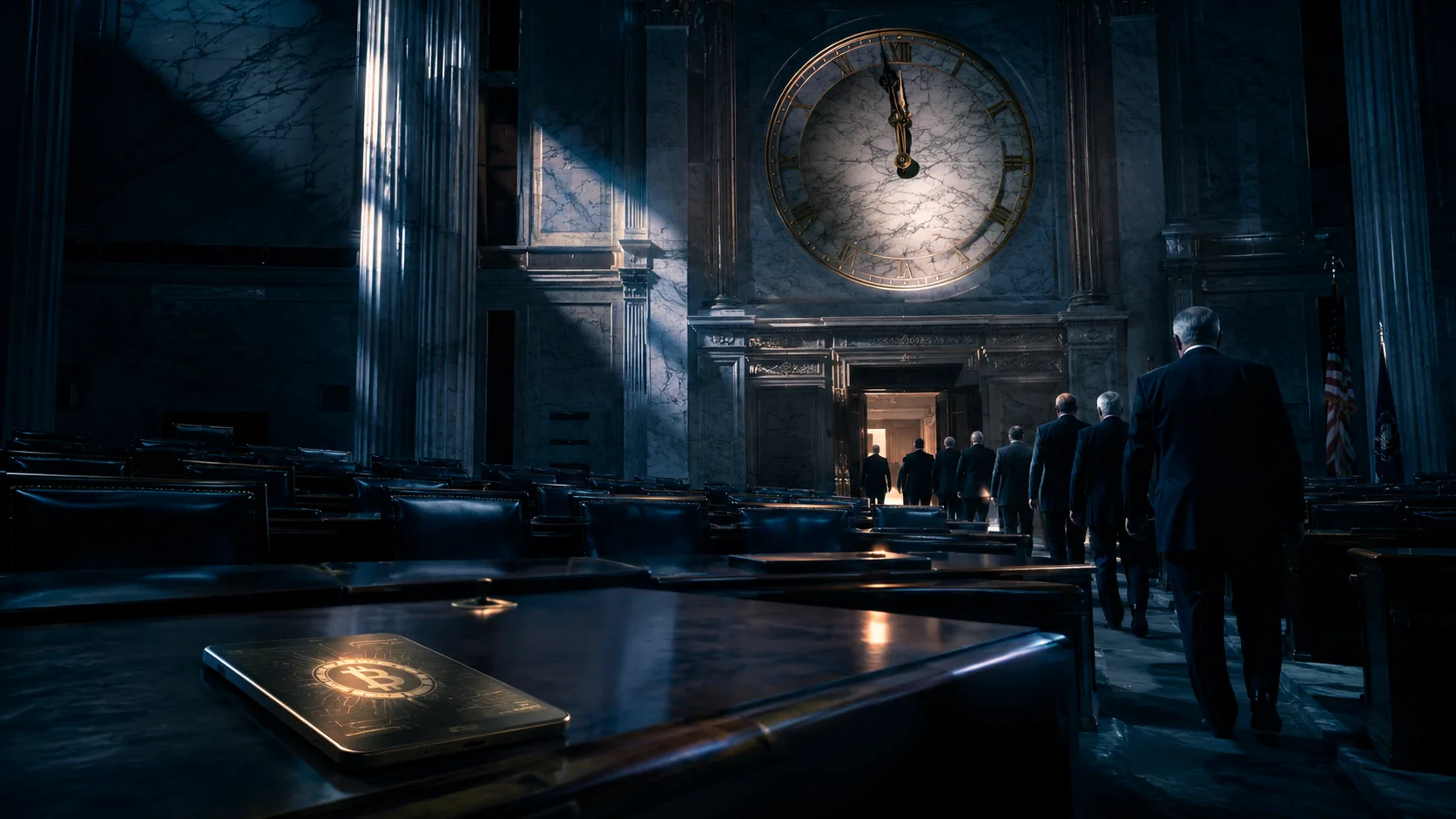
Senator Cynthia Lummis accused Democrats of intentionally delaying the CLARITY Act to avoid casting a recorded vote against it, according to a statement circulated on August 1, 2026. In her words, the delay was "a deliberate decision to run out the clock and kill" the market-structure bill rather than let members go on the record with a "no."
The comment lands as the Senate approaches its August recess with the bill still unresolved. It reframes the delay from a scheduling problem into a political calculation, and it puts a name to a tactic that crypto's Washington backers have suspected for weeks.
The bill that keeps stalling
The CLARITY Act is the House-passed market-structure bill that would divide oversight of digital assets between the Securities and Exchange Commission and the Commodity Futures Trading Commission. It sets out when a token is treated as a security versus a commodity, and it hands the CFTC a larger role over spot markets for assets deemed sufficiently decentralized. For exchanges, issuers, and card-linked programs that touch tokens, that dividing line decides which regulator writes the rules they live under.
Progress has been uneven. Momentum on Capitol Hill has faded more than once this summer, and the SEC has signaled it is prepared to move on its own rulemaking if Congress does not act. Lummis's accusation frames the latest slippage as a choice, not an accident of the calendar.
The vote nobody wants on the record
Lummis's specific charge is procedural. She argues that opponents would rather let the clock expire than force a floor vote, because a recorded "no" is a liability. A missed deadline can be blamed on process. A logged vote against a bill that split the House along less predictable lines is harder to walk back with constituents or donors.
That framing matters because it shifts the question from "does the bill have the votes" to "will the bill ever be allowed to reach a vote." Those are different problems. The first is about persuasion. The second is about floor time and leadership scheduling, which no amount of industry lobbying can force if the majority declines to bring it up.
It is worth weighing the source. This is one senator's characterization of an opponent's motives, delivered as the recess pressure peaks. Democrats have not conceded that description, and running out the clock on a bill is a routine legislative outcome that does not always signal coordinated intent. Treat the "deliberate" claim as an allegation from an interested party, not an established fact.
Stakes for the people who actually use crypto
For everyday holders and spenders, the near-term effect of another delay is continuity of the status quo. The current patchwork stays in place: the SEC and CFTC keep contesting jurisdiction case by case, and firms keep making product decisions under legal uncertainty. Several card issuers have already wound down US-facing programs this year, and an unsettled rulebook does nothing to reverse that caution.
A finished market-structure law would matter for spending products in a concrete way. Clear commodity-versus-security lines affect which tokens exchanges can list, how stablecoin rails are treated, and whether a crypto card tied to onchain balances faces securities-law exposure on the assets it spends. Rules that reduce that ambiguity tend to widen, not shrink, the set of compliant products available to US residents. That is the practical read for anyone weighing options in the United States right now.
The counterpoint is that legislation is not the only path. The SEC has said it is ready to set crypto rules itself if Congress stalls, which could deliver some clarity through rulemaking even if the CLARITY Act never reaches the floor. Agency rules are slower to write and easier to reverse under a new administration, but they are a live alternative to a stuck bill.
Overview
Senator Cynthia Lummis publicly accused Democrats of deliberately delaying the CLARITY Act to avoid an on-record vote before the August recess, calling it "a deliberate decision to run out the clock and kill" the bill. The market-structure legislation would split token oversight between the SEC and CFTC. The charge is one senator's allegation about her opponents' motives, not a confirmed account, and Democrats have not endorsed that framing. For crypto users, another delay means the current regulatory patchwork persists, though the SEC has signaled it may issue rules on its own if Congress does not act. The bill's fate now turns less on vote counts than on whether leadership schedules a floor vote at all.