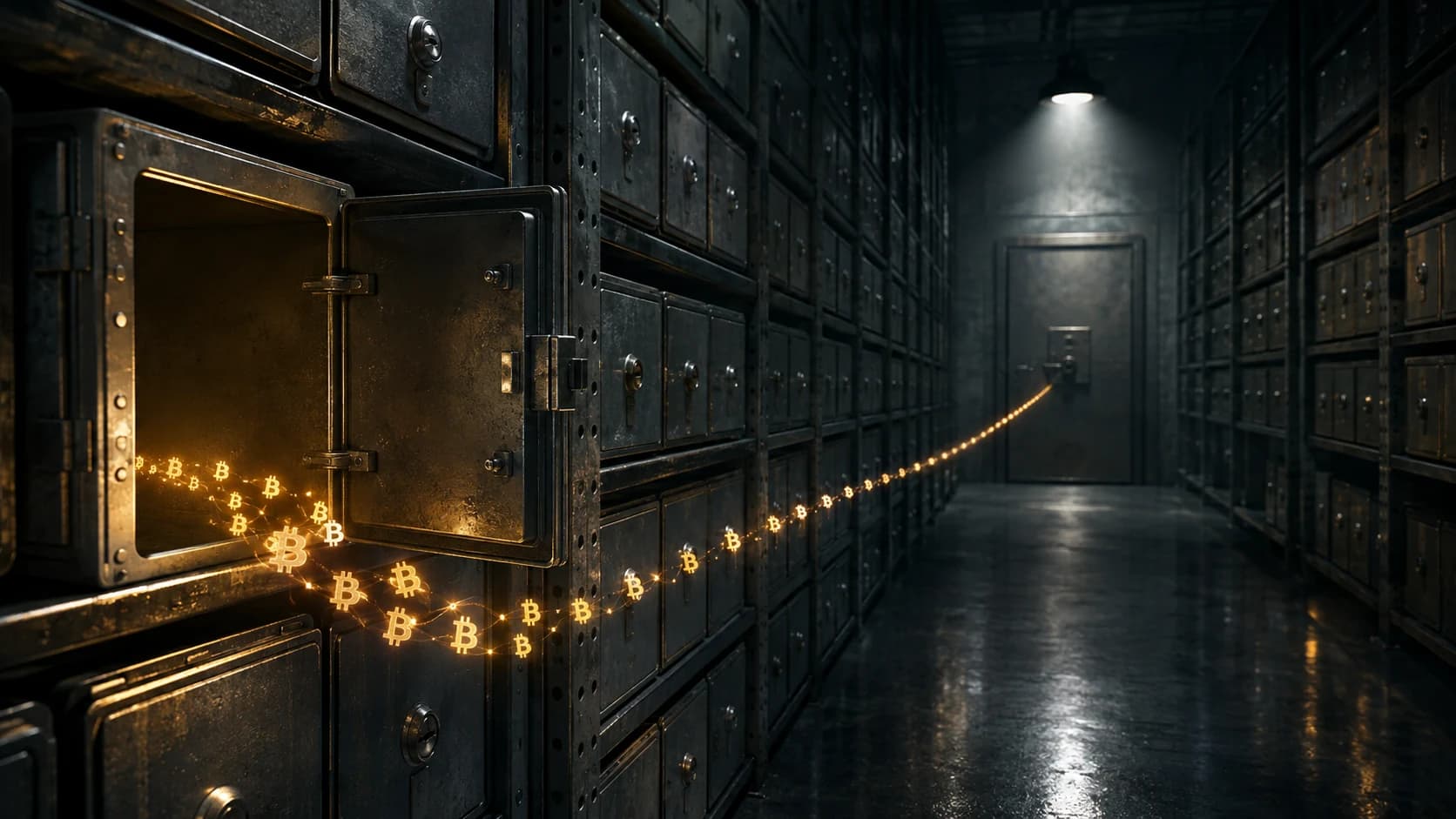
Ireland's Criminal Assets Bureau (CAB) has moved another 500 BTC on-chain, according to a report circulating on X early on August 29, 2026. There was no accompanying press release, no case reference, and no stated destination. At current prices, with Bitcoin trading around $77,820 as of August 29, 2026 (down 4.1% on the day per CoinMarketCap), that batch is worth roughly $39 million.
The transfer itself is not the mystery. State agencies move confiscated assets all the time. What draws attention is the pattern: a government body relocating a large tranche of seized Bitcoin quietly, on a ledger anyone can read, while saying nothing about why or where the coins are going.
A public ledger meets a private process
Seized fiat sits in a bank account no one outside the agency can inspect. Seized Bitcoin sits on a chain the entire world can watch block by block. That difference is the whole story here.
When the CAB moves coins, blockchain analysts and hobbyists can see the amount, the timing, and the receiving addresses within minutes. They cannot see the reason. The result is a running commentary of speculation that a treasury department shuffling euros would never attract. Is the state consolidating wallets for security? Preparing an auction? Migrating custody providers? On the public record, all of those look identical: coins leaving one address and landing in another.
For an agency, that transparency cuts both ways. It creates accountability, since the holdings can be independently verified rather than taken on trust. It also creates exposure, because adversaries can map the state's wallet clusters and time their attention around movements.
Government seizures are now a market force
Confiscated crypto has quietly become one of the larger overhangs in the market. Governments have accumulated meaningful Bitcoin positions through enforcement actions over the past decade, and how they handle those coins matters to everyone else holding the asset.
Two decisions define the impact. The first is custody: how a state secures keys to prevent theft or internal loss. The second is disposal: whether coins are auctioned in blocks, sold gradually on exchanges, or held. A poorly telegraphed sale can add supply pressure at an awkward moment; a transparent, scheduled auction usually does not. The CAB's silence here means observers cannot tell which path this 500 BTC is on, and that uncertainty is exactly what fuels the chatter.
Ireland has been an active jurisdiction for this kind of enforcement, and the CAB's mandate is specifically to strip proceeds from criminal activity. You can read more on how Irish rules treat crypto holders and where that leaves ordinary users. The broader point stands regardless of country: once the state holds your coins, the same custody questions that apply to any large holder apply to the government too.
The custody lesson for everyone else
Watching a state agency move seized Bitcoin is a useful reminder of a basic fact. Whoever holds the private keys controls the coins. Full stop.
For seized assets, that control has passed to the government by court order. For voluntary holders, the choice is yours, and it is the single most important decision in how you spend or store crypto. Custodial arrangements, where an exchange or card provider holds your keys, expose you to counterparty risk: if that entity is frozen, hacked, or wound down, your balance can go with it. The FTX and Wirecard collapses are the reference cases. Self-custody options, where you keep the keys and spend directly from your own wallet, remove that middleman risk, at the cost of putting full responsibility for key security on you.
The CAB episode also underlines why on-chain visibility is a feature and a liability at once. Anyone spending from a transparent wallet, including through a card linked to your own wallet, leaves a public trail. That is fine for most people, but it is worth understanding before assuming crypto payments are private. They are pseudonymous, not anonymous.
The part worth watching
For now, the facts are thin: a reported 500 BTC movement, no official statement, and a lot of open questions. It may resolve into something routine, a wallet migration or a pending auction announcement, or it may stay opaque, as government crypto handling often does.
The takeaway is not about Ireland specifically. It is that seized-asset custody has become part of the crypto market's plumbing, playing out on the same public ledger as everyone else's transactions. When a state moves $39 million in Bitcoin without a word, the coins are visible even when the reasoning is not. That gap between what the chain shows and what officials explain is the part worth watching.
Overview
Ireland's Criminal Assets Bureau moved roughly 500 BTC, worth about $39 million at Bitcoin's August 29, 2026 price near $77,820, with no public explanation of the reason or destination. The transfer highlights a structural feature of seized crypto: it moves on a public ledger everyone can watch, even when the process behind it stays private. Government-held coins now function as a real supply overhang, and how states custody and dispose of them affects the wider market. For individual holders, the episode is a reminder that key control decides ownership, that custodial platforms carry counterparty risk, and that on-chain activity is transparent by default.