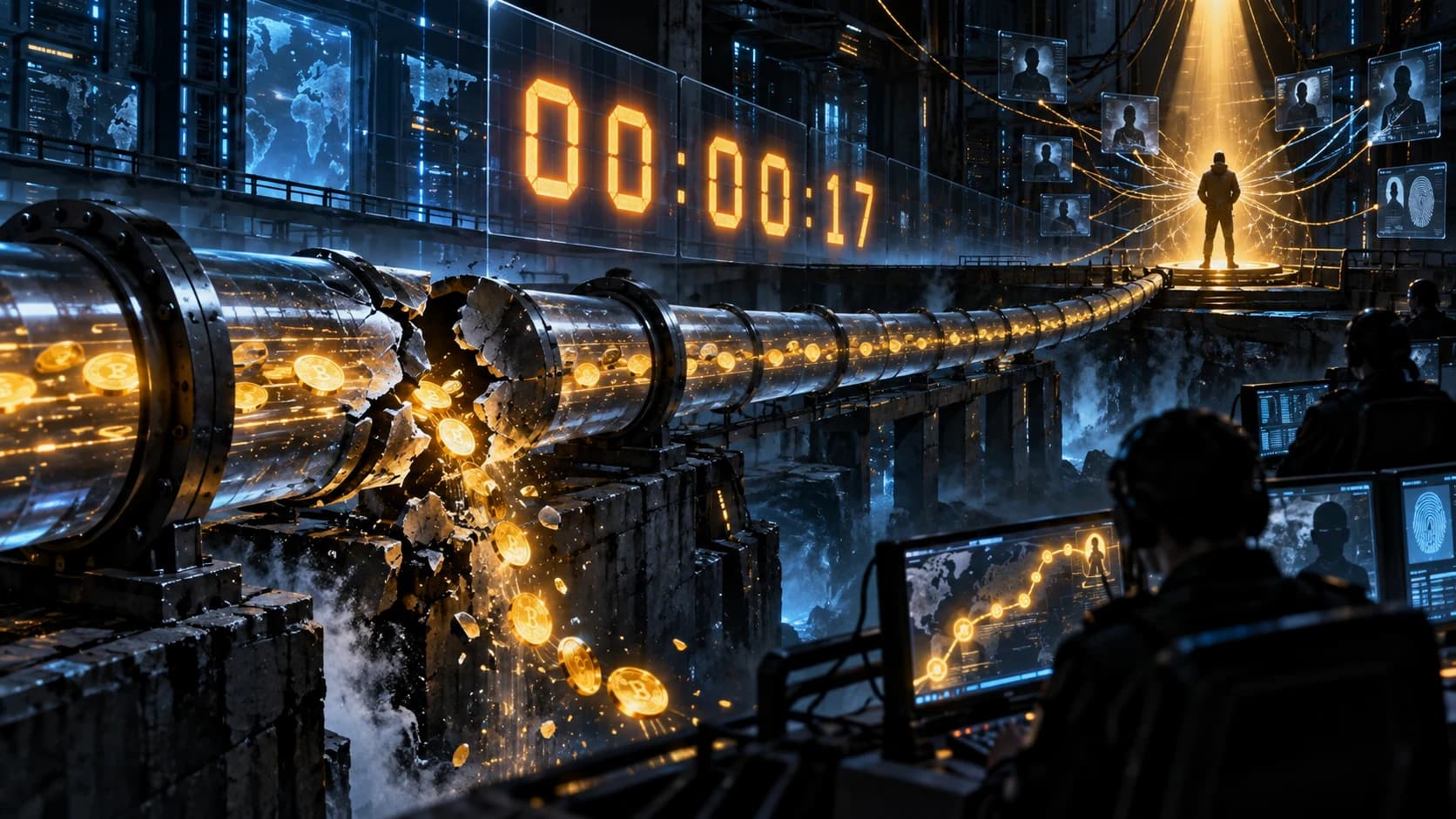
Harmony intends to roll its blockchain back to August 11, a move that would reverse more than 109,000 transactions, according to an August 18 alert from CoinMarketCap citing the project. A rollback of that scale is one of the most disruptive actions a chain can take, and it revives a question the industry keeps trying to settle: when is a confirmed transaction actually permanent?
The mechanics of a chain rollback
A rollback means the network discards blocks it had already produced and restarts from an earlier state, in this case the ledger as it stood on August 11. Every transaction recorded after that point, all 109,000-plus of them, gets erased from the canonical history. Trades, transfers, contract calls, and bridge movements made during that window would be treated as if they never happened.
This is different from a routine reorg, where a chain briefly competes between two valid block candidates and settles on one within seconds. Reversing a full week of activity is a deliberate, coordinated intervention by the people who run the network. It requires validators to agree to run software that abandons the current chain tip and adopts a rewritten one. On a decentralized network, getting that agreement is the hard part, and it is where most of the risk sits.
Days of settled activity, unwound
The headline number is 109,000 transactions, but the real damage is in what those transactions represent. Anyone who received funds after August 11 could see that balance vanish. Anyone who sold a token and moved the proceeds off-chain, to an exchange or into a bridge, creates an accounting mismatch the moment the rollback lands: the outbound transfer may have already cleared elsewhere, while the inbound leg gets deleted.
That asymmetry is the core hazard of any rollback. Value that left the reverted chain during the window does not automatically come back. Centralized venues that credited deposits from Harmony in that period now have to decide whether to claw them back, freeze them, or absorb the difference. Historically, the practical answer is that some users end up whole and some do not, depending on where their funds were sitting when the music stopped.
Harmony has not, in the initial alert, published a full technical post-mortem explaining the specific event that prompted the decision. Until that detail is public, the scope of who is affected and how compensation would work stays uncertain. Readers holding or transacting HARMONY-related assets should treat the current chain state as provisional and avoid moving funds until the team confirms the final plan.
The finality debate resurfaces
Blockchains are marketed on the promise of immutability: once a block is deep enough, its contents are supposed to be beyond reversal. A voluntary rollback is a direct exception to that promise, and it is not the first. Ethereum executed a rollback in 2016 to reverse the DAO hack, a decision so contested it split the network into Ethereum and Ethereum Classic. Harmony itself has been through a major incident before, when its Horizon bridge lost roughly $100 million to an exploit in 2022.
The tension is straightforward. A rollback can protect users from an event outside their control, but it does so by proving the ledger can be rewritten when enough operators agree it should be. For anyone relying on settlement being permanent, that is precisely the assurance a rollback undermines. The larger the reversal, the louder that contradiction becomes, and 109,000 transactions is large.
Settlement risk reaches everyday spenders
Most people using crypto for payments never think about chain-level finality until a moment like this. The link is worth making explicit. Cards and payment apps that let you spend from your own wallet settle transactions on-chain, and services that top up from stablecoin balances depend on those settlements being final. If the underlying chain can be rewound, a "completed" payment carries a tail risk that fiat rails do not.
In practice this is a reason many spending products favor high-throughput chains with strong validator sets and well-tested finality, and route around networks with a history of incidents. It also reinforces the case for holding funds you plan to spend on infrastructure you trust to be stable, rather than chasing yield on a chain that might reorganize its own past. Custodial products carry their own counterparty risk if a provider becomes insolvent, but chain-level rollbacks are a distinct hazard that even self-custody cannot fully insulate you from, because the ledger itself is the thing being changed.
For Harmony specifically, the coming days matter more than the announcement. A clean rollback with clear communication and a fair compensation path is recoverable. A messy one, with disputed balances and validators split over whether to follow the new chain, is how networks lose the last of their users.
Overview
Harmony plans to roll its blockchain back to August 11, reversing more than 109,000 transactions to undo an incident it has not yet fully detailed. The action would erase roughly a week of settled activity, creating potential mismatches for anyone who moved funds off-chain during that window. It also reopens the long-running argument over blockchain finality, echoing Ethereum's contested 2016 DAO rollback. Until Harmony publishes a full post-mortem and compensation plan, treat the current chain state as provisional and avoid moving affected funds. The episode is a reminder that "confirmed" and "final" are not always the same thing.