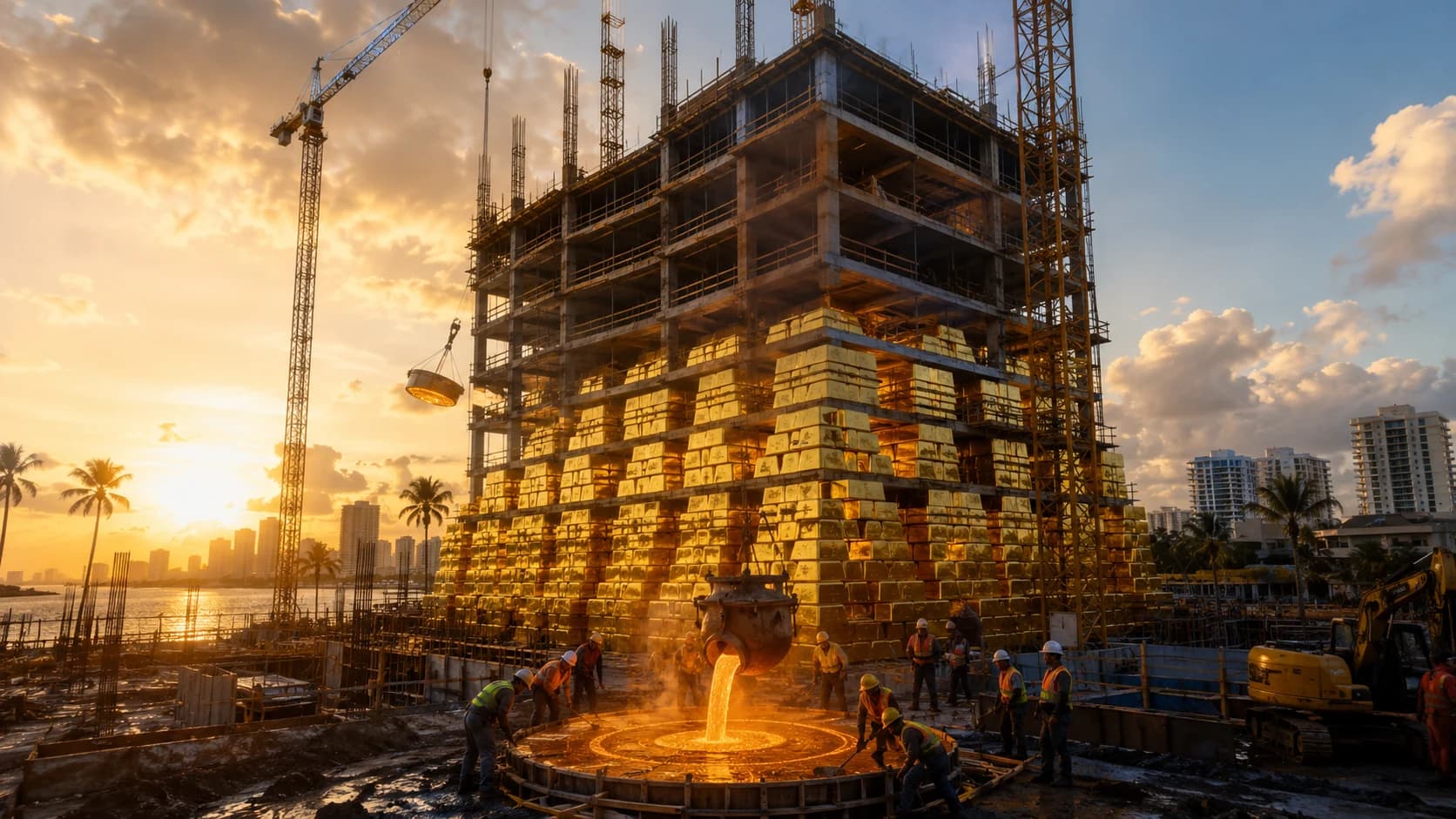
Real estate investor Grant Cardone said Cardone Capital is raising the Bitcoin allocation tied to its Fort Lauderdale project from 350 to 900 BTC, according to a Cointelegraph post citing his remarks. At Bitcoin's price of about $78,692 as of August 27, 2026, the extra 550 BTC represents roughly a $43 million increase in exposure.
The move fits a strategy Cardone has pushed for more than a year: buy income-producing apartment buildings, then layer Bitcoin on top of the rental cash flow so a single fund holds both a yielding physical asset and a fixed-supply digital one. The Fort Lauderdale property is one of several vehicles he has used to test that pairing.
The mechanics of a real-estate-plus-Bitcoin fund
Cardone's model blends two assets that behave differently. The apartments generate monthly rent, which covers operating costs and debt service. Some of that income, plus fresh investor capital, gets routed into Bitcoin held by the fund. The stated logic is that rents supply steady returns while Bitcoin supplies the upside if the currency debases over the fund's life.
Lifting the target from 350 to 900 BTC more than doubles the crypto weighting on this specific deal. That changes the fund's risk profile. A real estate vehicle with a modest Bitcoin sleeve is still fundamentally a property play. One with 900 BTC starts to look like a leveraged bet on Bitcoin wrapped in a real estate shell, where the direction of BTC can swamp the rental yield in any given quarter.
Timing against a jittery macro backdrop
The announcement lands during a volatile stretch for crypto. Bitcoin sat below $79,000 on August 27, down 0.3% over 24 hours but up 13.7% over the prior seven days, as traders started pricing in the possibility of a Federal Reserve rate hike. XRP led losses among large caps, off 2.6% on the day. The Fear and Greed Index read 80, or "extreme greed," the kind of reading that has historically preceded sharp pullbacks.
Adding exposure into extreme greed is a deliberate contrarian-sounding stance, though Cardone frames his Bitcoin buying as a multi-year hold rather than a trade. That framing matters. A fund that plans to hold BTC across a full real estate cycle can absorb a drawdown that would force a leveraged trader to sell. Investors weighing the deal should still separate the marketing from the math: the 900 BTC target is a target, not a completed purchase, and the dollar figure moves with every tick in the Bitcoin price.
Corporate and fund Bitcoin buying keeps widening
Cardone Capital is a smaller name than the treasury giants, but the pattern is the same one driving much of 2026's institutional demand. Public companies and private funds have kept adding Bitcoin as a balance-sheet asset, and some have built entire financing structures around it. BlackRock's digital assets head recently argued that the $40 trillion US debt load strengthens Bitcoin's long-term case, the exact thesis Cardone invokes when he talks about protecting real estate returns from currency debasement.
For everyday holders, the read-through is narrower. A developer routing rent into Bitcoin does not change how you spend or custody your own coins. If anything, it underscores the split between holding Bitcoin as a long-term reserve and using crypto for daily payments. Those are different jobs. People who want spending access without touching their long-term stack tend to reach for a crypto card funded from a separate wallet, or a stablecoin-based card that avoids selling BTC at the register. Self-custody matters here too: a fund holding your Bitcoin is a counterparty, and cards that spend from your own wallet remove that layer entirely.
There is also a jurisdiction angle. The project sits in the United States, where fund-level Bitcoin holdings face specific tax and disclosure treatment that differs from how an individual reports the same asset. That gap is one reason institutional buyers structure exposure through funds rather than personal wallets.
Overview
Grant Cardone said Cardone Capital is increasing the Bitcoin target on its Fort Lauderdale real estate fund from 350 to 900 BTC, a roughly $43 million jump at a BTC price near $78,700 on August 27, 2026. The plan pairs apartment rental income with a large Bitcoin position, more than doubling the crypto weighting on the deal. It arrives with Bitcoin up 13.7% on the week but the Fear and Greed Index at an "extreme greed" reading of 80, and with markets weighing a possible Fed rate hike. The target is a stated goal, not a settled purchase, and its dollar value will track the Bitcoin price from here.