Fold, the publicly traded Bitcoin rewards company, reported $9 million in Q4 revenue, an 8% year-over-year increase, while CEO Will Reeves made his boldest claim yet: Bitcoin rewards will overtake airline miles as the preferred consumer reward in the United States.
The earnings, reported on March 18, paint a company caught between growing product traction and a brutal stock performance that has erased 84% of its value over the past 12 months.
2,000 New Customers, 700 Fewer Bitcoin
Fold added 2,000 customers during Q4 and processed $215 million in transaction volume, a modest 3% decline year-over-year. The company posted a $6 million operating loss for the quarter and a $69.6 million net loss for full-year 2025.
The balance sheet tells a more complicated story. Fold held 1,527 BTC at the end of 2025 but only 827 BTC as of March 17, 2026. That 700 BTC reduction, worth roughly $50 million at today's prices (BTC at $71,179 as of March 19, 2026), came alongside the payoff of two convertible debt instruments that Reeves described as eliminating a "structural overhang."
Translation: Fold sold Bitcoin to pay off debt. Whether that was a strategic deleveraging or a forced hand depends on how you read the $69.6 million annual loss sitting alongside a $9 million quarterly revenue run rate.
The Visa Credit Card and Steak 'n Shake
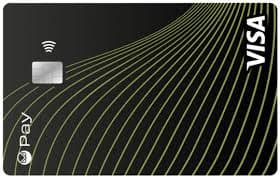
Fold launched two products that form the basis of its 2026 bet. The Fold Bitcoin Rewards Credit Card, powered by Visa and Stripe, offers Bitcoin cashback on everyday spending. Fold for Business lets companies include Bitcoin in payroll, bonuses, and corporate reward programs.
The most concrete enterprise win so far: Steak 'n Shake, which now accepts Bitcoin payments and pays employee bonuses in BTC through Fold's infrastructure.
Reeves framed 2026 as a scaling year focused on "customer acquisition, engagement, cross-sell, and retention" rather than new product launches. He also noted that "better risk and fraud controls" need to come before mass adoption can accelerate, an unusually cautious statement from a crypto CEO in earnings mode.
The Air Miles Argument
Reeves's claim that Bitcoin rewards will overtake airline miles deserves scrutiny. The US loyalty market is massive. American Airlines AAdvantage alone has over 100 million members. Delta SkyMiles, United MileagePlus, and hotel programs collectively issue hundreds of billions of points annually.
Bitcoin rewards have one structural advantage: they appreciate. A mile earned in 2020 is worth the same or less today after repeated devaluations. A Bitcoin earned in 2020 at $10,000 is worth roughly $71,000 now. That asymmetry is the entire thesis.
The problem is consistency. Cashback rewards paid in Bitcoin carry the same volatility risk that makes them attractive. A user who earned BTC at $69,000 in late 2024 and checked their balance in the sub-$60,000 dip of early 2025 experienced the opposite of the air miles pitch. Traditional points do not drop 15% in a week.
Several crypto card issuers already compete in this space. Coinbase offers up to 4% back in crypto on its Visa card. Crypto.com runs a tiered staking-based rewards system. Gemini pays up to 4% in over 50 cryptocurrencies through its Mastercard. Fold's differentiator is its Bitcoin-only focus and its public company status (ticker: FLD on Nasdaq), which theoretically gives it access to capital markets that private competitors cannot tap.
The Stock Price Reality Check
FLD shares surged 13.4% to $1.27 immediately after the earnings release, then gave back most of the gain, settling at $1.07, down 4.46%. The stock is down 59% year-to-date in 2026.
For context, Fold went public in early 2025 at roughly $6.50 per share. At $1.07, the market is pricing in serious doubt about whether the company can reach profitability before running out of runway. The 700 BTC sell-down between year-end and March suggests the cash position needed reinforcing.
With BTC at $71,179 and a Fear and Greed Index at 33 (Fear) as of March 19, Fold's remaining 827 BTC treasury is worth approximately $59 million. That provides a cushion, but every quarter of $6 million operating losses eats into it.
What Fold Needs to Prove
The Bitcoin-rewards-beat-air-miles thesis is not wrong on the math. It is early on the adoption curve. Fold's Q4 shows incremental progress: revenue up, debt retired, new products shipped. But 2,000 new customers per quarter against a $69.6 million annual loss is not yet a growth story. It is a survival story with a compelling pitch deck.
If BTC continues its recovery from the February lows, Fold's treasury appreciates and the reward proposition strengthens. If BTC drops below $60,000 again, the company faces both a balance sheet hit and a narrative problem: it is harder to sell Bitcoin rewards when your own Bitcoin holdings are underwater.
Reeves is betting that time is on his side. The loyalty industry took decades to entrench airline miles as the default. Bitcoin rewards have been around for less than five years. The question is whether Fold's cash runway matches the patience required.
Overview
Fold reported $9 million in Q4 revenue (up 8% YoY), added 2,000 customers, and launched a Visa-powered Bitcoin rewards credit card. CEO Will Reeves claims Bitcoin rewards will surpass airline miles as the top US consumer reward. The company posted a $69.6 million full-year net loss, sold 700 BTC to retire convertible debt, and its stock has fallen 84% over twelve months to $1.07. The thesis is structurally sound. The runway to prove it is the risk.
Recommended Reading
- Crypto Cards Roundup March 17 - Mastercard Signs 85 Partners, RedotPay Lands Two Licenses, MetaMask Goes Polymarket
- Mastercard Pays 1.8 Billion Dollars for BVNK as Card Networks Race to Own Stablecoin Rails
- Bitcoin ETFs Pull In 963 Million Dollars in Six Days, the Longest Inflow Streak Since October