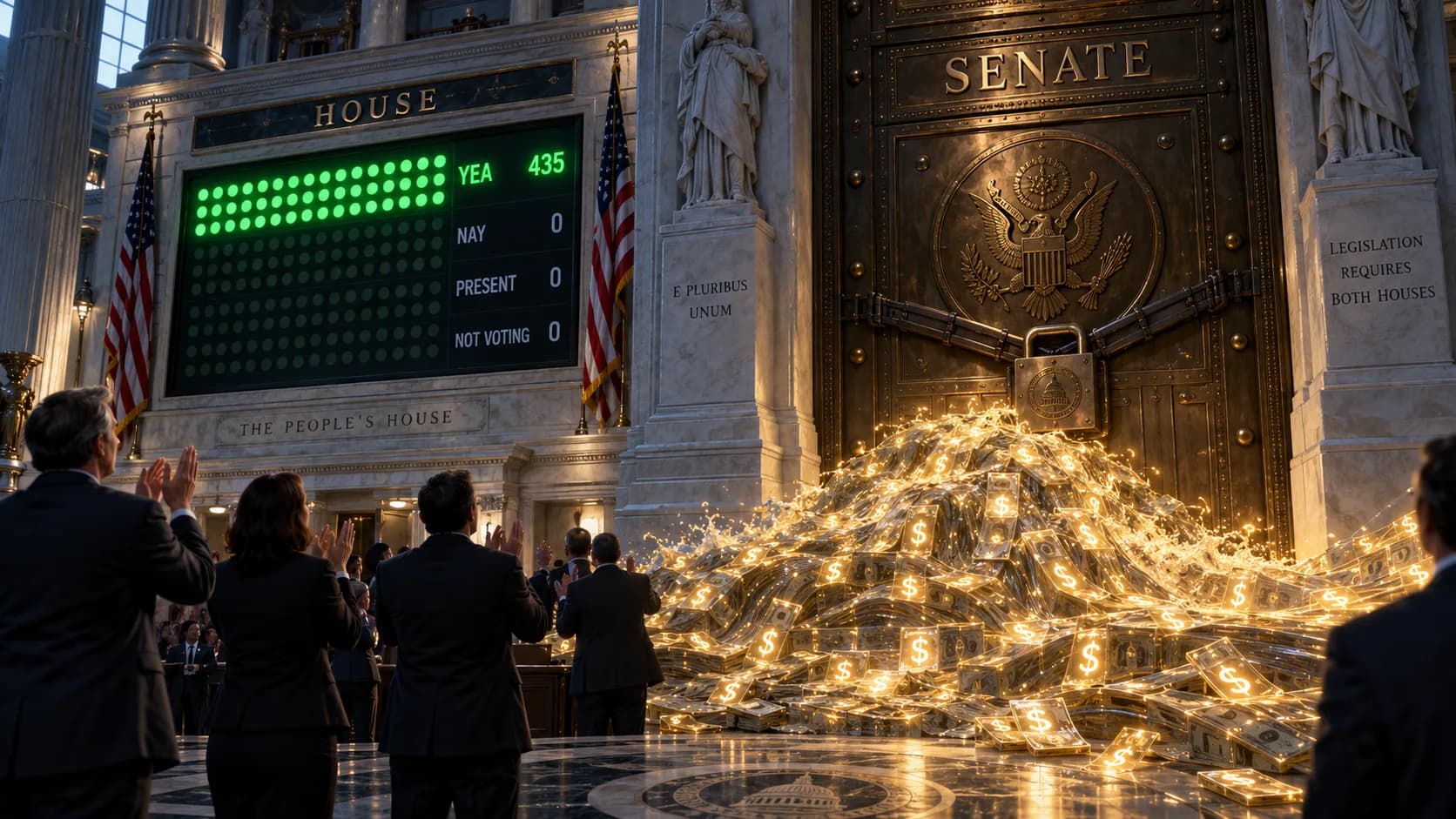
Fairshake, the crypto industry's largest super PAC, is committing $1 million each to six House incumbents, according to a report shared by Cointelegraph on October 6, 2026. Every one of the 32 candidates the PAC is backing this cycle voted for the CLARITY Act, the market-structure bill that cleared the House and now sits unmoved in the Senate.
The spending is a straightforward signal. Fairshake is rewarding the lawmakers who delivered a House majority for crypto's priority legislation, and it is doing so while the bill's fate is still undecided on the other side of the Capitol.
The money behind the slate
Six incumbents receiving $1 million apiece accounts for $6 million of direct support. That sits inside a broader slate of 32 candidates the PAC has endorsed, with the common thread being a recorded vote for the CLARITY Act.
Fairshake has been the dominant crypto spender in recent US election cycles, backed by firms across the industry that want clearer rules for digital assets. Concentrating seven figures on a single incumbent is a message to both the recipient and to any challenger weighing a run: crossing the industry on market-structure policy carries a cost, and voting with it brings resources.
The PAC's approach has been consistent. It does not frame its giving around party. It frames it around the vote. That keeps the money legible to lawmakers on both sides, since the only qualifying test here is how a member handled the CLARITY Act.
A bill the House passed and the Senate parked
The CLARITY Act is the House's answer to a question that has dogged US crypto for years: which regulator owns which token. The bill draws lines between assets treated as securities and those treated as commodities, and it assigns oversight accordingly. For exchanges, issuers, and the firms building payment and card products on top of crypto rails in the United States, that distinction decides who they answer to and how they register.
Passing the House was the easier half. The bill is now stuck in the Senate, where market-structure legislation has repeatedly slowed, and where the calendar and competing priorities make timing uncertain. Fairshake's spending does not change the Senate math directly. It protects the House coalition that produced the bill, so that if the Senate acts, the votes to finish the job on the House side remain in place.
Spending as a durability bet
Super PAC money this far out is less about a single race and more about locking in a policy coalition. By putting real money behind members who already voted the industry's way, Fairshake is betting those seats stay crypto-friendly through the next Congress.
There is a counter-read worth stating plainly. Large, visible industry spending can become a talking point for opponents who argue that crypto money is buying legislation. That risk is the trade-off the PAC is accepting. Its calculation is that a seated, reliable vote is worth more than the optics cost, especially while the most important bill for the sector is unfinished.
For the industry, the upside is concrete only if the Senate moves. Until then, the $6 million buys insurance on the House side rather than a new outcome.
Nothing changes on the ground until the Senate acts
Regulatory clarity is not an abstraction for people who hold, spend, or build on crypto. The CLARITY Act's security-versus-commodity framework shapes which products US firms can offer and under what registration. Card issuers, stablecoin operators, and exchanges have all cited the uncertainty as a reason to move cautiously in the US market or to prioritize other jurisdictions.
A bill that stays parked in the Senate means that caution continues. Fairshake's spending signals that the industry still expects the legislation to advance eventually, and it is paying now to keep the votes it needs when that window opens. For a US user watching the market-structure fight, the practical takeaway is simple: the House coalition is being reinforced, but nothing changes on the ground until the Senate takes it up.
Overview
Fairshake, crypto's largest super PAC, is directing $1 million each to six House incumbents, part of a 32-candidate slate united by a vote for the CLARITY Act. The bill passed the House and stalled in the Senate. The $6 million is a durability play: it protects the House votes behind the industry's top legislative priority rather than altering the Senate outcome. The spending matters to crypto users only to the extent it helps a market-structure bill eventually clear the Senate and settle who regulates what in the US.