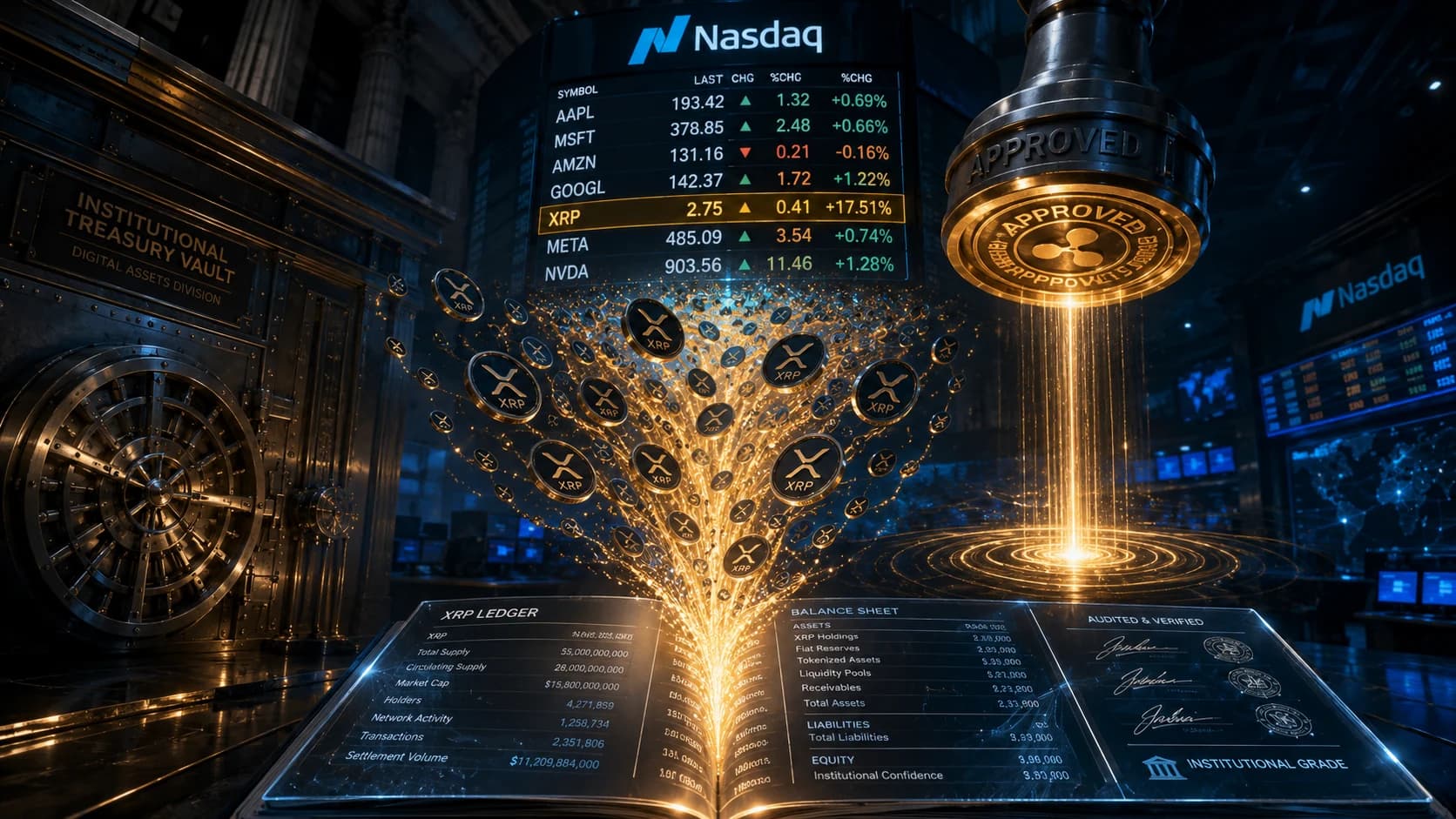
The US Securities and Exchange Commission has cleared Evernorth's registration to list on Nasdaq as an XRP treasury company, according to a CoinDesk report published August 28, 2026. The company will trade under the ticker XRPN, making it one of the first pure-play public vehicles built around holding XRP as its primary reserve asset.
The clearance is a registration milestone, not a token endorsement. What it signals is that a company whose core strategy is accumulating XRP can now access public equity markets through the same disclosure framework used by any other Nasdaq issuer. For a token that spent years defined by its legal fight with the same regulator, that is a notable turn.
From courtroom to balance sheet
XRP's relationship with the SEC has been adversarial for most of the past six years. The agency's case against Ripple over XRP sales shaped how the entire token was perceived by US institutions, and for a long stretch it kept regulated products at arm's length. An SEC sign-off on a company built specifically to hold XRP is a different posture. It treats XRP as an asset a public company can organize its treasury around and report on to shareholders.
Evernorth follows a template that Bitcoin and Ether have already normalized. Public companies raise capital, convert it into a target crypto asset, and let their share price track the value of the underlying holdings plus whatever yield or operating strategy management layers on top. Investors who want exposure without holding the token directly buy the stock. XRP now joins that structure with a dedicated Nasdaq name.
The treasury-company model, applied to XRP
The corporate crypto treasury has become one of 2026's defining trades. Strategy pioneered it with Bitcoin, Ether treasury vehicles multiplied through the year, and Solana treasuries followed. Each one converts a listed equity into a leveraged wrapper on a single token. XRPN extends the pattern to the fourth-largest crypto asset by market cap.
XRP traded at $1.43 as of August 28, 2026, down 0.9% on the day but up 4.8% over the prior week, per CoinMarketCap data. That is a calmer backdrop than the double-digit swings surrounding some treasury launches, and the broader market sat in "extreme greed" with a Fear and Greed reading of 81. A treasury vehicle listing into that sentiment inherits both the upside and the risk of a market priced for optimism.
The model carries a specific hazard worth stating plainly. A single-asset treasury company is a concentrated bet. If XRP falls, the equity typically falls harder, because these vehicles often trade at a premium to net asset value on the way up and a discount on the way down. Shareholders are exposed to the token's volatility and to the company's own financing decisions, not just to XRP itself.
Institutional access widens
The clearance sits inside a wider run of XRP-related market structure. Spot XRP products, treasury companies, and custody arrangements have all advanced through 2026 as US regulators moved from blanket caution toward case-by-case approval. Each new wrapper gives a different type of allocator a compliant way in: an ETF for a retirement account, a treasury equity for someone who wants operating leverage, direct custody for a fund that can hold the token itself.
For everyday users, the practical takeaway is narrower. A treasury company does not change how you spend or hold XRP day to day. If you use XRP for payments or move it through a card that settles in stablecoins, XRPN is a signal about institutional demand, not a product you interact with. It matters most as evidence that the regulatory door for XRP has moved, which tends to precede more consumer-facing products reaching regulated markets. Anyone weighing where XRP fits alongside stablecoin spending options should treat this as a demand signal rather than a spending upgrade.
Overview
The SEC has cleared Evernorth to list on Nasdaq as an XRP treasury company under the ticker XRPN, per CoinDesk's August 28, 2026 report. It applies the Bitcoin and Ether treasury-company template to XRP, giving public-market investors an equity wrapper tied to XRP holdings. The clearance is a registration step and a regulatory posture shift, not a guarantee of performance. XRP traded at $1.43 as of August 28, 2026, and the concentrated single-asset structure means XRPN's equity will likely amplify both XRP's gains and its losses.