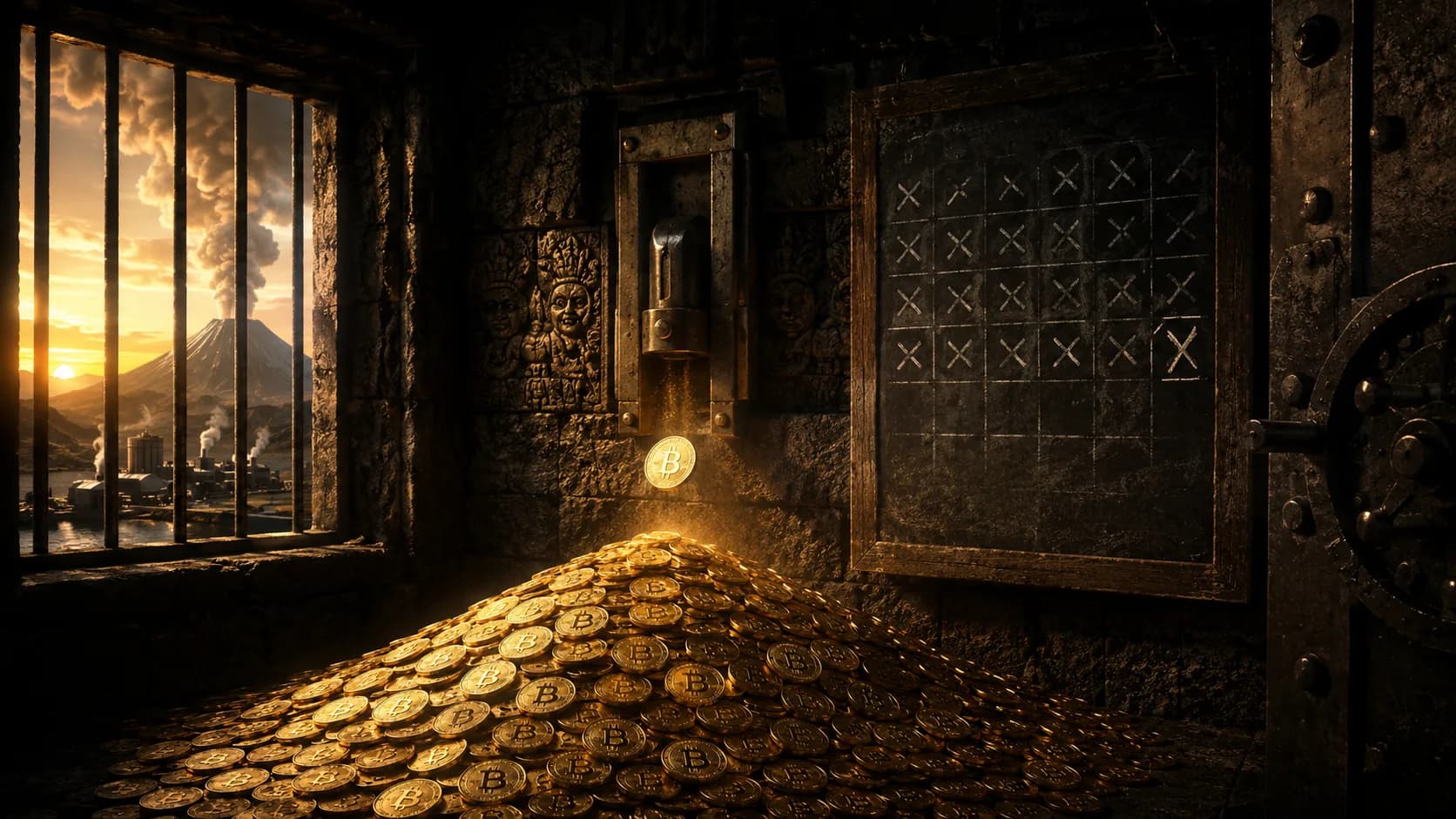
El Salvador's public Bitcoin address now holds 7,751.37 BTC after another daily purchase, according to a figure shared by Cointelegraph on August 23, 2026. At the current price of about $77,261 per coin, the treasury is worth roughly $599 million as of that date. Bitcoin is down 1.1% over the past 24 hours but up 22.7% across the week, so the reported valuation moves with every candle.
The milestone itself is modest. One coin at a time does not shift the market. The reason it keeps drawing attention is the consistency, and the fact that the buying has continued through a period when the government was supposed to have stopped.
A purchase cadence that outlasted the IMF deal
El Salvador became the first country to make Bitcoin legal tender in September 2021, then spent the following years adding to a national reserve and publishing the wallet for anyone to track. In late 2024, the government reached a $1.4 billion loan agreement with the International Monetary Fund. Part of that deal called for scaling back the public sector's direct Bitcoin activity, including a commitment that the state would stop accumulating coins.
The on-chain record has told a different story. President Nayib Bukele and the national Bitcoin Office have continued to report roughly one coin added per day, framing it as a long-run savings policy rather than a trade. The IMF has questioned whether the reported buys square with the loan terms, and the government has argued its accounting is consistent with the agreement. That tension has not been resolved in public, which is part of why each new total gets picked up.
For readers tracking the numbers, the takeaway is narrow: the wallet keeps growing at a predictable rate, and no single day's purchase is large enough to explain a price move. This is accumulation as a stated habit, not a market event.
Dollar-cost averaging at the level of a state
Buying a fixed amount on a fixed schedule regardless of price is dollar-cost averaging, a strategy retail investors use to smooth out volatility. El Salvador has turned it into fiscal policy. The average cost basis across years of purchases sits well below the current price after Bitcoin's recent run, which leaves the position in profit on paper. That can reverse quickly. Bitcoin fell hard in past cycles, and a treasury that marks its reserve to market takes the drawdowns along with the gains.
The country's setup has some features most buyers lack. It mines Bitcoin using geothermal energy from its volcanoes, and it routes purchases through a state office rather than a custodian, so the coins sit in wallets the government controls directly. Holding your own keys removes the counterparty risk that froze customer balances at failed platforms like FTX, though it puts the full weight of key security on the holder.
Nation-state buyers stay a small club
El Salvador remains the clearest case of a government treating Bitcoin as a reserve asset it accumulates on purpose. Others have exposure through seizures or pilot programs, but the daily-buy policy with a public wallet is still close to unique. The broader institutional bid has come from corporate treasuries and spot ETFs rather than sovereigns, and those flows dwarf a single coin a day.
Bitcoin's week-long climb of nearly 23% has coincided with heavy short liquidations and renewed treasury-driven demand elsewhere in the market, so El Salvador's steady buying is one small input among much larger ones. What it offers is a clean, verifiable data point: a state that said it would slow down, and whose wallet says it did not.
For anyone in the region who wants exposure without running a mining operation, the practical route is the same as anywhere else. A crypto card that spends from a stablecoin or Bitcoin balance turns holdings into everyday purchasing power, and coverage for Salvadoran users has widened as more issuers add Latin American markets. Cards that let you spend from your own wallet mirror the custody model the government uses, keeping the coins under your control until the moment of payment.
Overview
El Salvador's Bitcoin reserve reached 7,751.37 BTC, worth about $599 million as of August 23, 2026, after another daily purchase. The buying has continued despite an IMF loan condition that called for the state to stop accumulating, and the public wallet lets anyone verify the running total. No single day's buy moves the market; the story is the consistency and the gap between the loan terms and the on-chain record. Bitcoin's 22.7% weekly gain makes the position look strong today, but a treasury marked to market carries the downside of the next cycle too.