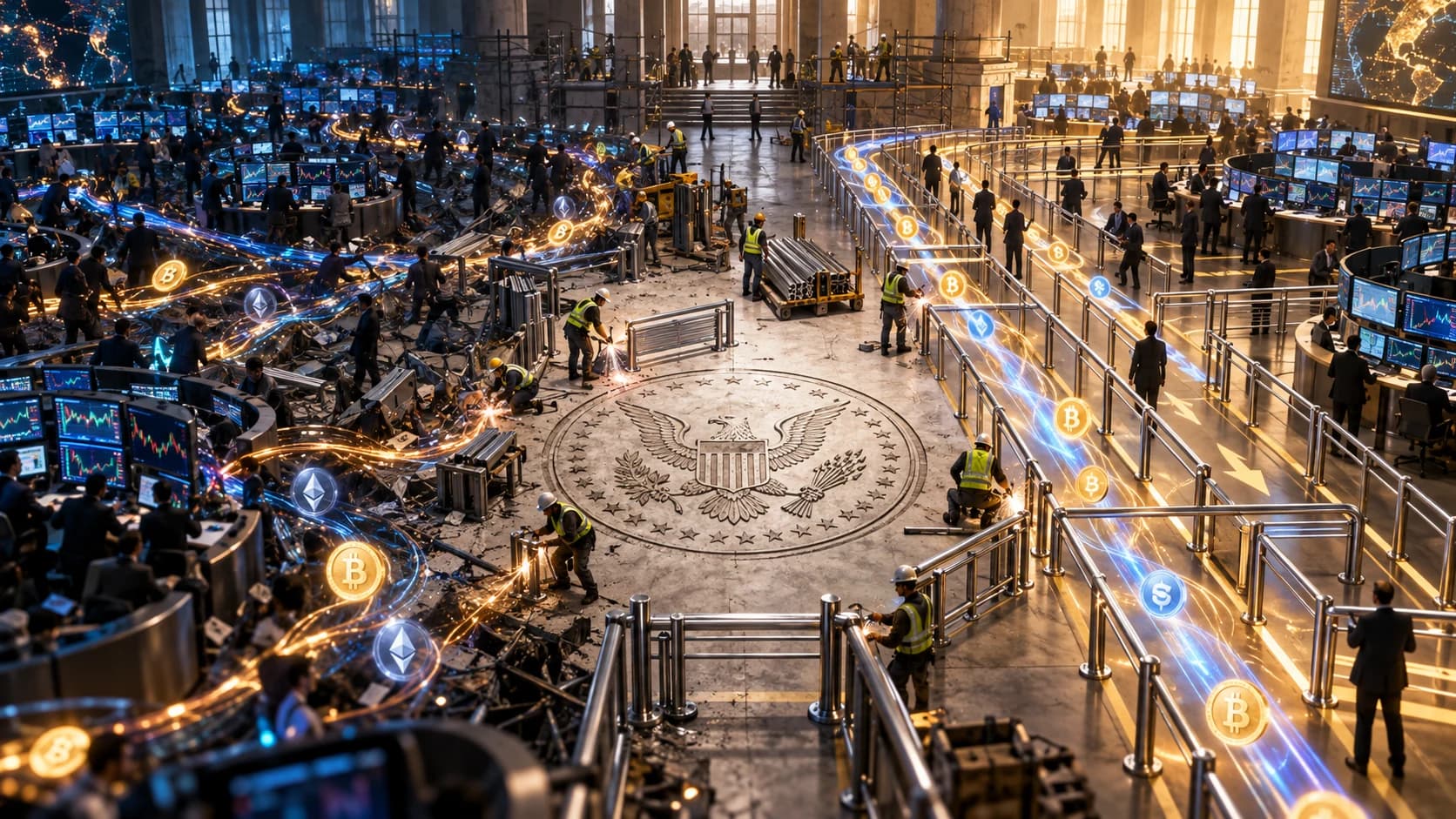
Dinari has partnered with Circle to offer tokenized US stock trading to eligible American investors, with 724 companies available to trade onchain and settled in USDC. Cointelegraph and CoinDesk both reported the launch on August 4, 2026, citing Dinari's announcement.
The detail that matters is the audience. Tokenized equities have existed for a while, but most issuers explicitly blocked US persons to avoid securities exposure. Dinari is pitching this specifically at American investors, which is a different regulatory posture than the offshore-only tokenization products that came before it.
The mechanics of the launch
Dinari issues tokens it calls dShares that track individual US-listed companies. The Circle partnership plugs USDC in as the settlement asset, so a trade moves stablecoin in one direction and a tokenized share in the other, both onchain. The reported roster covers 724 companies, which is broad enough to include most of the large and mid-cap names a retail investor would search for.
Circle's role is the piece worth reading closely. USDC gives the product a regulated dollar rail rather than an algorithmic or lightly-backed stablecoin, and it lets settlement happen without touching the traditional banking cutoff windows. A tokenized share bought at 2am settles the same way it would at 2pm, which is one of the practical arguments for putting equities onchain in the first place.
The US framing is the story
Platforms like Robinhood and several European brokers have pushed tokenized US stocks to non-US users this year, and the products drew scrutiny for tracking-error and custody questions. What separated them from Dinari's launch is jurisdiction: they were built for people outside the United States. Offering the same category to US investors puts the product directly under domestic securities law, and that is a line most tokenization projects have refused to cross.
That timing is not an accident. The regulatory backdrop has shifted through 2026, with the SEC and Congress both working through how digital assets fit existing rules. Our coverage of the CLARITY Act's stalled Senate vote tracks the legislative side of that debate, and the eventual shape of those rules will decide how much room products like this have to operate. Dinari launching to US investors now signals confidence that the ground has moved, even before the statute is settled.
Composability, and its caveats, for holders
The appeal for an onchain investor is composability. A tokenized share can sit in the same wallet as stablecoins and other assets, move on the same rails, and in theory serve as collateral or settle instantly against other onchain positions. That is the same argument driving the broader real-world asset push. Tokenized equity holders recently hit a record 759,000 addresses, up sharply this year, which shows the demand was building well ahead of this US-facing launch.
There are real caveats. A dShare is a claim that tracks a stock, not the registered share itself, so holders should understand what backs the token, who custodies the underlying, and how redemption works before treating it like a brokerage position. Corporate actions, dividends, and voting rights do not automatically carry over to a token unless the issuer builds and honors that plumbing. Onchain settlement removes some frictions and adds others, including smart-contract risk and the need to hold a compatible wallet.
The Circle angle and the payments overlap
Circle keeps showing up at the center of these launches because USDC has become the default dollar settlement layer for tokenized assets. The same rail that clears a stablecoin payment can clear a tokenized-stock trade, which blurs the line between spending, saving, and investing in a single wallet. For anyone already holding stablecoins to spend through a stablecoin-linked card, the idea of buying a tokenized S&P name with the same balance is a short conceptual jump.
This is the second major Circle-adjacent story in a week, following Mastercard's $1.8 billion BVNK acquisition to bring stablecoin settlement in-house. The pattern is consistent: dollar stablecoins are moving from a crypto-native trading tool toward general financial infrastructure, and equities are the latest asset class to get wired into that rail.
Overview
Dinari launched tokenized trading of 724 US companies for eligible American investors on August 4, 2026, using Circle's USDC as the settlement asset. The technical setup is not new, but the audience is: this is one of the few tokenized-equity products aimed squarely at US persons rather than offshore users. As of publication, the practical questions for anyone considering it are what backs each token, how corporate actions and redemption are handled, and how the eventual US regulatory framework treats these instruments. The market reaction was muted, with BTC at $63,885 and ETH at $1,867 as of August 4, 2026, and a Fear & Greed reading of 37.