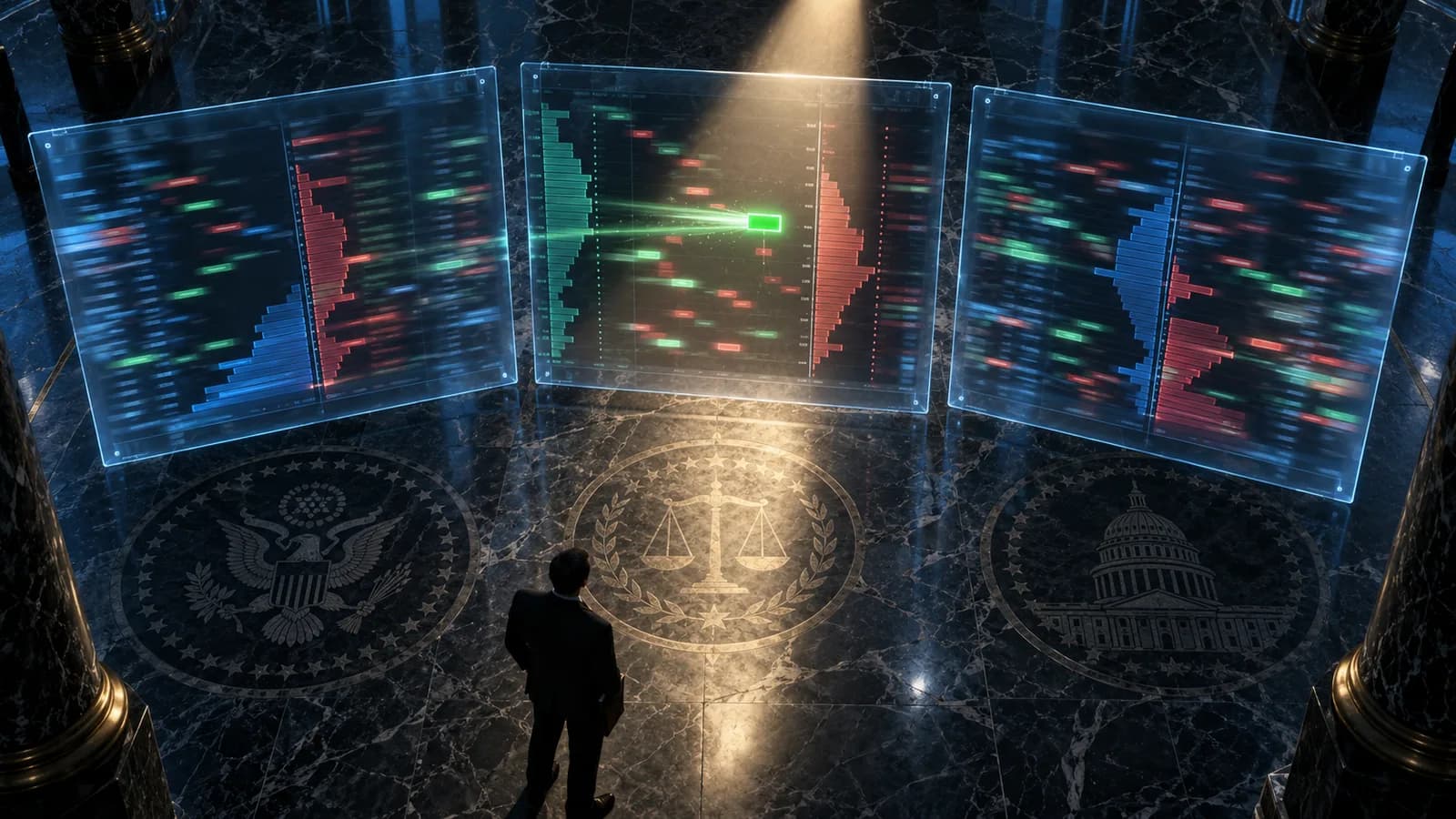
The Commodity Futures Trading Commission has opened three previously unreported investigations into suspected insider trading on Polymarket, according to a report from Cointelegraph published September 12, 2026. The probes reportedly focus on trades placed in markets tied to Biden-era pardons, the Iran conflict, and Google.
The detail that matters here is not the existence of one inquiry but the count. Three simultaneous investigations into a single platform points to a pattern regulators are tracking, rather than a one-off complaint. It also lands while the CFTC is deciding how much of the prediction-market category belongs under its jurisdiction at all.
Three markets, one question
Each of the three flagged markets shares a common trait: the outcome was knowable, or partially knowable, to a small group of people before it became public. Pardons are decided inside a closed circle. Military and geopolitical decisions around the Iran conflict move through classified channels. Corporate outcomes involving Google can hinge on information held by insiders, advisers, or counterparties well before any announcement.
Insider trading enforcement rests on that exact asymmetry. If a trader bought a "Yes" position at long odds shortly before a non-public outcome resolved in their favor, the trade pattern itself becomes the evidence. On a public blockchain-settled venue, those patterns are unusually legible. Every position, timestamp, and wallet is recorded, which cuts both ways: it exposes suspicious activity to investigators as clearly as it once exposed it to the crowd copying "smart money" wallets.
Cointelegraph is the single source for this report at the time of writing, and the CFTC has not published the investigations. Treat the specifics as reported rather than confirmed by the agency until official filings or statements appear.
The jurisdiction fight underneath
Prediction markets have spent the past two years arguing that event contracts are a legitimate derivatives category the CFTC should regulate as such. That argument cuts both ways. Regulatory legitimacy comes bundled with regulatory enforcement, and insider trading rules are among the sharpest tools the CFTC carries.
The agency has been circling the sector on multiple fronts. It has weighed how election and event contracts should be treated, and it has scrutinized how platforms handle information-sensitive markets. Opening insider trading probes moves the conversation from "should these markets exist" to "who is allowed to trade in them and on what information." That is a meaningful escalation for a category that markets itself on open, permissionless access.
For the platforms, the outcome is a double bind. Fighting for recognition as regulated derivatives venues invites exactly this kind of oversight. Rejecting that framing risks being pushed offshore or shut out of the US entirely.
Transparency cuts both ways for crypto users
Polymarket settles in stablecoins and runs on public rails, which is precisely why this case is a crypto story and not just a gambling-regulation footnote. The same transparency that lets anyone audit on-chain flows is now an enforcement asset. Anyone who has moved funds onto a prediction venue, or who spends and settles through stablecoin rails, is operating in an environment where the audit trail is permanent and public by design.
There is a broader signal for the United States market. Regulators are increasingly comfortable reading on-chain data directly, without waiting for a platform to hand over records. That precedent extends past prediction markets to any on-chain activity a US agency decides to examine, from DeFi positions to wallet-to-wallet transfers. The lesson is not that transparency is a trap, but that it is symmetric. It protects users and exposes them in equal measure.
The wider prediction-market sector also faces a credibility test. These venues sell themselves on the idea that crowd-sourced odds beat pundits because participants have "skin in the game." If a share of the sharpest bets turn out to be informed by non-public information rather than superior forecasting, the accuracy pitch weakens. Confirmed insider activity would undercut the central claim these platforms make about why their prices are worth trusting.
The near-term path runs through the CFTC
The near-term path runs through the CFTC. If the investigations produce enforcement actions, expect subpoenas for wallet-linked identity data, cooperation demands on the platform, and a public accounting of specific trades. If they quietly close, the episode still sets a marker: prediction markets are now inside the enforcement perimeter, whatever their final legal classification.
For now, the concrete fact is narrow and worth holding onto. Three investigations, three information-sensitive markets, one platform, and a regulator that increasingly reads the chain itself. The rest is analysis until the CFTC speaks.
Overview
The CFTC has reportedly opened three insider trading investigations into Polymarket, targeting bets on Biden pardons, the Iran conflict, and Google, per a September 12, 2026 Cointelegraph report. The count matters more than any single probe: it signals pattern-level scrutiny of prediction markets. The case highlights a defining feature of on-chain venues, where public settlement data serves both users and investigators. It also raises the cost of the sector's push for regulated-derivatives status, since that recognition carries insider trading enforcement with it. The agency has not confirmed the probes, so specifics remain reported rather than official.