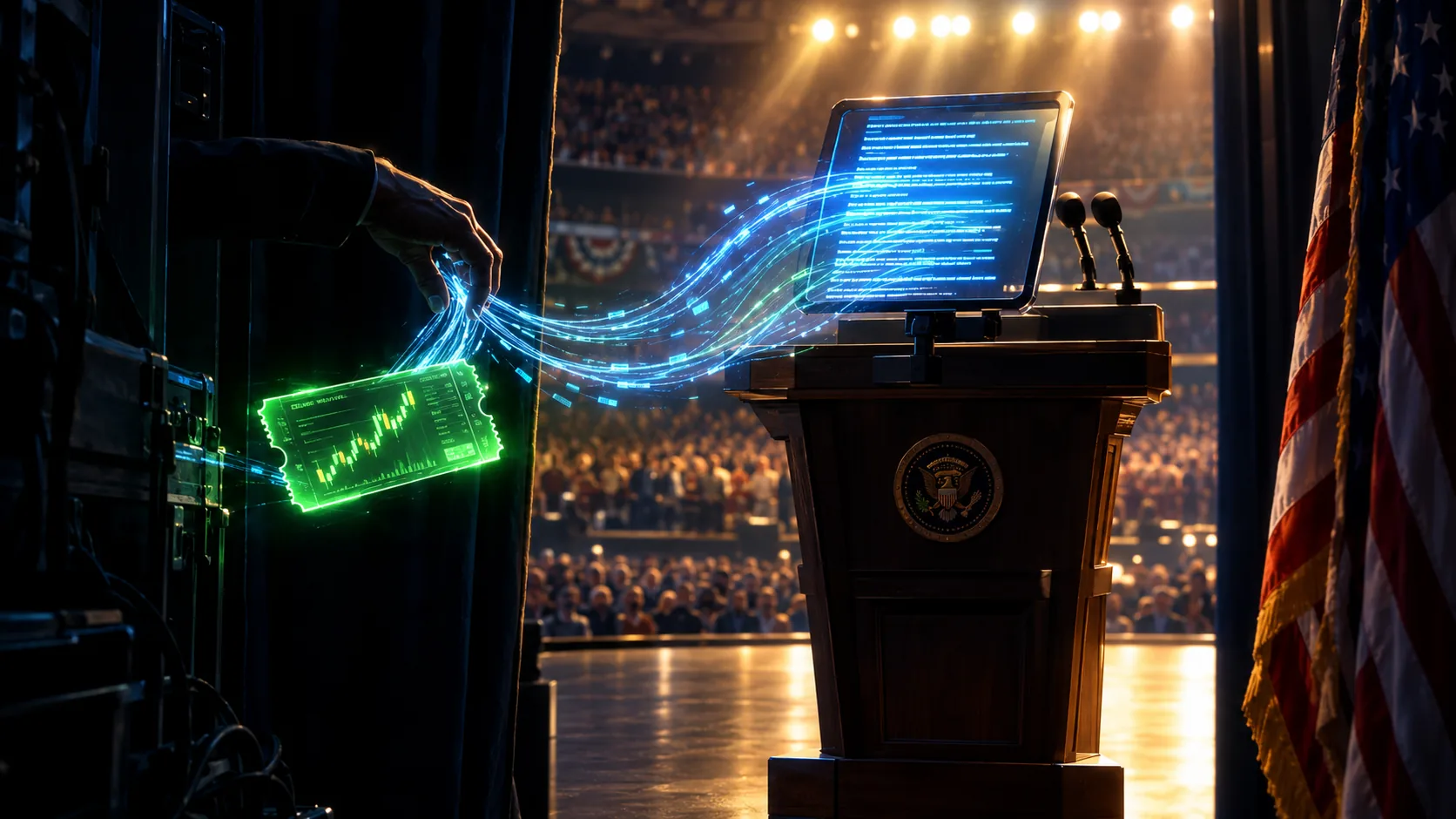
The Commodity Futures Trading Commission ordered Gabriel Perez, a former White House teleprompter operator, to pay roughly $172,000 for trading "presidential mention" prediction-market contracts using speeches he could read before they were spoken, according to a CoinMarketCap report on August 31, 2026. The penalty covers his trading gains plus a civil fine, and it lands squarely on a corner of the market that has spent the past year arguing it is not gambling and should be treated like any other regulated venue.
An information edge built into the job
Perez's role gave him a clean, repeatable edge. Presidential mention markets let traders bet on whether a president will say a specific word or phrase during a given speech or event. The operator loading the speech into the teleprompter sees the exact wording, in order, before the audience or the market does. That is not a leaked rumor or a hunch. It is the settlement data of the contract, in hand, ahead of time.
The CFTC's action treats that advantage as material non-public information, the same category that underpins classic securities and commodities insider-trading cases. The agency did not need to prove Perez hacked anything or broke into a system. He was paid to see the text first, and he traded on it.
Prediction markets pulled into the enforcement net
The order matters less for its dollar figure than for its signal. Presidential mention contracts sit inside the broader prediction-market boom, where platforms have insisted their event contracts are legitimate financial instruments rather than bets. That framing cuts both ways. If these are real derivatives, then trading them on inside information is real market abuse, and the CFTC has jurisdiction to punish it.
This is the second insider-style case tied to event and prediction markets to surface in recent weeks. Earlier in August, a U.S. servicemember faced insider trading charges over a Polymarket position allegedly informed by classified military information. Different platform, different information source, same underlying problem: people with privileged access to an outcome betting on that outcome before it becomes public.
A pattern regulators are now watching
Two cases do not make a crackdown, but they do establish a template. Prediction markets settle on discrete, verifiable events, elections, speeches, policy announcements, military actions. Those events are often known first by a small circle of insiders: staffers, operators, officials. The closer a contract's payout is tied to a scripted or classified event, the larger the edge available to whoever controls the script.
The CFTC's message is that the venue does not launder the conduct. Trading a $172,000 profit on advance knowledge of a teleprompter script draws the same enforcement logic as trading a stock on a leaked earnings report. For the platforms courting mainstream and institutional users, that is a double-edged outcome. Enforcement validates the claim that these are serious markets. It also invites the surveillance, reporting, and compliance burden that serious markets carry.
Crypto rails pull users into the same net
Many of the largest prediction markets run on crypto rails, settle in stablecoins, and draw a heavily crypto-native user base. As these venues face the same insider-trading standards as regulated exchanges, the compliance expectations flowing to their users rise with them: identity checks, position monitoring, and clearer lines around what counts as illegal information. Traders who fund these markets with a crypto card or on-chain wallet should expect the regulated-market posture, and its scrutiny, to tighten rather than loosen.
For context on the broader market backdrop, Bitcoin traded at about $78,564, up 0.7% on the day, with the Fear and Greed Index at 75 ("Greed") as of August 31, 2026. The macro tape is calm. The regulatory tape is not.
Overview
The CFTC ordered Gabriel Perez, a former White House teleprompter operator, to pay roughly $172,000 for trading presidential mention prediction contracts on speeches he read before delivery. Coming weeks after a separate Polymarket insider case, the order signals that regulators will apply insider-trading standards to prediction markets, holding people with privileged access to an outcome accountable when they bet on it. This is reporting on an enforcement action, not financial or legal advice.