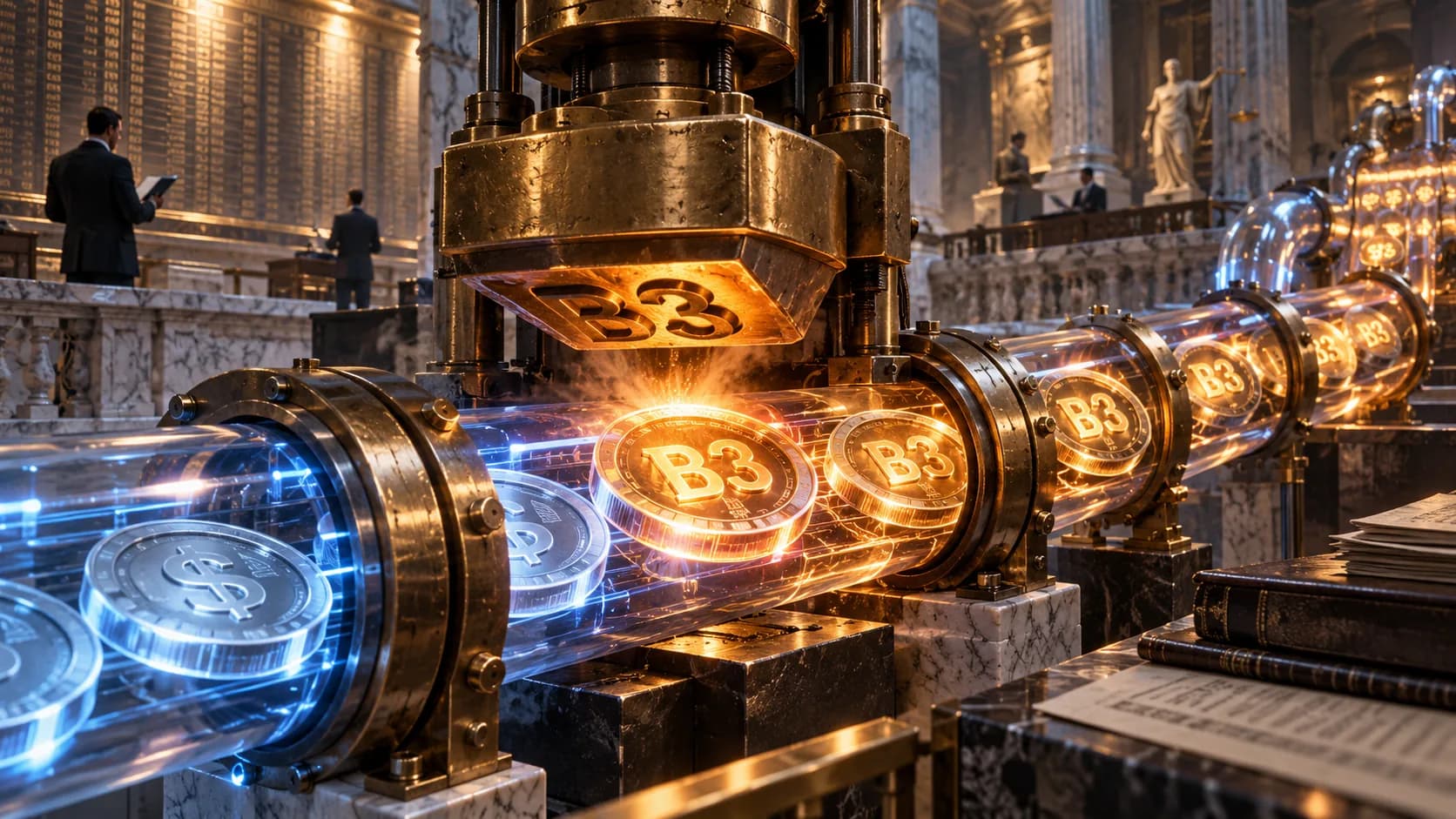
B3, the largest stock exchange in Latin America, has launched options on Bitcoin, Ethereum and Solana futures, according to a July 10, 2026 post from CoinMarketCap. The listing gives traders in the region a regulated instrument to hedge or position on the three assets without routing orders through an offshore derivatives desk.
The move lands during a cautious stretch for the market. Bitcoin trades at $62,973, up 1.5% over 24 hours, while Ether sits at $1,738 and Solana at $77.86, both close to flat on the day (prices as of July 10, 2026). The Fear and Greed Index reads 28, in "Fear" territory. Options tend to draw more interest exactly when direction is uncertain, since they let desks define risk in advance rather than take a naked position.
A regulated venue replaces the offshore workaround
Until now, a Brazilian fund that wanted listed crypto options had to go abroad, typically to Deribit or the CME, and deal with the currency conversion, counterparty exposure, and reporting friction that comes with an offshore account. B3 collapsing that into a domestic, exchange-cleared product removes several of those steps. Contracts clear through the same infrastructure that already handles equity and commodity derivatives in the country.
That matters more for institutions than retail. A local pension allocator or asset manager operating under Brazilian mandates often cannot hold positions on a venue outside the national regulatory perimeter. Options settled through B3 sit inside that perimeter, which is the practical unlock here rather than the headline of "crypto options now exist."
Options on futures, not on spot
The instruments are options on BTC, ETH and SOL futures, not on the underlying coins. The distinction is worth keeping straight. A trader is buying the right to enter a futures position at a set strike, and settlement flows through the futures contract rather than delivery of actual Bitcoin. B3 already ran crypto futures and index products before this, so options are the next rung on an existing ladder rather than a standing start.
Solana's inclusion is the notable part. Bitcoin and Ether options are standard across most regulated venues at this point, but a national exchange listing SOL derivatives alongside them signals that Solana has cleared the internal risk bar these institutions apply before they will touch an asset. That is a slow, conservative process, and clearing it in Brazil is a data point about how the asset is now perceived by traditional finance desks.
Brazil keeps building crypto market structure
The listing fits a broader pattern in Brazil, where regulators and market operators have been steadily formalizing digital-asset activity rather than fighting it. The country already ranks among the most active crypto markets in Latin America by trading volume, and its central bank has spent the past two years drafting rules for stablecoins and virtual-asset service providers. A domestic options market gives that activity a hedging layer it previously lacked.
The timing also tracks a wider institutional shift. Regulated crypto derivatives volume has been climbing globally, with RWA perpetuals topping $100 billion in June and tokenized equities setting fresh records the same month. B3 adding options is the same story from a different angle: traditional venues absorbing crypto instruments into products their existing clients already understand.
For everyday users, the direct effect is thin. Options on futures are professional tools, not something most people spending from a crypto card will ever touch. The second-order effect is what to watch. Deeper, better-hedged local markets tend to bring tighter spreads and more liquidity to the underlying assets over time, which flows down to on-ramps, stablecoin rails, and the payment products built on top of them.
Overview
B3 has listed options on Bitcoin, Ethereum and Solana futures, giving Latin America's largest exchange a regulated derivatives layer that local institutions can use without going offshore. The contracts are options on futures, settled through B3's existing clearing, and Solana's inclusion is a sign of how far the asset has traveled into traditional finance. The near-term impact is institutional rather than retail, but it deepens Brazil's crypto market structure at a moment when regulated venues worldwide are folding digital assets into familiar products. This is reporting on a single announcement; none of it is financial advice.