The Blockchain Association has filed a comment letter urging the Securities and Exchange Commission to rescind two long-standing market structure rules, arguing they were written for an equities market that predates tokenized assets. The request, posted by Cointelegraph on August 18, 2026, targets Rule 611 and Rule 610(e) of Regulation NMS, the framework that has governed how US stock orders route and execute since the mid-2000s.
The pitch is narrow but pointed. Rather than asking for sweeping new crypto legislation, the industry group wants two specific pieces of the existing rulebook removed so that securities issued and settled on a blockchain are not forced through plumbing built for a different era.
The two rules on the chopping block
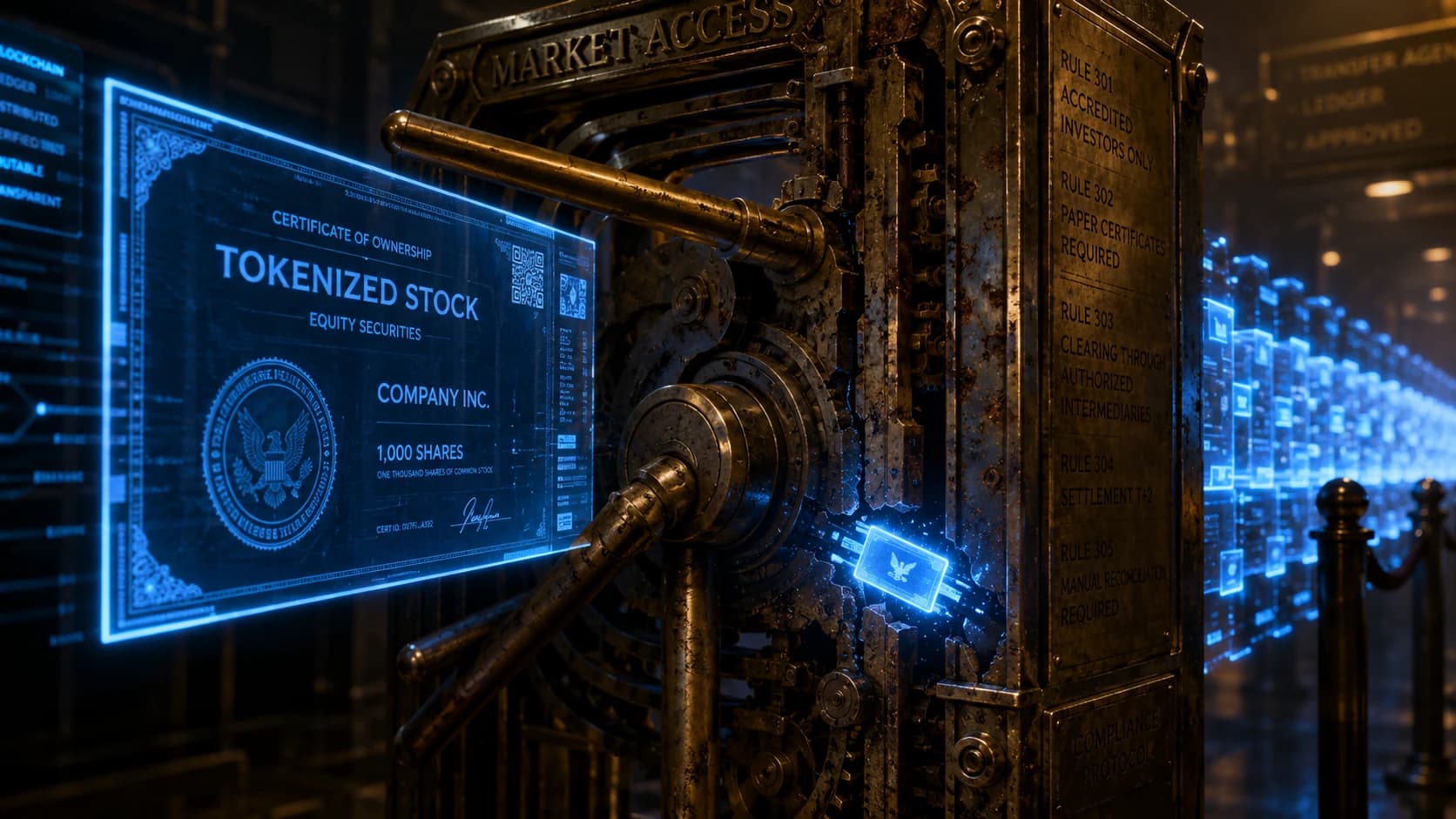
Rule 611, often called the Order Protection Rule or trade-through rule, requires that an order be routed to whichever venue is displaying the best available price. It was designed to stop one exchange from executing a trade at a worse price when a better quote existed somewhere else. Rule 610(e) caps the access fees a trading venue can charge to reach those protected quotes.
Both rules assume a specific market shape: dozens of registered national securities exchanges, a consolidated national best bid and offer, and centralized quote feeds that every participant can see. That structure works for shares of a listed company changing hands on Nasdaq or the NYSE. It fits awkwardly with a tokenized security that lives on a public ledger, where settlement is near-instant and the concept of a single protected quote across fragmented venues does not map cleanly onto how blockchains actually clear trades.
The Blockchain Association's position is that keeping these rules in place forces tokenization projects to either bolt themselves onto legacy exchange infrastructure or stall while they wait for interpretive relief. Removing the two rules, the group argues, clears a path for on-chain markets to develop their own price discovery without violating requirements that assume off-chain intermediaries.
The venue and framing behind the filing
The letter lands in the middle of a broader push to reconcile US securities law with tokenized assets. The SEC has been weighing an exemption that would give tokenization projects room to operate, and that relief has slipped more than once. We covered the most recent delay in the SEC's tokenization exemption slipping again, where the timing got tangled up with negotiations over the CLARITY Act.
Comment letters like this one are a routine part of rulemaking, and submitting one does not obligate the SEC to act. What gives this filing weight is the venue and the framing. The Blockchain Association is not asking for an exception carved out for crypto. It is arguing that two rules already on the books have outlived the market they were written to protect, which is a harder position for regulators to dismiss as special pleading.
Tokenization has moved from concept to measurable volume over the past year. Tokenized money market funds, on-chain equities, and blockchain-settled treasuries have all crossed real dollar thresholds, and platforms handling them have run into exactly the friction the letter describes. When Ondo's tokenized stock platform crossed $1 billion in TVL in under a year, it did so while the regulatory questions around how those instruments should trade remained unsettled.
The market context
Crypto markets were calm as the letter circulated. As of August 18, 2026, Bitcoin traded at $64,053, up 1.0% over 24 hours, while Ether sat at $1,893, down 0.6%. The Fear and Greed Index read 40, in neutral territory. Regulatory filings of this kind rarely move prices on their own, and this one did not.
The longer arc is what matters for anyone holding tokenized assets or watching the sector. Market structure rules determine who can build a trading venue, how orders clear, and what fees a platform can charge. If the SEC eventually rescinds Rule 611 and Rule 610(e), or replaces them with something built for on-chain settlement, it would lower one of the structural barriers that has kept tokenized securities trading in a legal gray zone.
For now, the request is exactly that: a request. The SEC has not signaled how it will respond, and the two rules remain in force. The Blockchain Association has made its case that the market has changed faster than the rulebook governing it, and put that argument on the public record.
Overview
The Blockchain Association filed a comment letter on August 18, 2026, asking the SEC to rescind Rule 611 and Rule 610(e) of Regulation NMS, two mid-2000s market structure rules that govern order routing and access fees for US equities. The group argues the rules assume centralized exchanges and consolidated quotes that do not fit tokenized securities settling on a blockchain. The filing adds to a broader effort to modernize securities rules for on-chain assets, running alongside a delayed SEC tokenization exemption and CLARITY Act talks. No SEC action has followed yet, and crypto prices were unmoved.