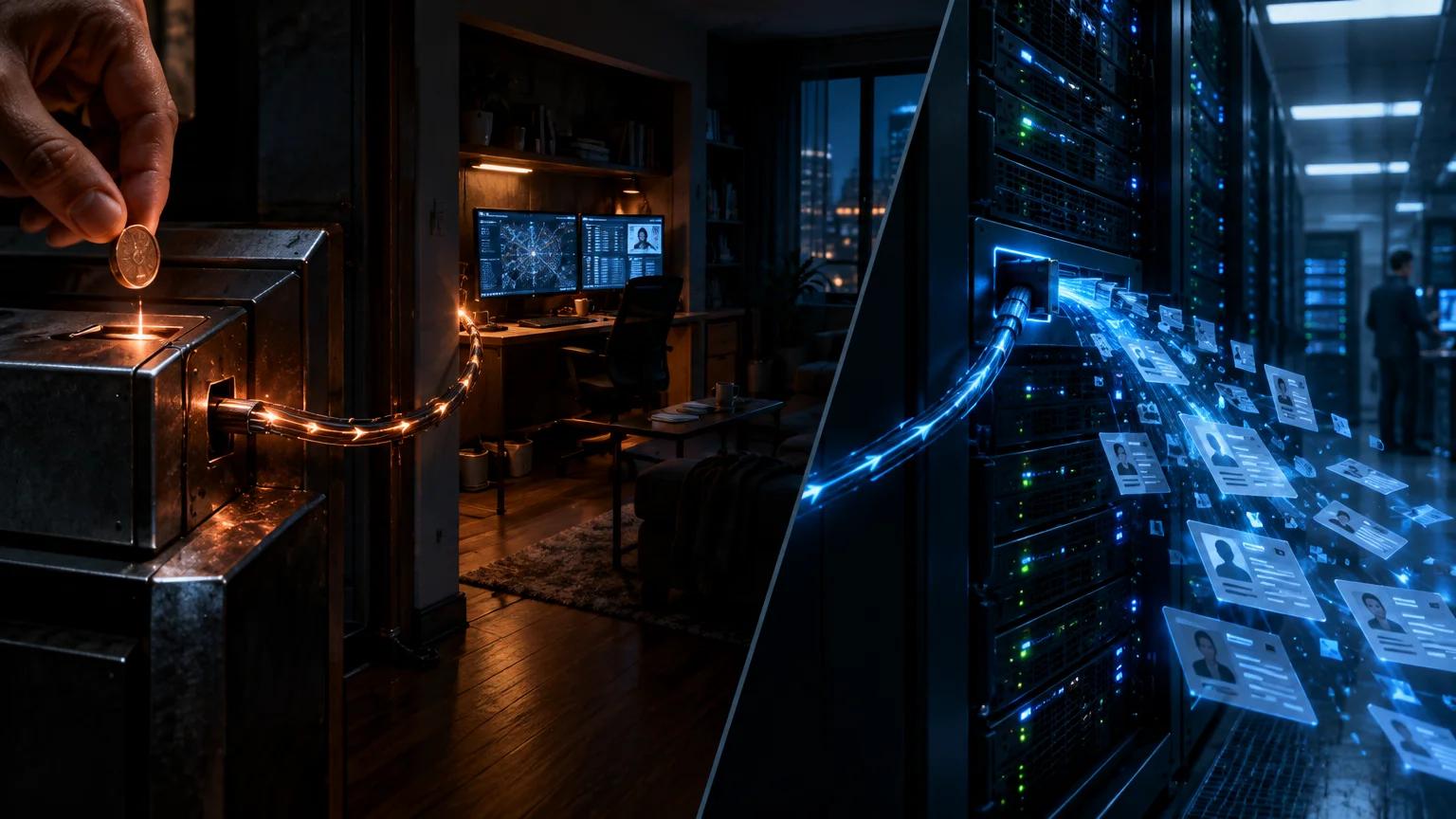
Bitcoin wallet research and a separate breach at Standard Chartered's Zodia Custody put information exposure at the center of two crypto security reports circulating on November 27, 2026. A developer demonstrated a cheap way to associate an address with a computer monitoring it. Zodia confirmed unauthorized access to client information while reporting no unauthorized transactions.
The common concern is exposure around the assets: the machine watching an address, or the people working with a custodian. The incidents involve different systems and require different responses. Neither report describes the Bitcoin technique being used against Zodia.
A small payment can make a wallet identify its node
Bitcoin Core contributor Abubakar Sadiq Ismail examined a wallet behavior that automatically announces unconfirmed transactions again after roughly 12 to 36 hours. An attacker can plant a small, low-fee payment and observe which computer later announces it.
The research associated the correct address and node in all 30 controlled attributions. Those experiments ran in a local Bitcoin testing environment, not on the live network. The result demonstrates the mechanism under test conditions rather than measuring its success rate against Bitcoin users.
The developer's research also shows that a watch-only wallet can respond. Such a wallet monitors addresses without holding their private keys. The computer identified by the technique may consequently belong to a monitoring service rather than the person able to spend the bitcoin.
The practical implication is an address linked to infrastructure tracking it. Identifying a person requires more information, but the observation can expose which computer is watching the address even when that computer cannot spend its funds.
For readers comparing ways to retain control of their keys, the finding adds a separate question: which software watches the addresses associated with those keys, and which network connections can observe its behavior?
Developers face a tradeoff over automatic rebroadcasting
The low payment amount attracts attention, but an adversary also needs observation infrastructure: access to candidate nodes, or connections from them, and time to wait for the wallet to rebroadcast. The payment amount alone captures only part of what the attack requires.
A proposed Bitcoin Core change, pull request #36398, would stop automatic rebroadcasting of transactions that pay a wallet without spending its inputs. As of November 27, the proposal remained open.
The code review discussion reveals a practical disagreement. Martin Zumsande argues that passive wallet users should be protected from unsolicited payments that reveal their node. Andrew Chow points out that recipients benefit from rebroadcasting because it can help payments confirm.
Removing that behavior also creates manual work. A recipient expecting payment may need to resubmit a transaction when the sender stops rebroadcasting it. Developers are debating the balance between payment reliability and privacy for users who merely leave a wallet running.
The effectiveness of a fix also depends on its implementation. A change that suppresses one announcement path can still leave another route available after a transaction drops from the node's pending transaction pool.
Zodia confirms contact-data exposure after taking an API offline
Zodia's incident concerns institutional client information. In the company's statement, chief executive Richard Clark said Zodia detected attempts to probe its platform on November 23. It temporarily disconnected its business-to-business API, added security measures and restored the service.
Monitoring on November 24 identified unauthorized access to limited client information. Zodia described the records as publicly available organization details and, for a small number of clients and employees, business contact names and email addresses.
The company's incident statement said it had contacted clients and informed relevant regulators. Its investigation had found no unauthorized transactions.
For a custody client, asset security and information security remain separate operational concerns. The reported exposure gives clients a reason to review how they handle communications about their custody accounts even though the investigation found no unauthorized asset movements.
The practical concern is targeted impersonation: a message addressed to a named employee and referring to their custodian could be more persuasive than an anonymous approach. Clients can respond by confirming unexpected requests through an established contact channel, particularly requests involving destination addresses or account access.
Zodia reported notifying regulators as part of its response to the incident; it did not announce an enforcement action against the company.
Overview
The Bitcoin research demonstrates an address-to-node privacy leak in controlled testing, with automatic wallet rebroadcasting providing the observable signal. The proposed response remains under developer review because recipients also use rebroadcasting to help legitimate payments confirm.
Zodia separately confirmed exposure of organization and business contact information after temporarily taking its institutional API offline. Its investigation reported no unauthorized transactions. The custodian restored the service and notified clients and regulators.