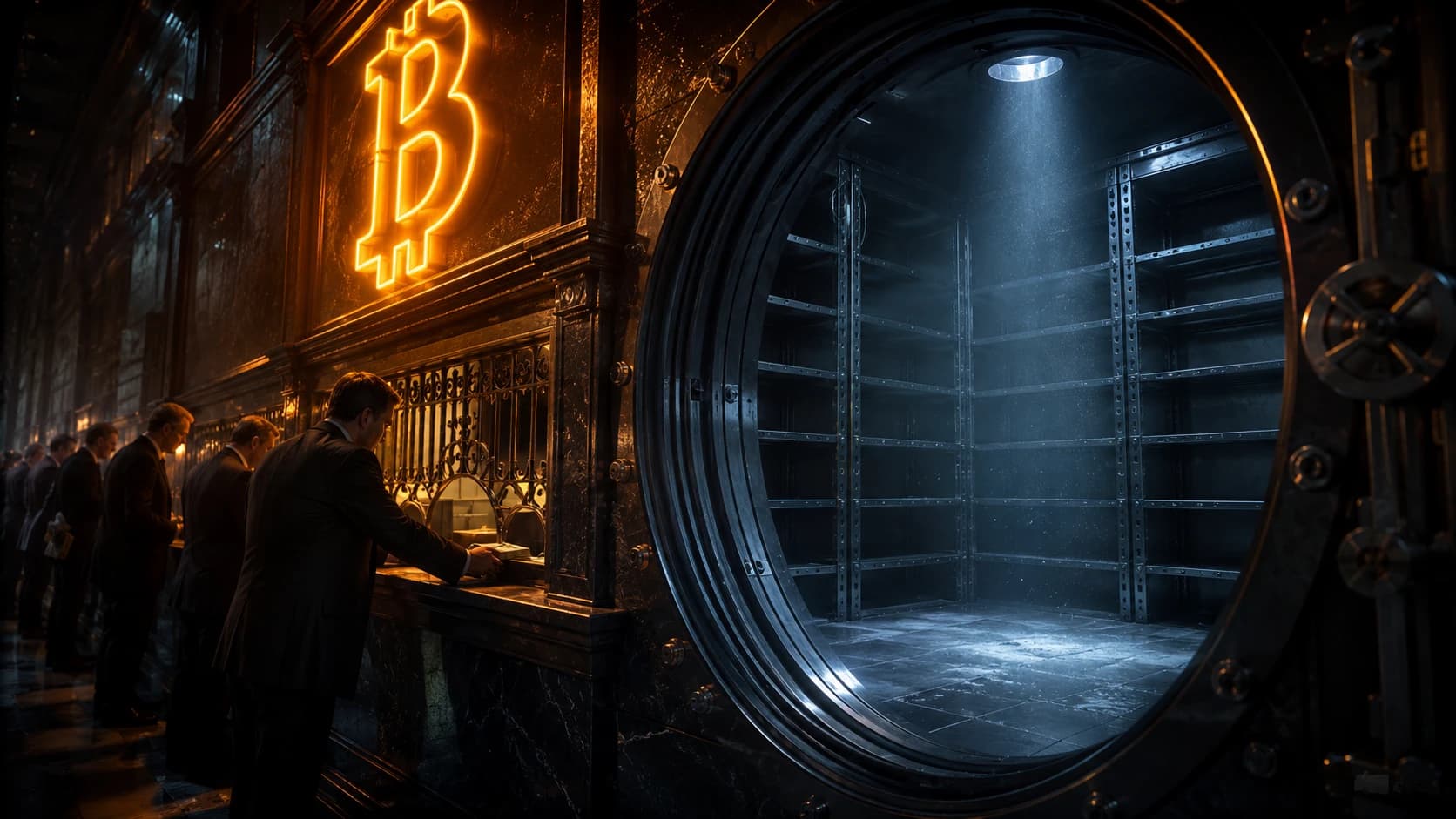
A company operating under the name "Bitcoin Japan" is raising $60 million and, by its own disclosure, has never bought a single Bitcoin. The detail was flagged by Coin Bureau on July 19, 2026, and it captures how far the digital-asset treasury trade has drifted from the assets it claims to hold.
The contradiction is the story. A firm whose entire brand rests on one coin has raised eight figures without acquiring any of it. Investors are buying the label and the promise of future purchases rather than a balance sheet that already exists.
The name is doing the work
The digital-asset treasury model, popularized by Strategy under Michael Saylor, has a simple logic. A public company raises capital, buys Bitcoin, and lets its share price trade at a premium to the coins it holds. The premium is the point: it lets the company issue more stock and buy more Bitcoin in a loop. That loop only works if the coins are actually on the books.
Bitcoin Japan inverts the sequence. It has the name, the raise, and the intent, but not the holdings. Buyers are underwriting a plan to accumulate later, which means the premium is being paid on branding before a single satoshi has been custodied. If the purchases never happen at the promised scale, or happen at a worse price than investors assumed, the gap between the story and the balance sheet is where losses live.
Bitcoin traded around $64,595 as of July 19, 2026, up 1.0% over 24 hours, with the Crypto Fear and Greed Index at 35, in Fear territory. A company raising to buy into a fearful, sideways market is making a timing bet on top of a branding bet, and neither is disclosed as an asset yet.
A pattern, not a one-off
Bitcoin Japan is the extreme version of a trend that has spread across public markets over the past year. Dozens of small-cap firms have rebranded around a token, announced a treasury strategy, and watched their shares jump before any meaningful purchase cleared. The announcement moves the stock; the execution, when it comes, is slower and smaller than the headline implied.
Japan has been fertile ground for this. The country recently moved to reclassify crypto as a financial instrument, clearing a path toward domestic Bitcoin ETFs and a flat 20% tax treatment. That regulatory warming gives treasury-style companies in Japan a credible narrative to sell, even when the underlying holdings are still hypothetical. Established players are moving too: SBI Holdings has been pivoting its blockchain stack toward Solana and launching stablecoin products, a reminder that serious Japanese balance-sheet activity does exist alongside the branding plays.
The distinction matters for anyone reading these announcements. A treasury company with audited coins is a leveraged bet on an asset you can verify. A treasury company with a name and a raise is a bet on management doing what it says. Those are different risks wearing the same costume.
Verify the holdings, not the ticker
For crypto investors, the lesson is procedural. Before treating any treasury stock as Bitcoin exposure, confirm three things: how many coins the company actually holds, where those coins are custodied, and whether the reported figure is audited or self-declared. Bitcoin Japan fails the first test outright, because the answer is zero.
There is also a cleaner path to the exposure most of these firms are selling. Buyers who simply want Bitcoin can hold it directly and, if they want to spend it, route purchases through cards that let them convert crypto at the point of sale rather than paying an equity premium for someone else's promise to buy later. Direct ownership removes the layer where a company's name and its balance sheet can diverge.
None of this is a verdict on Bitcoin Japan's eventual execution. The firm may deploy the full $60 million into coins and close the gap. The point on July 19 is narrower and factual: the money is raised, the brand is Bitcoin, and the Bitcoin is not there yet. This is speculative analysis, not financial advice, and the single verifiable fact is the one that should anchor any decision.
Overview
A firm branded Bitcoin Japan is raising $60 million while holding zero Bitcoin, per a July 19, 2026 flag from Coin Bureau. The gap between the name and the balance sheet is the whole story, and it mirrors a broader wave of treasury companies whose share prices move on announcements before any coins clear. Japan's move to reclassify crypto as a financial instrument gives these plays a credible backdrop, but the practical takeaway for investors is unchanged: verify how many coins a company holds and where they are custodied before treating its stock as crypto exposure. Bitcoin traded near $64,595 with sentiment in Fear at 35 as the raise surfaced.