A long-time Bitcoin developer is proposing a hard fork that would do something the community has treated as untouchable for sixteen years: reassign Satoshi Nakamoto's coins. Paul Sztorc, the engineer behind the Drivechains concept, announced the plan on X on April 24 and named the new chain eCash. Cointelegraph picked it up on April 27, and the conversation has not slowed down since.
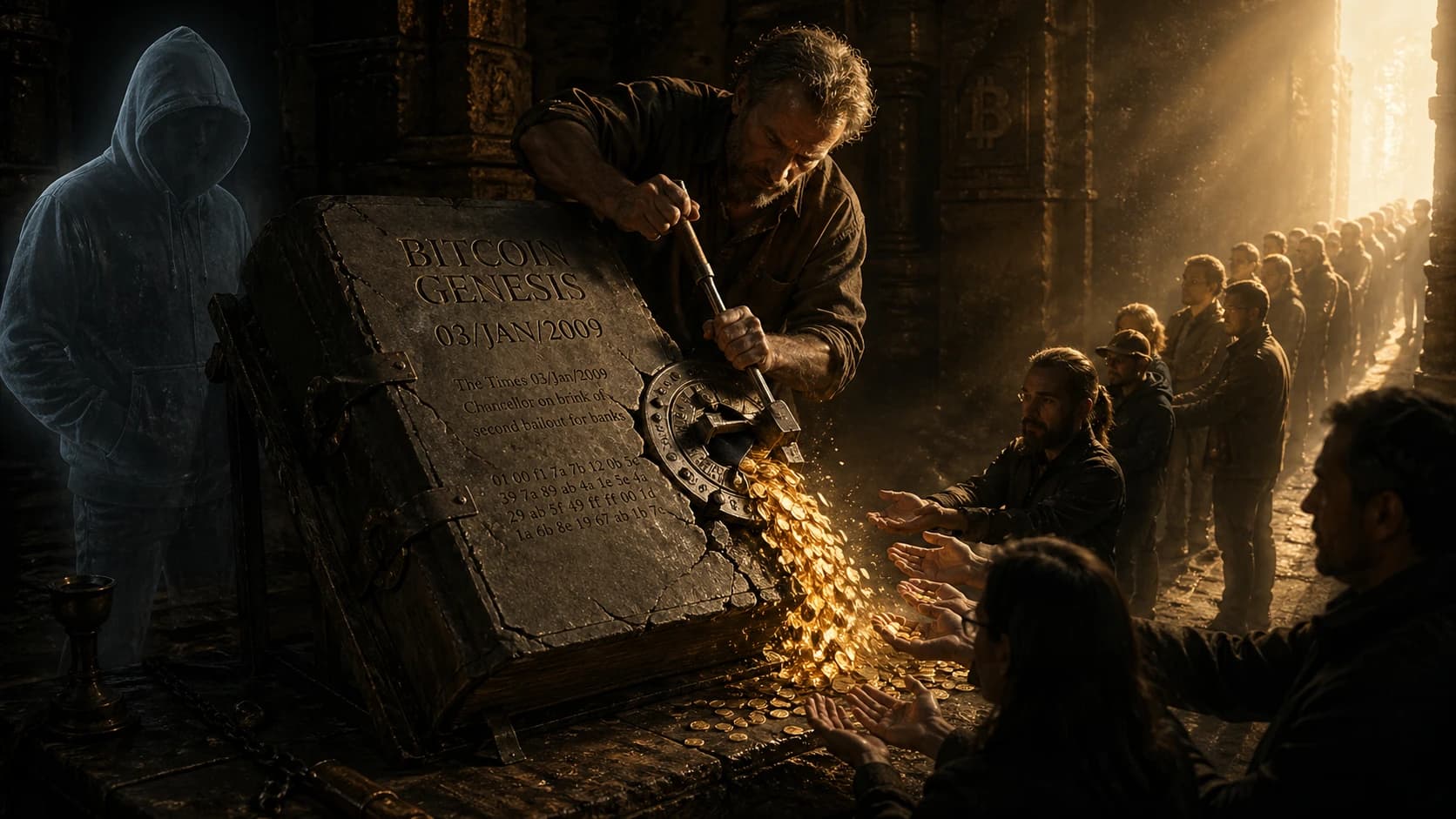
The pitch is simple and incendiary. At block 964,000, currently estimated for August 2026, eCash would split off from Bitcoin. Holders would get equivalent tokens on the new chain. But the roughly 1.1 million coins linked to Satoshi's known addresses would not transfer one-for-one. About half of those coins, around 550,000 BTC equivalent, would be reassigned on eCash to early backers and developers funding the fork. As of April 27, 2026, with BTC trading near $77,778, that allocation is worth close to $43 billion if the new chain ever achieves price parity.
The April 24 X post that broke a Bitcoin taboo
Sztorc framed the move as deliberate and necessary. "This will no doubt be a controversial decision," he wrote, "but I think it is necessary, and in fact, ideal." His logic: Satoshi has not moved a single coin since 2010, the dormant stash is unlikely to ever spend, and the fork needs capital to bootstrap miners, infrastructure, and developer pay. Reusing the inert allocation, in his framing, turns dead weight into working capital.
Bitcoiners do not see it that way. Multiple replies under the original thread used the word theft. The cultural rule that nobody touches Satoshi's coins predates most of the people now defending it. Bitcoin maximalist accounts argued the precedent matters more than the dollar value: if a fork can rewrite one address's history, no holder is fully sovereign on a fork chain.
What eCash actually does, and where the Satoshi coins go
The redistribution is the headline, but eCash carries a second payload: Drivechains. Sztorc has spent years pushing BIP 300 and BIP 301, which would let Bitcoin host opt-in sidechains for things like privacy, smart contracts, and faster payments without changing the base layer. Bitcoin Core has declined to merge those proposals. eCash activates them by default.
Under the proposal, the 550,000 reassigned coins are not handed to one entity. Sztorc has described the allocation as a pool used to bring institutional and retail investors onboard before launch, similar to a pre-mine but funded from inactive supply. The remaining roughly 550,000 coins linked to Satoshi addresses still mint on eCash but stay locked at those original addresses, mirroring Bitcoin.
For ordinary BTC holders, the mechanics are familiar. If you hold the keys to your coins on August 2026 fork day, you receive an equivalent eCash balance. If you keep your coins on a custodial venue, whether the issuer credits the airdrop is up to them. Past Bitcoin forks like Bitcoin Cash and Bitcoin SV produced uneven exchange support, and self-custody users tend to capture the airdrop more cleanly. Self-custody options matter more than usual when a contentious fork is on the calendar.
Why the community is calling it theft
Three objections keep coming up. First, the sacred-cow problem. Satoshi's coins have functioned as Bitcoin's most powerful proof of fairness: the founder did not cash out. Reassigning them, even on a separate chain, breaks the implicit promise that no future actor controls early supply.
Second, the precedent risk. If a fork can rewrite one wallet's allocation for funding reasons, the technical floor for what a fork can do drops. Quantum-vulnerability proposals like BIP-361 already raise the question of whether dormant Satoshi-era coins should be defensively migrated or frozen. Sztorc's plan answers that question with a much more aggressive version: redistribute first, debate later.
Third, the credibility gap. eCash is not Bitcoin. Hard forks rarely reach price parity with the chain they branch from. Bitcoin Cash never did. The 550,000 reassigned units only become meaningful capital if the market values eCash highly enough to make them spend-worthy, and that is far from guaranteed.
What to watch between now and block 964,000
Three signals will tell you whether this becomes a real event or a footnote. Mining pool support is the first. A hard fork without hash power is a dead chain. Second, exchange listings: whether major venues commit to crediting eCash to BTC depositors will determine the airdrop's reach. Third, any response from the Satoshi addresses themselves. A movement from those wallets, even a single one, would reshape the entire debate.
For now, the proposal lives on X and a draft spec. The block height is fixed but the runway is short. Bitcoin's spot price already absorbed news of a quantum-risk debate over Satoshi-era coins earlier this month with little reaction. Whether a redistribution proposal carries more weight will depend on who lines up behind it before August.
Overview
Paul Sztorc's eCash hard fork would launch at Bitcoin block 964,000 in August 2026 and reassign roughly 550,000 coins linked to Satoshi Nakamoto to fund development and bootstrap investors. Bitcoiners are calling it theft, and exchange and miner support remains unconfirmed. The proposal lives or dies on whether anyone with hash power or capital lines up behind it before August.