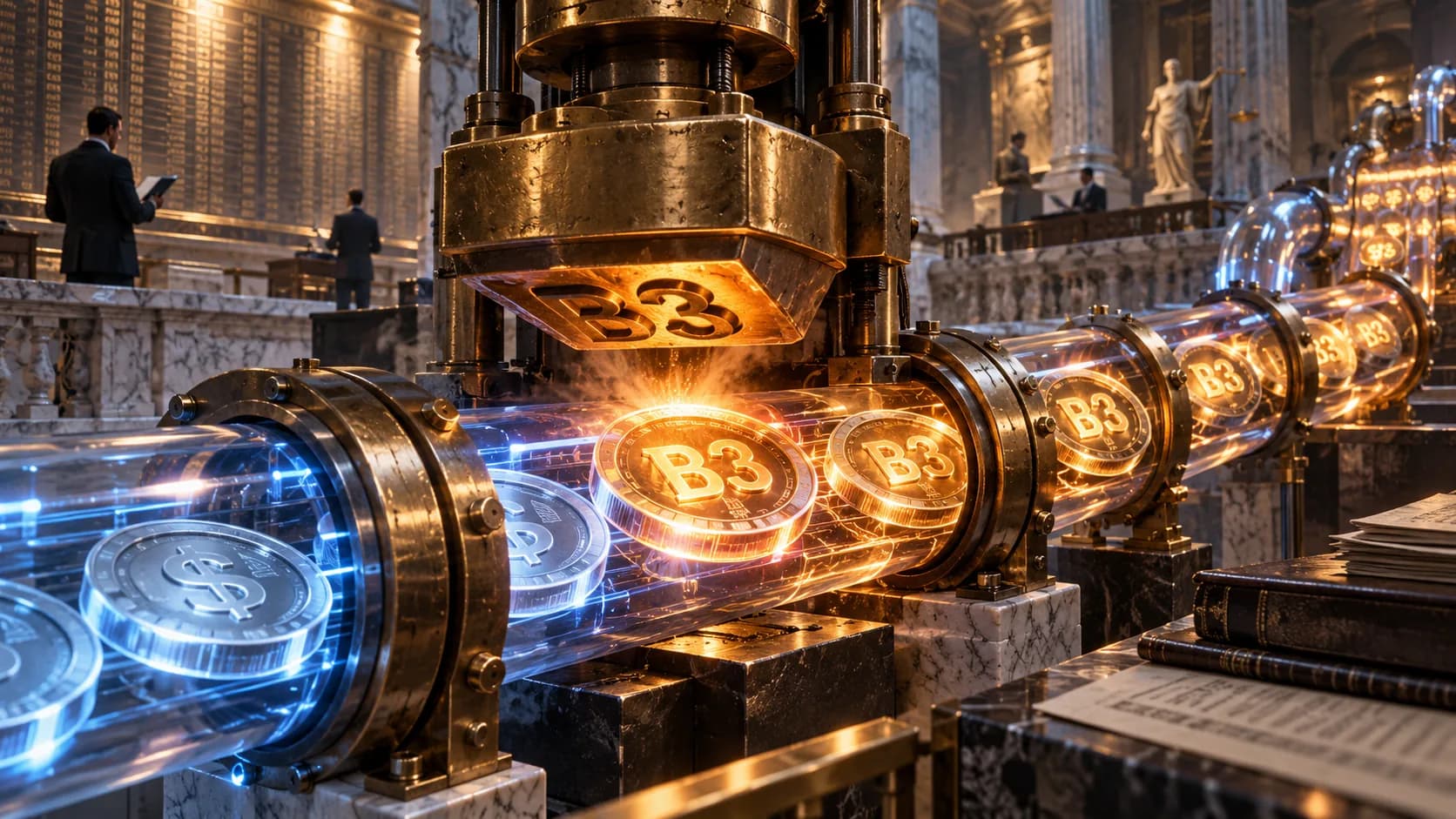
The US Treasury ran a $4 billion bond buyback intended to pull long-end yields lower. The bond market gave a muted response. Bitcoin did not. As of August 24, 2026, BTC trades at $77,105, up 1.0% on the day and roughly 21% over the past seven days, according to CoinMarketCap data. CoinDesk framed the split plainly: the operation wanted lower yields and got a Bitcoin surge instead.
The buyback is part of the Treasury's routine liquidity-support program, where it repurchases older, less-traded government debt to keep the market functioning smoothly. This round was read by many traders as something more: a signal that Washington prefers cheaper financing for a debt load that keeps climbing. That interpretation, not the mechanics of the buyback itself, is what moved crypto.
The bond market shrugged, crypto did not
A $4 billion buyback is small against a Treasury market measured in the tens of trillions. On its own it does not reset the yield curve. Long-dated yields stayed close to where they started, which is why the operation looked like a miss on its stated goal.
Bitcoin traders looked past the size and focused on the intent. Buybacks, bill-heavy issuance, and any hint that the Treasury wants to hold financing costs down all feed the same narrative: the real cost of holding dollars is being managed lower over time. Ray Dalio made a related point the same morning, telling investors they should own "a bit of Bitcoin" as US debt risks rise, per a separate CoinDesk report. Two macro signals pointing the same direction on one trading day gave the move extra fuel.
The rest of the majors moved with it. Ether trades at $2,452, up 3.3% on the day and about 29% on the week. XRP sits at $1.48, up nearly 48% over seven days. Solana is at $94.24. The Crypto Fear and Greed Index reads 78, firmly in "Greed" territory, which tells you positioning is already leaning long into this.
The debasement trade is running the tape
The logic behind the reaction is the debasement trade: when a government signals it wants lower real financing costs and rising debt, holders of fixed-supply assets bid them up as a hedge against currency dilution. Bitcoin's 21 million cap is the cleanest expression of that thesis, which is why it tends to react to Treasury policy headlines faster than to crypto-native news.
This is not the first time this month the pattern has shown up. A broader Treasury buyback plan already revived the debasement bet earlier in August and pushed Bitcoin up 21% in that episode. The Bessent operation is the follow-through: same narrative, fresh confirmation, and a market that has now been trained to buy the dip on any debt-and-yields story.
A word of caution on reading too much into a single week. A Fear and Greed reading of 78 means a lot of good news is already priced in. Rallies driven by macro sentiment rather than flows can reverse quickly if a data print or a Fed comment cuts the other way. This is market context, not financial advice.
The link to how you hold and spend
For anyone holding crypto rather than trading it, the practical question is where those balances sit when volatility spikes. Sharp macro-driven moves are exactly when custodial risk matters most: if a provider halts withdrawals during a fast tape, your funds can be stuck at the worst possible moment. That is the case for spending from your own wallet rather than parking everything on a custodial platform.
Spending appreciated Bitcoin directly is its own decision. A crypto card lets you convert to fiat at the point of sale, but every swipe of an asset that just ran 21% can be a taxable disposal in many jurisdictions, including the United States. Many holders prefer to spend from a stablecoin balance and leave the Bitcoin untouched during a rally, precisely to avoid triggering a taxable event on every coffee.
For readers watching the flows behind this move, the same week brought the strongest ETF inflows since October, with $1.92 billion into spot BTC and ETH funds. That institutional bid is the other half of why the tape held its gains rather than fading after the buyback headline.
Overview
A $4 billion Treasury buyback meant to soften yields left the bond market roughly where it found it and instead handed Bitcoin a reason to run, with BTC at $77,105 and up about 21% on the week as of August 24, 2026. The move was about interpretation, not mechanics: traders read the operation as one more signal that Washington wants cheaper money, and the debasement trade did the rest. With Fear and Greed at 78 and record weekly ETF inflows in the background, the setup is bullish but crowded. The concrete takeaway for holders is unchanged by any single week: decide in advance where your coins sit and how you spend them, so a macro headline does not force the decision for you.