

Jan 22, 202616m 41s
Self-Sovereign Identity: The Future of Crypto Card KYC
The end of 'sending your passport' is here. Learn how ZK-KYC and Self-Sovereign Identity (SSI) are making crypto cards private and secure.
Listen to narrated articles from the SpendNode Journal. The feed covers crypto policy, payment rails, stablecoins, market structure, and crypto cards, with each episode linking back to the full written analysis. The full RSS feed lives at /audio.xml if you want to pull it into an app that accepts external feeds.
The end of 'sending your passport' is here. Learn how ZK-KYC and Self-Sovereign Identity (SSI) are making crypto cards private and secure.

How smart contracts protect your crypto card from fraud. Learn about on-chain spending limits, guardians, and the future of decentralized card security.

Trace the evolution of crypto off-ramps. Discover how direct card spending is replacing centralized exchange withdrawals for faster, cheaper liquidity.

Beware of the 'Zero Fee' trap. Learn how crypto cards use hidden spreads to charge you more than a transparent commission on your purchases.

How Multi-Party Computation (MPC) protects crypto cards: threshold signatures, key share architecture, vs. multisig comparison, real security incidents, and implementation across 12 major cards.

Deep-dive into crypto cashback tiers, staking requirements, monthly caps, token volatility, and real ROI calculations. Compare instant vs vested rewards across 10+ major cards.
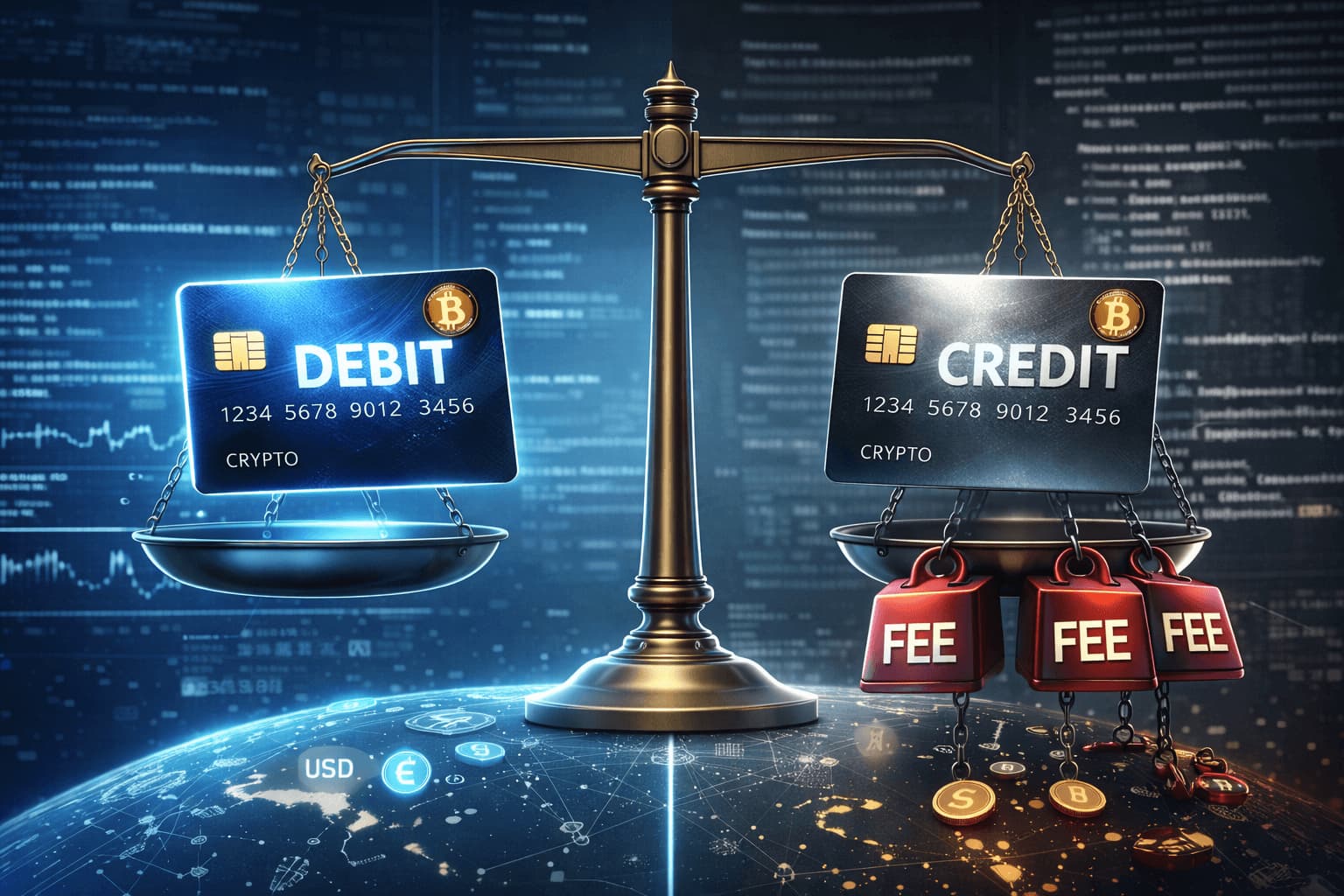
Analysis of crypto debit vs credit cards: tax implications, LTV ratios, liquidation risk, and which model suits your spending pattern. Real examples from 15+ cards.

How crypto card points programs work, historical TGE conversion rates, risk analysis, and strategies for maximizing airdrop value from Tria, Ether.fi, and Xplace.

How yield-bearing stablecoin cards work: USDe, USDm, sDAI mechanics, real ROI calculations vs standard cashback, risk frameworks, and which balance level makes them worthwhile.

Is crypto cashback taxable income? Capital gains calculations, jurisdiction-specific rules for US/UK/EU, optimization strategies, and real-world examples with numbers.