
MetaMask vs Tria
Side-by-side comparison of MetaMask and Tria crypto cards. Data sourced from official issuer documentation and verified by SpendNode.
Comparing 2 Cards
Side-by-side comparison of features and benefits
| Attribute | 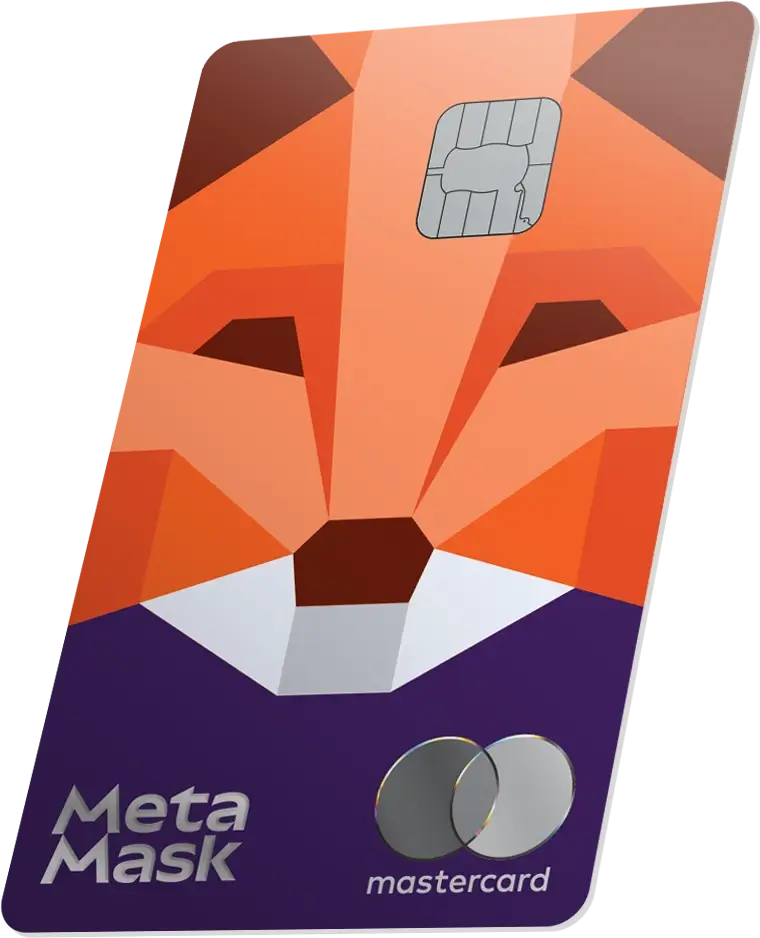 | 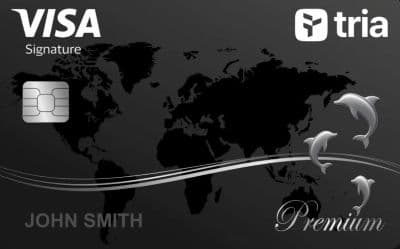 |
|---|---|---|
| Max Cashback | 3% | 6%Highest |
| Annual Fee | TBD | $250Best |
| FX Fee | 0% | 0% |
| Custody Model | Custodial | Custodial |
| Network | MASTERCARD | VISA |
| Regions | USEEAUKGLOBAL | EEAUKUSGLOBAL |
| Supported Assets | 9+ assets USDCUSDTwETHEUReGBPemUSDamUSDaUSDCaBasUSDC | 3+ assets ETHUSDCUSDT |
| Cashback | Yes | Yes |
| Staking | No | Yes |
| Points | Yes | No |
| Airdrops | Yes | Yes |
| Lounge access | No | Yes |
| Subscription rebates | No | No |
| Metal card | Yes | Yes |
| Virtual Cards | No | No |
| Physical Cards | No | No |
| Visa | No | No |
| Mastercard | No | No |
| Apple Pay | Yes | No |
| Google Pay | Yes | No |
| Self-custody spend | Yes | Yes |
| Stablecoin spend | No | No |
| No annual fee | No | No |
| No FX fee | Yes | Yes |
| ATM free allowance | No | Yes |
| No KYC | Yes | No |
| Virtual vs Physical | No | No |
| Debit vs Prepaid | No | No |
| Best For | Best for Security | Best for Cashback |
Note: All data verified as of February 2026. Rewards and fees may vary based on your spending tier and region. Check each card's detailed page for complete terms.
MetaMask vs Tria: Key Differences
Two [self-custodial](/crypto-cards/self-custody/) debit cards with global reach and zero FX fees - but different reward philosophies. [MetaMask](/crypto-cards/metamask-virtual-card/) offers 1% [cashback](/crypto-cards/cashback/) (3% Metal waitlist) with no token requirement, [no-KYC](/crypto-cards/no-kyc/) onboarding, and MetaMask Rewards points that could translate to a Consensys/Linea airdrop. [Tria](/crypto-cards/tria-virtual-card/) offers 1.5-6% tiered cashback with up to 15% APY, XP farming for a separate airdrop, and Visa Signature travel perks. Both charge 0% FX. Both serve 50+ countries. MetaMask wins on zero-commitment access and brand recognition. Tria wins on cashback rates and yield.
The right choice depends on your priorities: cashback rates, regional availability, custody model, and which ecosystem you already use. Below, we break down who should choose each card.
Product Overview
MetaMask - Self-custodial Mastercard debit powered by Baanx. Spends directly from your MetaMask wallet across Linea, Base, and Solana. Two tiers: Virtual (free, 1% cashback, no-KYC, $10K/month cap) and Metal (waitlist, 3%, $50K/month). Zero FX markup. Earns 1 Rewards point per dollar. Apple Pay + Google Pay compatible. Available in 50+ countries. Supports USDC, USDT, wETH, EURe, GBPe, and Aave yield tokens.
Tria - Self-custodial Visa debit. Three tiers: Virtual (free, 1.5%, $10K/month), Signature ($109/year, 3%, Visa Signature insurance, 15% APY, $50K/month), Premium ($250/year, 6%, 0% ATM, metal, purchase protection, $100K/month). 0% FX all tiers. XP farming for airdrop. GLOBAL. Assets: ETH, USDC, USDT.
Cashback Comparison
| Tier | MetaMask (rate / cost) | Tria (rate / cost) | MetaMask annual on $3K/mo | Tria annual on $3K/mo |
|---|---|---|---|---|
| Free | 1% / $0 (Virtual) | 1.5% / $0 (Virtual) | $360 | $540 |
| Mid | 3% / waitlist (Metal) | 3% / $109/yr (Signature) | $1,080 (if available) | $971 |
| Premium | 3% / waitlist | 6% / $250/yr (Premium) | $1,080 (if available) | $1,910 |
According to SpendNode's side-by-side data, at the free tier (the only tier both cards guarantee access to), Tria earns 50% more. Tria Virtual (1.5%) generates $180/year more than MetaMask Virtual (1%) on $3,000/month spending. Both are free, both have 0% FX, both are self-custodial. The rate advantage is clean and immediate.
At 3%, MetaMask Metal matches Tria Signature on rate but Metal is waitlist-only. Tria Signature is available now at $109/year. Availability matters - MetaMask Metal may not be accessible when you need it.
Tria Premium (6%) has no MetaMask equivalent. The $1,910/year in net cashback on $3,000/month exceeds MetaMask's maximum published rate (3%) by $830/year.
Yield: 15% APY vs Aave Token Support
Tria: Up to 15% APY on wallet balances at Signature and Premium tiers. On $10,000: up to $1,500/year. Stablecoin-denominated. Variable rates.
MetaMask: Supports Aave yield-bearing tokens (aUSDC, aBasUSDC) as spending assets. You can hold these tokens in your wallet, earning Aave yield (typically 3-5%), and spend them directly. The yield is not MetaMask-specific - it is standard Aave DeFi yield accessed through the wallet.
Tria's integrated 15% APY significantly exceeds Aave's typical 3-5% yield. But Aave is battle-tested with years of operation and billions in TVL. Higher APY implies higher risk.
Airdrop Potential: Points vs XP
Both cards farm ecosystem rewards, but through different mechanisms.
MetaMask Rewards: 1 point per $1 spent. Points accumulate in the MetaMask ecosystem. No token exists yet. The 30M+ MetaMask wallet user base and Consensys/Linea backing make any future token distribution potentially significant. Historical DeFi airdrops (Uniswap, Optimism, Arbitrum) delivered $1,000-10,000+ to active users.
Tria XP: Earned through card spending and activity. 300,000+ enrolled users farming XP for a future token generation event. The user base is smaller than MetaMask's, but the points-to-token conversion is more explicitly tied to card activity.
MetaMask's airdrop potential benefits from a larger ecosystem (Linea L2, Consensys infrastructure). Tria's XP farming is more directly tied to card usage. Neither has launched a token yet - both are speculative.
What People Get Wrong
Choosing MetaMask Virtual for 1% when Tria Virtual offers 1.5% for free with equal self-custody. Both cards are free, self-custodial, and have 0% FX. Tria earns 50% more cashback ($540 vs $360 per year on $3K/mo). The only reasons to prefer MetaMask Virtual: no-KYC requirement, existing MetaMask wallet integration, and preference for Mastercard over Visa. If none of these matter, Tria's 1.5% is the better free option. How to avoid it: Compare the free tiers directly. If you have no strong preference for MetaMask's ecosystem or KYC-free access, Tria Virtual earns more on every transaction.
Ignoring MetaMask's Rewards points when comparing only cashback rates. Tria wins on pure cashback at every tier. But MetaMask's 1 point per $1 spent adds uncounted value. On $3,000/month, MetaMask accumulates 36,000 points/year versus Tria's XP (amount depends on tier multiplier). If the MetaMask ecosystem is larger or more valuable at token launch, the point value could exceed the cashback gap. Tria's XP may be worth less per point but with higher per-user allocation. How to avoid it: View MetaMask Rewards points as free options on a future token. If you believe the Consensys ecosystem will produce a valuable token, MetaMask's 1% cashback + points may deliver higher total expected value than Tria's higher cashback alone. If you want certain returns now, Tria wins.
The Fast Answer
For maximum certain cashback with self-custody: Tria at any tier. 1.5-6% beats MetaMask's 1-3% at every level, with 0% FX and available tiers (no waitlist).
For zero-friction, zero-commitment entry: MetaMask Virtual with 1%, no-KYC, instant activation, and the broadest wallet integration in crypto. The lowest barrier to self-custodial spending.
For highest yield on idle balances: Tria Signature/Premium with up to 15% APY. MetaMask supports Aave yield tokens (3-5%) but does not match Tria's integrated yield.
For MetaMask/Consensys ecosystem positioning: MetaMask with Rewards points accumulation. The 30M+ user base makes any token event potentially significant.
For travel insurance: Tria Signature includes Visa Signature travel protection at $109/year. MetaMask does not offer travel insurance at any tier.
Outlook: MetaMask Metal at 3% (when generally available) would match Tria Signature on rate with no annual fee and broader ecosystem integration. Until then, Tria offers the better available deal. If Tria's airdrop event delivers significant value, early adopters benefit from the XP farming. If MetaMask's ecosystem token launches first, MetaMask point holders benefit instead. Both cards are competing for the same DeFi-native audience in 2026.
Fee Breakdown
| Fee | MetaMask | Tria |
|---|---|---|
| FX Fee | 0% | 0% |
| Annual Fee | TBD | $250 |
| ATM Fee | 2% | 0% |
Fees pulled from issuer documentation. Verify on the official site before applying.
Who Should Choose MetaMask
The MetaMask Metal Card is best suited for users who:
- Want up to 3% cashback on spending
- Need zero FX fees for international transactions
- Are based in US, EEA, UK, GLOBAL
Who Should Choose Tria
The Tria Premium Card is best suited for users who:
- Want up to 6% cashback on spending
- Need zero FX fees for international transactions
- Are based in EEA, UK, US, GLOBAL
Our Verdict
**SpendNode tested both cards for guaranteed returns: Tria outearns MetaMask on cashback at every tier, while MetaMask offers the lowest-friction entry point in self-custodial cards.** At the free tier, Tria Virtual (1.5%) earns $540/year on $3,000/month versus MetaMask Virtual (1%) at $360/year - $180/year more with zero commitment on either side. At mid-tier, Tria Signature (3%, $109/year) earns $971/year versus MetaMask Virtual's $360 - a $611/year gap. MetaMask Metal (3%, waitlist) would match Tria Signature on rate but is not generally available. MetaMask's counter-advantages: no-KYC instant activation, 30M+ wallet user base, and Rewards points with speculative airdrop value. For users who want maximum certain returns, Tria wins at every level. For users who want zero-friction self-custody with ecosystem upside, MetaMask's point system and brand make it the safer ecosystem bet.
Frequently Asked Questions
Which has better cashback, MetaMask or Tria?
Tria offers up to 6% cashback compared to MetaMask's 3%. Actual rates depend on your spending tier and card variant.
Which card has lower fees?
Both charge 0% FX fee.
Is MetaMask or Tria better for self-custody?
Both use custodial models. If self-custody is important, consider providers like Gnosis Pay or ether.fi.
Which card is available in more regions?
Both are available in 4 regions. Check the issuer's website for current eligibility.