
MetaMask vs RedotPay
Side-by-side comparison of MetaMask and RedotPay crypto cards. Data sourced from official issuer documentation and verified by SpendNode.
Comparing 2 Cards
Side-by-side comparison of features and benefits
| Attribute | 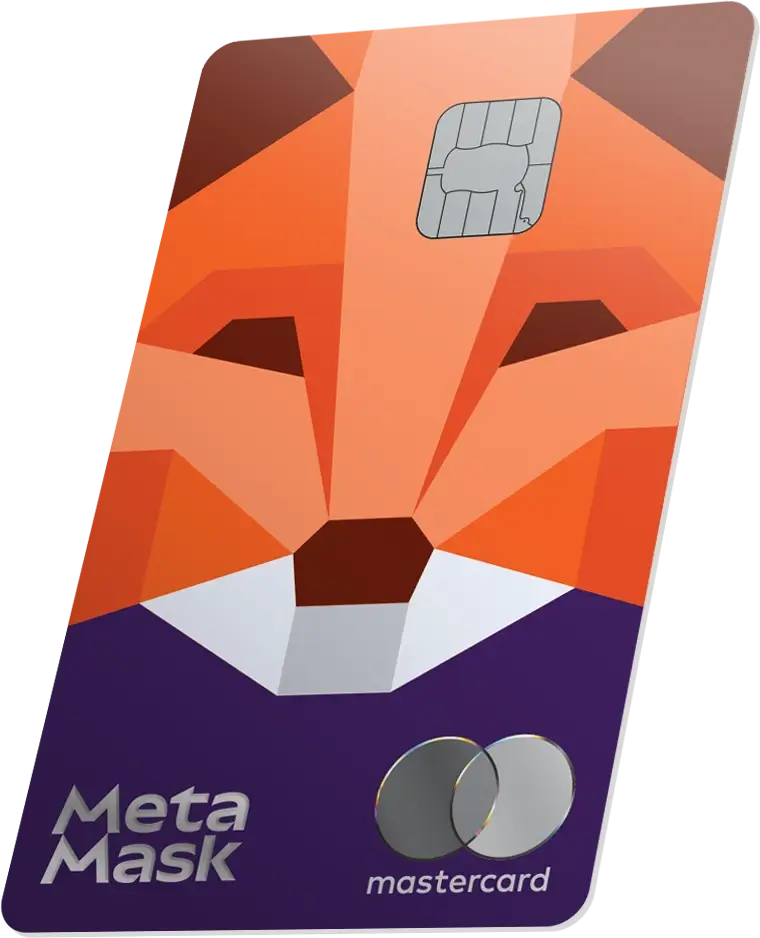 |  |
|---|---|---|
| Max Cashback | 3%Highest | 3%Highest |
| Annual Fee | TBD | FreeBest |
| FX Fee | 0% | 1.2% |
| Custody Model | Custodial | Custodial |
| Network | MASTERCARD | VISA |
| Regions | USEEAUKGLOBAL | GLOBALAPACLATAMEEA |
| Supported Assets | 9+ assets USDCUSDTwETHEUReGBPemUSDamUSDaUSDCaBasUSDC | 5+ assets SOLUSDTUSDCBTCETH |
| Cashback | Yes | Yes |
| Staking | No | No |
| Points | Yes | No |
| Airdrops | Yes | No |
| Lounge access | No | No |
| Subscription rebates | No | No |
| Metal card | Yes | No |
| Virtual Cards | No | Yes |
| Physical Cards | No | No |
| Visa | No | No |
| Mastercard | No | No |
| Apple Pay | Yes | Yes |
| Google Pay | Yes | No |
| Self-custody spend | Yes | No |
| Stablecoin spend | No | Yes |
| No annual fee | No | Yes |
| No FX fee | Yes | No |
| ATM free allowance | No | No |
| No KYC | Yes | Yes |
| Virtual vs Physical | No | Yes |
| Debit vs Prepaid | No | No |
| Best For | Best for Cashback | Best for Cashback |
Note: All data verified as of February 2026. Rewards and fees may vary based on your spending tier and region. Check each card's detailed page for complete terms.
MetaMask vs RedotPay: Key Differences
[Self-custodial](/crypto-cards/self-custody/) spending versus high-limit off-ramping - two fundamentally different approaches to crypto cards. [MetaMask](/crypto-cards/metamask-virtual-card/) offers 1% [cashback](/crypto-cards/cashback/) (3% Metal waitlist) with 0% fees, [no-KYC](/crypto-cards/no-kyc/) instant activation, wallet-native self-custody, and Rewards points for a potential Consensys/Linea airdrop. [RedotPay](/crypto-cards/redotpay-virtual-card/) offers zero permanent cashback with 2.2% total fees (1% conversion + 1.2% FX) but provides $1,000,000 daily spending limits, no-KYC instant access, and support for BTC and ETH off-ramping at scale. MetaMask wins on spending economics and custody. RedotPay wins on transaction volume and asset flexibility.
The right choice depends on your priorities: cashback rates, regional availability, custody model, and which ecosystem you already use. Below, we break down who should choose each card.
Product Overview
MetaMask - Self-custodial Mastercard debit via Baanx. Wallet-integrated (Linea, Base, Solana). Virtual (free, 1%, instant, no-KYC, $10K/month) and Metal (waitlist, 3%, $50K/month). 0% FX. 1 Rewards point per $1. Apple Pay + Google Pay. 50+ countries. Assets: USDC, USDT, wETH, EURe, GBPe, Aave yield tokens.
RedotPay - Custodial Visa prepaid. Three variants: Virtual ($10 issuance, no-KYC, instant), Solana Edition ($10, 3% promo cashback limited-time), Physical ($100 issuance, ATM access). 1% crypto conversion + 1.2% FX on all variants. No permanent cashback. $1M daily, $100K per transaction. 50+ countries. Assets: USDT, USDC, BTC, ETH, SOL.
Spending Economics
| Feature | MetaMask Virtual | RedotPay Virtual |
|---|---|---|
| Cashback | 1% | 0% (no permanent) |
| FX fee | 0% | 1.2% |
| Conversion fee | 0% | 1% |
| Annual fee | $0 | $0 ($10 issuance) |
| Net on $3K/mo | +$360/yr | -$792/yr |
| KYC | No | No |
| Activation | Instant | Instant |
Based on SpendNode's full comparison, MetaMask earns $1,152/year more than RedotPay on $3,000/month spending. Both are no-KYC, instant activation, and free to hold. The difference is pure economics: MetaMask's 0% fees and 1% cashback versus RedotPay's 2.2% fee stack with no rewards.
At higher spending volumes, the gap widens. On $10,000/month: MetaMask earns $1,200/year. RedotPay loses $2,640/year. The $3,840/year swing makes the choice clear for regular spending.
Transaction Limits: The Real Comparison
| Metric | MetaMask Virtual | MetaMask Metal | RedotPay Virtual | RedotPay Physical |
|---|---|---|---|---|
| Monthly spending | $10,000 | $50,000 | $1,000,000+ | $1,000,000+ |
| Per transaction | Standard | Standard | $100,000 | $100,000 |
| Daily limit | Standard | Standard | $1,000,000 | $1,000,000 |
| ATM monthly | N/A | N/A | N/A | $50,000 |
RedotPay processes 100x MetaMask's volume. MetaMask Virtual caps at $10,000/month. RedotPay's daily limit alone exceeds MetaMask's monthly cap by 100x. For users who need to move serious capital through the Visa network, RedotPay is in a different category entirely.
MetaMask Metal ($50K/month) narrows the gap but remains on a waitlist. Even when available, it handles 5% of RedotPay's daily capacity.
Custody: Self vs Custodial
MetaMask is self-custodial. Your crypto stays in your MetaMask wallet until the moment of purchase. No counterparty risk on idle funds. You control the private keys.
RedotPay is custodial. You deposit crypto into RedotPay's wallet for spending. The platform holds your funds. If RedotPay experiences issues, your deposited funds are at platform risk.
For users who prioritize sovereignty and control, MetaMask's self-custody model eliminates counterparty risk. For users who prioritize speed and volume, RedotPay's custodial model enables the $1M daily processing.
Asset Support
MetaMask: USDC, USDT, wETH, EURe, GBPe, and Aave yield-bearing tokens (aUSDC, aBasUSDC). Multi-chain: Linea, Base, Solana. No native BTC support.
RedotPay: USDT, USDC, BTC, ETH, SOL. Direct BTC off-ramping without bridging or wrapping. Load BTC, spend in fiat.
RedotPay supports native BTC spending. For Bitcoin holders who want to spend without wrapping to wBTC or converting to stablecoins first, RedotPay handles the conversion natively. MetaMask supports wETH but not native BTC.
What People Get Wrong
Using RedotPay for daily spending when MetaMask charges zero fees and earns cashback. RedotPay's 2.2% fee costs $66/month on $3,000 in spending. MetaMask earns $30/month on the same volume. The $96/month swing ($1,152/year) is significant for regular purchases. RedotPay is not designed for daily coffee purchases - it is designed for high-value off-ramping. How to avoid it: Use MetaMask (or any 0% fee card) for daily transactions under $10,000/month. Reserve RedotPay for transactions that exceed MetaMask's limits or require native BTC conversion.
Choosing MetaMask for high-value crypto liquidation when it caps at $10K/month. A user holding $50,000 in ETH who needs immediate fiat access would take 5+ months to off-ramp through MetaMask Virtual. RedotPay handles $50,000 in a single transaction within minutes. Even MetaMask Metal ($50K/month waitlist) would take a full month. The time-value difference matters when crypto prices are volatile or when payment deadlines are fixed. How to avoid it: Assess your maximum single-transaction need. Under $10K/month regular spending: MetaMask. Above $10K in single transactions or urgency: RedotPay.
The Fast Answer
For daily spending with self-custody: MetaMask Virtual with 1%, 0% fees, no-KYC, and wallet-native security. The simplest way to spend crypto while maintaining full control.
For high-volume off-ramping: RedotPay with $1M daily limits. Accept the 2.2% fee as the cost of scale and speed.
For native BTC spending: RedotPay. Load BTC directly without wrapping or bridging.
For Consensys ecosystem exposure: MetaMask with Rewards points. The 30M+ wallet user base and Linea L2 backing make potential airdrop events significant.
For both use cases: Keep both cards. MetaMask for daily purchases (earn 1%, no fees). RedotPay for occasional high-value transactions (pay 2.2%, no limit issues). The $10 RedotPay issuance fee is minimal insurance for having high-limit access when needed.
Outlook: MetaMask and RedotPay occupy opposite ends of the crypto card spectrum: MetaMask optimizes for self-custodial daily spending with rewards, RedotPay optimizes for custodial high-volume off-ramping with speed. If MetaMask increases its spending limits (especially at the Metal tier), it would address the volume gap. If RedotPay adds cashback or reduces fees, it would compete for daily spending. Until then, they complement rather than compete.
Fee Breakdown
| Fee | MetaMask | RedotPay |
|---|---|---|
| FX Fee | 0% | 1.2% |
| Annual Fee | TBD | Free |
| ATM Fee | 2% | TBD |
Fees pulled from issuer documentation. Verify on the official site before applying.
Who Should Choose MetaMask
The MetaMask Metal Card is best suited for users who:
- Want up to 3% cashback on spending
- Need zero FX fees for international transactions
- Are based in US, EEA, UK, GLOBAL
Who Should Choose RedotPay
The RedotPay Solana Card is best suited for users who:
- Want up to 3% cashback on spending
- Prefer a card with no annual fee
- Are based in GLOBAL, APAC, LATAM, EEA
Our Verdict
**SpendNode's MetaMask vs RedotPay verdict: MetaMask earns money on every transaction while RedotPay loses money on every transaction - but RedotPay can process 100x more volume per day.** At the free tier, MetaMask Virtual (1%, 0% fees) earns $360/year on $3,000/month spending. RedotPay Virtual (0%, 2.2% fees) loses $792/year. The swing is $1,152/year between two free, no-KYC, instant-activation cards. Both share the zero-friction onboarding advantage over most competitors: no KYC, virtual-first, active in minutes. The difference is purpose. MetaMask is a spending card that earns rewards through its 30M+ wallet ecosystem. RedotPay is an off-ramp that converts large crypto positions to Visa spending at scale. A user spending $3,000/month on daily purchases should use MetaMask. A user converting $100,000 in BTC to fiat in a single transaction needs RedotPay. The cards serve different needs and can coexist in the same wallet.
Frequently Asked Questions
Which has better cashback, MetaMask or RedotPay?
Both offer up to 3% cashback. The difference comes down to reward currency, spending caps, and eligibility.
Which card has lower fees?
MetaMask charges 0% FX fee vs RedotPay's 1.2%.
Is MetaMask or RedotPay better for self-custody?
Both use custodial models. If self-custody is important, consider providers like Gnosis Pay or ether.fi.
Which card is available in more regions?
Both are available in 4 regions. Check the issuer's website for current eligibility.