
ether.fi vs Solflare
Side-by-side comparison of ether.fi and Solflare crypto cards. Data sourced from official issuer documentation and verified by SpendNode.
Comparing 2 Cards
Side-by-side comparison of features and benefits
| Attribute |  | 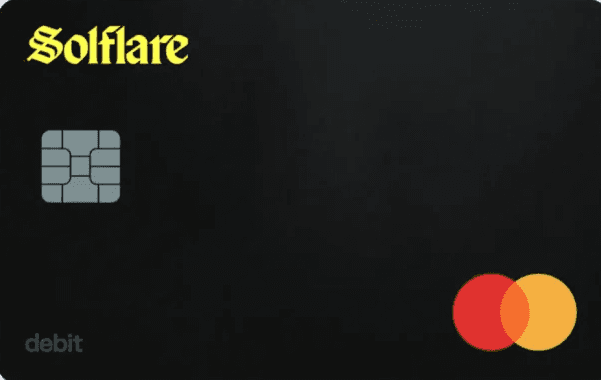 |
|---|---|---|
| Max Cashback | 3%Highest | TBD |
| Annual Fee | FreeBest | FreeBest |
| FX Fee | 1% | 1% |
| Custody Model | Custodial | Custodial |
| Network | VISA | MASTERCARD |
| Regions | GLOBALUSUKEEA | EEAUK |
| Supported Assets | 4+ assets USDCETHeETHweETH | 1+ assets USDC |
| Cashback | Yes | No |
| Staking | Yes | No |
| Points | Yes | No |
| Airdrops | No | Yes |
| Lounge access | No | No |
| Subscription rebates | No | No |
| Metal card | No | No |
| Virtual Cards | Yes | Yes |
| Physical Cards | Yes | No |
| Visa | No | No |
| Mastercard | No | No |
| Apple Pay | Yes | No |
| Google Pay | Yes | Yes |
| Self-custody spend | Yes | Yes |
| Stablecoin spend | Yes | No |
| No annual fee | Yes | Yes |
| No FX fee | No | No |
| ATM free allowance | No | No |
| No KYC | No | No |
| Virtual vs Physical | Yes | Yes |
| Debit vs Prepaid | No | No |
| Best For | Best for Cashback | Best for Security |
Note: All data verified as of February 2026. Rewards and fees may vary based on your spending tier and region. Check each card's detailed page for complete terms.
ether.fi vs Solflare: Key Differences
Ethereum's liquid-staking card versus Solana's wallet-native card - two [self-custodial](/crypto-cards/self-custody/) cards built on rival L1 ecosystems with fundamentally different reward models. [ether.fi](/crypto-cards/ether-fi-core-card/) delivers a guaranteed 3% [cashback](/crypto-cards/cashback/) against ETH collateral that earns [staking](/crypto-cards/staking/) yield, EigenLayer restaking rewards, and ETHFI points. [Solflare](/crypto-cards/solflare-card/) spends USDC directly from your Solana wallet with speculative rewards through "The Benefits" platform - raffle entries and ecosystem points, with direct cashback listed as "coming soon." Both are genuinely self-custodial with identical fee structures (1% FX, 2% ATM). The comparison comes down to guaranteed returns versus ecosystem speculation, and global reach versus EEA/UK only.
The right choice depends on your priorities: cashback rates, regional availability, custody model, and which ecosystem you already use. Below, we break down who should choose each card.
Two Self-Custodial Models, Two Ecosystems
Both cards keep your funds under your control until the moment of purchase. Neither requires depositing into a centralized exchange. But the architectures differ by blockchain and spending model.
ether.fi uses a credit-line model on Ethereum. You collateralize eETH or weETH and borrow against it. Your collateral simultaneously earns Ethereum staking yield (approximately 4% APY), EigenLayer restaking rewards, and ETHFI Membership Points. No crypto is sold at point of sale - you spend borrowed value, meaning no taxable disposal in most jurisdictions. Visa network. Apple Pay and Google Pay. Four tiers: Core (free, 3% cashback), Luxe (metal card, conference lounges, 65% hotel discounts), Pinnacle ($200K limits), VIP (invite-only, 0% FX). All tiers share the same flat 3% cashback.
Solflare uses a debit model on Solana. You spend USDC directly from your Solflare wallet with Solana-speed settlement. Every transaction sells USDC at point of sale, creating a taxable event (though stablecoin spending carries minimal capital gains). Mastercard network. Google Pay only (no Apple Pay). Single tier with no annual fee. Rewards through "The Benefits" platform: raffle entries (headline prize: Porsche 911 GT3), ecosystem points, and future airdrop eligibility. Direct cashback listed as "coming soon" as of February 2026.
Tax treatment differs structurally. ether.fi's credit model borrows without selling - no disposal, no capital gains trigger on appreciated ETH. Solflare's debit model sells USDC at point of sale. Since USDC is a stablecoin with minimal price deviation, the tax impact is typically negligible. However, ether.fi's credit model provides a cleaner tax position for users whose collateral (ETH) has appreciated significantly - they preserve their ETH exposure while spending.
Guaranteed Returns vs Speculative Rewards
This is the core asymmetry in the comparison.
| Scenario | ether.fi (3%, same-currency) | ether.fi (3%, cross-currency) | Solflare (0% cashback, same-currency) | Solflare (0% cashback, cross-currency) |
|---|---|---|---|---|
| Casual ($1,000/mo) | $30 | $20 | $0 + raffle entries | -$10 (FX cost only) |
| Active ($2,000/mo) | $60 | $40 | $0 + raffle entries | -$20 (FX cost only) |
| Power ($3,000/mo) | $90 | $60 | $0 + raffle entries | -$30 (FX cost only) |
| Annual ($3,000/mo) | $1,080 | $720 | $0 + raffle entries | -$360 (FX cost only) |
SpendNode's 2026 comparison reflects a total asymmetry: ether.fi earns $1,080/year on same-currency spending at $3,000/month while Solflare earns $0 in guaranteed cashback. On cross-currency spending, Solflare users pay the 1% FX fee with no cashback to offset it - a net cost of $360/year. ether.fi's 3% more than covers the identical 1% FX fee, delivering a 2% net return ($720/year).
Solflare's rewards are event-driven and speculative. "The Benefits" platform launched with a Porsche 911 GT3 raffle (through February 14, 2026). Every transaction earns raffle entries and ecosystem points. The expected value of raffle entries depends on the number of participants and prize pool - for most users, the expected return per dollar spent will be a fraction of 1%. Future airdrop distributions from Solana ecosystem partners could add meaningful value, but this is unquantifiable today.
Solflare has indicated direct cashback is "coming soon." When launched, this would transform the comparison. A hypothetical 1-2% cashback rate on Solflare with the same 1% FX fee would make it competitive for same-currency European spending. Until the rate is announced, Solflare's card is effectively a zero-return spending tool with speculative upside.
Yield Stacking: ether.fi's Structural Advantage
ether.fi's credit model creates passive income alongside card spending:
- Card cashback: 3% on all spending ($1,080/year at $3,000/month)
- ETH staking yield: approximately 4% APY on collateral ($800/year on $20,000)
- EigenLayer restaking rewards: additional variable yield
Combined annual returns for $20,000 ETH collateral, $3,000/month spending:
- ether.fi: $1,080 cashback + $800 staking + variable restaking = approximately $1,880+/year
- Solflare: $0 cashback + $0 yield on USDC balance + raffle entries = speculative
The staking yield alone ($800/year) exceeds the expected value of most raffle programs. ether.fi's collateral earns continuously while backing your spending. Solflare's USDC balance sits idle until spent, earning nothing.
The trade-off is liquidation risk. ether.fi's credit model carries the risk that a significant ETH decline triggers collateral liquidation. Solflare's debit model has zero liquidation risk - you spend your USDC balance directly with no borrowing. For users who want zero exposure to collateral calls, Solflare's simpler model eliminates this concern.
Geographic Reach and Practical Differences
ether.fi: Available globally including the US, UK, and EEA. Visa. Apple Pay and Google Pay. 4 assets (USDC, ETH, eETH, weETH). Spending limits scale by tier up to $200K/month (Pinnacle). Conference lounges and 65% hotel discounts at Luxe tier and above.
Solflare: EEA and UK only. No US access. Mastercard. Google Pay only (no Apple Pay). USDC only. $30,000/month spending limit. $500/day ATM limit. No premium perks. Free bank reloads (crypto reloads carry 1% fee).
For US users, ether.fi is the only option. For APAC, LATAM, or any market outside Europe, ether.fi is the only option. The geographic comparison is one-sided.
Within Europe, the practical difference is Apple Pay support: ether.fi has it, Solflare does not. For iPhone users who rely on mobile payments, this is a daily usability gap.
Solflare's advantage is Solana wallet integration. For users who already hold USDC in their Solflare wallet, the card is a frictionless extension of their existing setup. No new wallet, no bridging, no token swaps. Bank reloads are free (ether.fi charges no reload fee either). The onboarding for existing Solflare users is the simplest path from wallet to card spending in the Solana ecosystem.
App Store ratings: Solflare has an exceptionally high 4.8 stars from 9,226 reviews. ether.fi is newer to the card market. Both wallets have strong user satisfaction.
Common Pitfalls
Choosing Solflare over ether.fi based on the expectation that "coming soon" cashback will match or exceed 3%. Solflare has announced direct cashback is coming but has not disclosed a rate. Users who choose Solflare today expecting a future 3%+ rate are foregoing $1,080/year in guaranteed ether.fi cashback for an unconfirmed promise. If Solflare launches at 1%, the gap is still $720/year. At 2%, still $360/year. Only at 3%+ with better fee structure would Solflare match ether.fi on cashback alone - and even then, ether.fi's staking yield adds $800+/year that Solflare cannot replicate. How to avoid it: Use ether.fi for guaranteed returns now. When Solflare announces its cashback rate, compare the actual numbers. Nothing prevents holding both cards - ether.fi for daily spending with guaranteed 3%, Solflare for Solana ecosystem engagement and airdrop eligibility.
Dismissing Solflare entirely because it has no fixed cashback rate. For Solana-native users, the card serves a purpose beyond cashback: maintaining SOL ecosystem activity for airdrop eligibility, earning raffle entries with no additional cost (you would spend the USDC anyway), and keeping funds in the Solana ecosystem without bridging to Ethereum. The expected value of future Solana ecosystem airdrops for active users could theoretically exceed ether.fi's cashback - though this is speculative. How to avoid it: Evaluate Solflare as an ecosystem tool, not a cashback card. If you are building a position in the Solana ecosystem and already hold USDC in Solflare, the card adds speculative upside at zero marginal cost ($0 annual fee, 0% bank reload). The mistake is choosing Solflare instead of ether.fi for primary spending - the rational approach is using both for their respective strengths.
Which One to Pick
For ETH holders wanting maximum total returns: ether.fi Core with 3% guaranteed cashback plus staking yield. Total returns exceed $1,880/year on $3,000/month spending with $20,000 collateral. Global availability including the US.
For SOL-native users in Europe wanting ecosystem engagement: Solflare as a secondary card for Solana ecosystem rewards and airdrop eligibility. Use alongside a guaranteed-cashback card for primary spending.
For US users: ether.fi is the only option (Solflare serves EEA/UK only).
For premium travelers: ether.fi Luxe adds conference lounges and 65% hotel discounts. Solflare offers no premium perks at any level.
For iPhone users in Europe: ether.fi supports Apple Pay; Solflare does not (Google Pay only).
Outlook: This comparison will change significantly when Solflare launches its direct cashback feature. If the rate is 2%+ with the same 1% FX and 2% ATM fee structure, Solflare becomes competitive for European same-currency spending. Until then, ether.fi's guaranteed 3% plus yield stacking makes it the clear choice on measurable returns. Watch for Solflare's cashback announcement and any Solana ecosystem airdrop distributions to active cardholders, which could retroactively justify early adoption.
Fee Breakdown
| Fee | ether.fi | Solflare |
|---|---|---|
| FX Fee | 1% | 1% |
| Annual Fee | Free | Free |
| ATM Fee | 2% | 2% |
Fees pulled from issuer documentation. Verify on the official site before applying.
Who Should Choose ether.fi
The ether.fi Core Card is best suited for users who:
- Want up to 3% cashback on spending
- Prefer a card with no annual fee
- Are based in GLOBAL, US, UK, EEA
Who Should Choose Solflare
The Solflare Card is best suited for users who:
- Prefer a card with no annual fee
- Are based in EEA, UK
Our Verdict
**In SpendNode's head-to-head on measurable financial returns, ether.fi wins by an unbridgeable margin.** At $3,000/month spending, ether.fi earns $1,080/year in guaranteed cashback. Solflare earns $0 in guaranteed cashback - its rewards are currently raffle entries and ecosystem points with no fixed rate. Add ether.fi's staking yield (approximately 4% APY on collateral), and the total value gap exceeds $1,880/year for ETH holders. ether.fi also serves the US and global markets while Solflare is limited to EEA and UK. Solflare's appeal is ecosystem-specific: SOL-native users who value [airdrop](/crypto-cards/airdrops/) eligibility, Solana ecosystem integration, and speculative upside from raffle prizes may find the card worth holding alongside (not instead of) a guaranteed-cashback card. When Solflare launches its direct cashback feature, this comparison will need revisiting.
Frequently Asked Questions
Which has better cashback, ether.fi or Solflare?
Compare the rewards section above for the latest cashback rates from both issuers.
Which card has lower fees?
Both charge 1% FX fee. Neither charges an annual fee.
Is ether.fi or Solflare better for self-custody?
Both use custodial models. If self-custody is important, consider providers like Gnosis Pay or ether.fi.
Which card is available in more regions?
ether.fi is available in 4 regions (GLOBAL, US, UK, EEA) compared to Solflare's 2 regions (EEA, UK). Always verify eligibility on the issuer's website.