
Coinbase vs OKX
Side-by-side comparison of Coinbase and OKX crypto cards. Data sourced from official issuer documentation and verified by SpendNode.
Comparing 2 Cards
Side-by-side comparison of features and benefits
| Attribute | 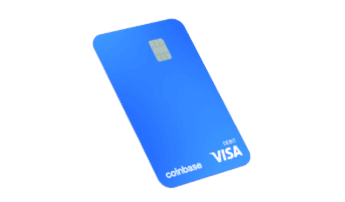 |  |
|---|---|---|
| Max Cashback | 4% | 5%Highest |
| Annual Fee | FreeBest | FreeBest |
| FX Fee | 0% | 0% |
| Custody Model | Custodial | Custodial |
| Network | VISA | MASTERCARD |
| Regions | US | EEAAPAC |
| Supported Assets | 4+ assets USDCBTCETHSOL | 6+ assets OKBUSDTUSDCBTCETHSOL |
| Cashback | Yes | Yes |
| Staking | No | No |
| Points | No | No |
| Airdrops | No | No |
| Lounge access | No | No |
| Subscription rebates | No | No |
| Metal card | No | No |
| Virtual Cards | No | No |
| Physical Cards | No | No |
| Visa | No | No |
| Mastercard | No | No |
| Apple Pay | No | Yes |
| Google Pay | No | Yes |
| Self-custody spend | No | No |
| Stablecoin spend | No | No |
| No annual fee | Yes | Yes |
| No FX fee | Yes | Yes |
| ATM free allowance | No | No |
| No KYC | No | No |
| Virtual vs Physical | No | No |
| Debit vs Prepaid | No | No |
| Best For | Best for US users | Best for Cashback |
Note: All data verified as of February 2026. Rewards and fees may vary based on your spending tier and region. Check each card's detailed page for complete terms.
Coinbase vs OKX: Key Differences
The US regulatory benchmark versus the global exchange challenger. [Coinbase](/crypto-cards/coinbase-card/) offers American users FDIC-insured balances, a stainless steel Amex credit card with up to 4% BTC back and full purchase protection, plus a prepaid Visa with zero-fee [USDC spending](/crypto-cards/stablecoin/). [OKX](/crypto-cards/okx/) targets EEA and APAC users with up to 5% OKB-tiered [cashback](/crypto-cards/cashback/), [0% FX fees](/crypto-cards/no-fx-fee/), and [Apple Pay/Google Pay](/crypto-cards/apple-pay-google-pay/) support. No geographic overlap exists between these cards.
The right choice depends on your priorities: cashback rates, regional availability, custody model, and which ecosystem you already use. Below, we break down who should choose each card.
No Geographic Overlap
Coinbase serves the United States exclusively. The prepaid Visa is available in all US states except Hawaii. The Coinbase One Amex credit card is available in the US excluding territories. No Coinbase card product serves any market outside the United States.
OKX serves the EEA and APAC with a Mastercard debit card. OKX is not available in the US, UK, or LATAM. Additionally, OKX is banned or restricted in India, Malaysia, Philippines, Thailand, Singapore, Japan, and Canada - removing seven major APAC markets.
There is no market where both cards are simultaneously available. A US user must use Coinbase. An EEA or APAC user must use OKX (where available). The value of this comparison is in understanding the two exchanges' card philosophies for users who may relocate, hold accounts on both platforms, or are choosing which exchange ecosystem to invest in long-term.
Net Returns After Fees: Nearly Identical at the Top
Both cards offer 0% FX fees. The fee divergence is in conversion: OKX charges 0.9% on every crypto-to-fiat transaction. Coinbase charges no explicit conversion fee on the Amex (it is a credit line - no crypto sold at POS) and zero fees on USDC spending via the prepaid Visa. A spread applies on non-USDC crypto conversions through the Coinbase Visa.
| Scenario | Coinbase Amex (4% BTC) | Coinbase Amex (2% base) | Coinbase Visa (USDC) | OKX Base (approx. 1%) | OKX Mid (approx. 3%) | OKX Max (5%) |
|---|---|---|---|---|---|---|
| Casual ($1,000/mo) | $36 (after $4.17/mo sub) | $16 (after sub) | $0 cost, $0 rewards | $1 (0.1% net) | $21 (2.1% net) | $41 (4.1% net) |
| Active ($3,000/mo) | $116 | $56 | $0 cost | $3 | $63 | $123 |
| Power ($5,000/mo) | $196 | $96 | $0 cost | $5 | $105 | $205 |
| Annual ($3,000/mo) | $1,392 | $672 | $0 | $36 | $756 | $1,476 |
At maximum tiers, the net returns are remarkably close. Coinbase Amex at 4% earns $1,392/year on $3,000/month spending. OKX at 5% (4.1% net after 0.9% conversion) earns $1,476/year. The $84/year gap - just $7/month - is the entire difference at the ceiling. But the paths to reaching those ceilings are fundamentally different: Coinbase requires $49.99/year membership plus sufficient Assets on Coinbase (AOC), while OKX requires substantial OKB holdings and consistent 30-day trading volume.
SpendNode's winner by category at base tiers: the gap is enormous. OKX at 0.1% net earns $36/year on $3,000/month spending. Coinbase Amex at even the base 2% tier earns $672/year. A new OKX user with no OKB holdings earns 18x less than a Coinbase user at the minimum Amex tier.
The Coinbase prepaid Visa with zero-fee USDC spending earns no cashback but costs nothing. For daily purchases where tax efficiency matters more than rewards, spending USDC through Coinbase creates zero capital gains and zero fees - a clean utility play with no equivalent on OKX.
Tax Treatment: The Defining Structural Difference
This is where the comparison transcends raw cashback math.
Coinbase's Amex is a credit card. When you tap the Amex, you are spending a credit line. No crypto is sold at the point of sale. No taxable disposal occurs. BTC rewards received are treated like traditional credit card cashback, which current IRS guidance suggests is not taxable income. The Coinbase prepaid Visa with USDC spending also minimizes tax events because USDC maintains a 1:1 USD peg, generating minimal or zero capital gains.
OKX's Mastercard is a debit card. Every transaction converts crypto to fiat at the point of sale, creating a taxable disposal event. If you loaded USDT at $1.00 and spend when USDT is still $1.00, the gain is near zero. But spending appreciated BTC, ETH, or SOL triggers capital gains on the appreciation since acquisition.
For a US-based comparison (hypothetical, since OKX is not available in the US): a user spending $3,000/month from appreciated crypto on OKX would owe capital gains tax on every transaction. The same user on Coinbase Amex would owe zero tax on spending, only potentially owing tax on BTC rewards if IRS guidance changes. At a 20% long-term capital gains rate on average 50% appreciation, the OKX user would face approximately $3,600/year in additional tax liability that the Coinbase Amex user completely avoids.
This structural advantage makes Coinbase's credit card model fundamentally superior for users holding appreciated crypto assets, independent of cashback rates.
Regulatory Trust and Protection
Coinbase is publicly traded (NASDAQ: COIN). It files quarterly earnings with the SEC, undergoes public audits, and provides FDIC pass-through insurance up to $250,000 on USD balances via Pathward, N.A. With 1.79 million App Store reviews at a 4.7 rating, it is the most reviewed crypto app in the US. The Amex adds layers of protection no crypto debit card can match:
- Retail Protection: up to $10,000 per claim for damaged or stolen purchases
- Extended Warranty: doubles manufacturer coverage up to 1 additional year
- Trip Cancellation/Interruption insurance
- Worldwide Car Rental Insurance (Loss Damage Waiver)
- Return Protection
A single Retail Protection claim on a $3,000 laptop exceeds two years of the cashback difference between the two cards. These protections are guaranteed Amex benefits, not probabilistic.
OKX is privately held with no public financial disclosures. The exchange has 21,983 App Store reviews at 4.6 rating and over 20 million users globally. OKX operates under various national regulatory frameworks and may benefit from MiCA compliance in the EEA. The card offers no purchase protection, no travel insurance, and no extended warranty.
For users choosing a long-term exchange platform, Coinbase's public company transparency and FDIC insurance represent a qualitatively different level of asset safety.
Common Pitfalls
Comparing OKX's 5% headline to Coinbase's 4% without accounting for conversion fees and tier accessibility. After OKX's 0.9% conversion fee, the 5% nets 4.1% - just 0.1% above Coinbase's 4% Amex. On $3,000/month spending, the difference is $3/month ($36/year). But OKX's 5% requires substantial OKB holdings and sustained trading volume, while many OKX users sit at the base tier earning 0.1% net. Meanwhile, Coinbase's 2% base tier (available to all Amex holders) already earns 20x more than OKX's base tier. The raw headline comparison dramatically overstates OKX's advantage. How to avoid it: Compare at your actual tier on each platform. If you are at OKX base (approx. 1%) versus Coinbase 2% base, Coinbase earns $672/year versus OKX's $36/year on $3,000/month spending. OKX only matches Coinbase's base tier when your OKB cashback rate exceeds approximately 2.9% (to offset the 0.9% conversion fee).
Ignoring the credit card vs debit card tax difference when choosing a platform. Users often compare cashback rates as though they are the only financial variable. But Coinbase's Amex generates zero taxable events per transaction (credit line, no crypto sold), while OKX's debit card creates a taxable disposal on every purchase. For users spending appreciated crypto, the tax savings from Coinbase's credit model can exceed the cashback earned. A user with $3,000/month in spending from crypto that has doubled in value faces approximately $3,600/year in capital gains tax on OKX that they would completely avoid on Coinbase Amex. How to avoid it: Factor in your capital gains exposure. If you hold stablecoins only (no appreciation), the tax difference is minimal. If you hold appreciated BTC/ETH and spend from those positions, Coinbase's credit card model is structurally cheaper regardless of the cashback rate.
Which One to Pick
US residents: Coinbase is your only option between these two. The Amex at up to 4% BTC with full purchase/travel protection, no crypto disposal at POS, and a credit card tax advantage is among the strongest crypto card offerings globally. Add the prepaid Visa for zero-fee USDC spending as a tax-efficient daily driver.
EEA/APAC residents (excluding banned countries): OKX is your only option. At mid-to-high OKB tiers (3-5%), it delivers competitive net returns of 2.1-4.1% after the 0.9% conversion fee. The 0% FX makes it excellent for cross-border European spending. Apple Pay support adds daily convenience.
Outlook: Coinbase briefly offered a card in the UK before withdrawing. With MiCA now in effect, Coinbase has the regulatory infrastructure to re-enter Europe in 2026. If that happens, this comparison shifts from geography-decided to a genuine head-to-head - and Coinbase's credit card model, Amex protection suite, and public company transparency would create serious competitive pressure on OKX in the EEA. OKX's card program is stable in Europe but faces 7-country APAC bans with no reinstatement timeline. Watch for a Coinbase European card announcement, which would be the single biggest shift in the exchange card landscape since Binance's EEA withdrawal in December 2023.
Fee Breakdown
| Fee | Coinbase | OKX |
|---|---|---|
| FX Fee | 0% | 0% |
| Annual Fee | Free | Free |
| ATM Fee | 0% | 1% |
Fees pulled from issuer documentation. Verify on the official site before applying.
Who Should Choose Coinbase
The Coinbase Card (Prepaid Visa) is best suited for users who:
- Want up to 4% cashback on spending
- Need zero FX fees for international transactions
- Prefer a card with no annual fee
- Are based in US
Who Should Choose OKX
The OKX Mastercard Debit is best suited for users who:
- Want up to 5% cashback on spending
- Need zero FX fees for international transactions
- Prefer a card with no annual fee
- Are based in EEA, APAC
Our Verdict
**This comparison is decided by your passport.** Coinbase is US-only. OKX serves EEA and APAC. No individual user can choose between both cards. The comparison matters for users deciding which exchange to commit to as a long-term platform - especially given Coinbase's potential European expansion under MiCA. According to SpendNode's side-by-side data, Coinbase's Amex credit card avoids crypto disposal at the point of sale (no taxable event per transaction), offers full Amex protection worth thousands in potential claim value, and pays up to 4% in BTC rather than an exchange token. OKX counters with a higher headline ceiling (5% vs 4%) and no subscription requirement, though the 0.9% conversion fee reduces the effective 5% to 4.1% net - nearly identical to Coinbase's 4%.
Frequently Asked Questions
Which has better cashback, Coinbase or OKX?
OKX offers up to 5% cashback compared to Coinbase's 4%. Actual rates depend on your spending tier and card variant.
Which card has lower fees?
Both charge 0% FX fee. Neither charges an annual fee.
Is Coinbase or OKX better for self-custody?
Both use custodial models. If self-custody is important, consider providers like Gnosis Pay or ether.fi.
Which card is available in more regions?
OKX is available in 2 regions (EEA, APAC) compared to Coinbase's 1 region (US). Always verify eligibility on the issuer's website.