
Coinbase vs Kraken
Side-by-side comparison of Coinbase and Kraken crypto cards. Data sourced from official issuer documentation and verified by SpendNode.
Comparing 2 Cards
Side-by-side comparison of features and benefits
| Attribute | 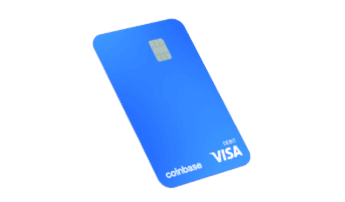 | 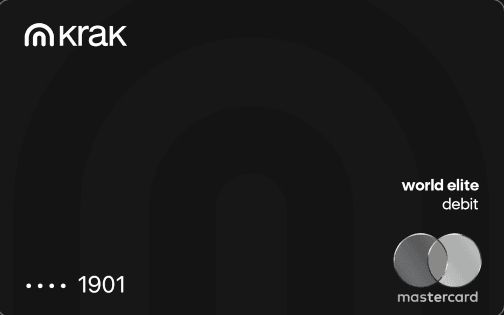 |
|---|---|---|
| Max Cashback | 4%Highest | 1% |
| Annual Fee | FreeBest | FreeBest |
| FX Fee | 0% | 0% |
| Custody Model | Custodial | Custodial |
| Network | VISA | MASTERCARD |
| Regions | US | EEAUK |
| Supported Assets | 4+ assets USDCBTCETHSOL | 6+ assets BTCETHUSDTUSDCEURGBP |
| Cashback | Yes | Yes |
| Staking | No | Yes |
| Points | No | No |
| Airdrops | No | No |
| Lounge access | No | No |
| Subscription rebates | No | No |
| Metal card | No | No |
| Virtual Cards | No | Yes |
| Physical Cards | No | Yes |
| Visa | No | No |
| Mastercard | No | No |
| Apple Pay | No | Yes |
| Google Pay | No | No |
| Self-custody spend | No | No |
| Stablecoin spend | No | No |
| No annual fee | Yes | Yes |
| No FX fee | Yes | Yes |
| ATM free allowance | No | No |
| No KYC | No | No |
| Virtual vs Physical | No | Yes |
| Debit vs Prepaid | No | No |
| Best For | Best for Cashback | Best for Yield |
Note: All data verified as of February 2026. Rewards and fees may vary based on your spending tier and region. Check each card's detailed page for complete terms.
Coinbase vs Kraken: Key Differences
Two of the most trusted exchanges in crypto, both offering cards with zero FX fees and [no annual fees](/crypto-cards/no-annual-fee/). [Coinbase](/crypto-cards/coinbase-card/) serves the US with up to 4% BTC back on a stainless steel Amex credit card plus zero-fee [USDC spending](/crypto-cards/stablecoin/) on a prepaid Visa. [Kraken](/crypto-cards/kraken/) serves the EEA and UK with 1% uncapped [cashback](/crypto-cards/cashback/), 400+ spendable assets, 3.6% APY on idle balances, and zero fees across every category. No geographic overlap.
The right choice depends on your priorities: cashback rates, regional availability, custody model, and which ecosystem you already use. Below, we break down who should choose each card.
Both US Exchanges, Different Card Markets
Both Coinbase and Kraken are US-headquartered, heavily regulated exchanges. This shared heritage provides unique institutional trust for crypto card users.
Coinbase serves the United States exclusively. The prepaid Visa works in all states except Hawaii. The Coinbase One Amex credit card is US-only excluding territories. Coinbase is publicly traded (NASDAQ: COIN) with FDIC pass-through insurance up to $250,000 on USD balances via Pathward, N.A.
Kraken serves the EEA and UK with a Mastercard debit card featuring Apple Pay support. It is not available in the US or any non-European market. Kraken entered the European card market in 2024, filling the gap left by Binance's December 2023 EEA exit.
No individual user can hold both cards. The comparison matters for users choosing which exchange to commit to as a platform, especially those who may relocate or who maintain accounts on both.
Net Returns After Fees
Both cards charge 0% FX fees and $0 annual fees. The rewards gap and yield integration create the value difference.
| Scenario | Coinbase Amex (4% BTC) | Coinbase Amex (2% base) | Coinbase Visa (USDC) | Kraken (1%, zero fees) | Kraken + $20K yield |
|---|---|---|---|---|---|
| Casual ($1,000/mo) | $36 (after $4.17/mo sub) | $16 (after sub) | $0 cost, $0 rewards | $10 | $70 ($10 + $60 yield) |
| Active ($3,000/mo) | $116 | $56 | $0 cost | $30 | $90 |
| Power ($5,000/mo) | $196 | $96 | $0 cost | $50 | $110 |
| Annual ($3,000/mo) | $1,392 | $672 | $0 | $360 | $1,080 |
On pure cashback, Coinbase Amex at 4% outperforms Kraken by 4x. At $3,000/month, $1,392/year versus $360/year. The gap is unambiguous at the top tier.
But many Coinbase users qualify for the 2% base Amex tier, not 4%. At 2%, Coinbase earns $672/year versus Kraken's $360 - still ahead, but by less. Add Kraken's 3.6% APY on a $20,000 idle balance ($720/year), and Kraken's total ecosystem return ($1,080) exceeds Coinbase 2% base ($672). At the 4% Amex tier, Coinbase still wins ($1,392 vs $1,080), but the yield narrows the gap from 4x to 1.3x.
Kraken's zero-spread pricing is the hidden advantage. Coinbase applies a spread on non-USDC crypto conversions via the prepaid Visa (typically 0.5-2% depending on asset and liquidity). Kraken converts at mid-market rates with no spread markup. On $3,000/month in non-USDC crypto spending via Coinbase Visa, the spread cost could reach $15-60/month ($180-720/year). Kraken's cost: $0. This spread cost does not apply to the Coinbase Amex (which uses a credit line, not crypto conversion).
Tax Treatment: Credit Card vs Debit Card
Coinbase Amex is a credit card. When you spend, you are using a credit line. No crypto is sold at the point of sale. No taxable disposal occurs. BTC rewards received are treated like traditional credit card cashback, which current IRS guidance suggests is not taxable income.
Kraken is a debit card. Every transaction converts crypto to fiat at the point of sale, creating a taxable disposal event. Spending appreciated BTC through Kraken triggers capital gains tax on the appreciation.
This structural difference is significant for users holding appreciated crypto. A user with $3,000/month in spending from BTC that has doubled in value faces approximately $3,600/year in capital gains tax on Kraken at a 20% rate. The same user on Coinbase Amex faces $0 in disposal-related tax. The tax savings from Coinbase's credit model can exceed the entire cashback earned on Kraken.
Coinbase's prepaid Visa with USDC spending also minimizes tax events since USDC maintains a 1:1 USD peg.
400+ Assets vs 4 Assets
SpendNode's winner by category on asset breadth: this is the widest support gap in any comparison we track.
Kraken supports over 400 cryptocurrencies for direct spending. A user holding DOT, AVAX, ATOM, MATIC, or any of hundreds of altcoins can spend directly without converting first. The conversion happens at mid-market rate with zero spread at the point of sale.
Coinbase supports 4 assets on the prepaid Visa (USDC, BTC, ETH, SOL). The Amex pays rewards in BTC only. For altcoin holders, Coinbase requires converting to a supported asset before spending the Visa - creating both friction and an additional taxable event.
For BTC/ETH/USDC holders, the asset gap is irrelevant. Both platforms handle major assets cleanly. For diverse portfolio holders, Kraken's 400+ assets eliminate conversion steps entirely.
Trust and Security
Coinbase is publicly traded with FDIC insurance, SEC oversight, quarterly earnings, and public audits. 1.79 million App Store reviews at 4.7 rating. The Amex adds Retail Protection (up to $10,000/claim), Extended Warranty, Trip Cancellation/Interruption, and Car Rental Insurance.
Kraken is privately held but has never suffered a security breach since its 2011 founding - over 14 years of uninterrupted operation. It publishes proof-of-reserves audits and maintains institutional-grade custody. 27,963 App Store reviews at 4.7 rating.
Both platforms provide the kind of institutional trust that risk-averse users value. Coinbase proves it through public financial transparency. Kraken proves it through an unblemished operational track record. The Amex protection suite adds a layer of consumer safety (purchase protection, travel insurance) that Kraken's Mastercard debit does not offer.
Common Pitfalls
Assuming Coinbase's 4% Amex rate is available to all cardholders. The 4% tier requires a high 30-day average Assets on Coinbase (AOC). Users with modest holdings start at 2% - identical to two-thirds of Kraken's 1% advantage perception. At the 2% base tier on $3,000/month, Coinbase earns $672/year. Add Kraken's 3.6% APY on a $20,000 balance ($720/year), and Kraken's total ecosystem return ($1,080/year) exceeds Coinbase 2% by 61%. The "4x advantage" only materializes at the top AOC tier. How to avoid it: Check your current AOC in the Coinbase app. If you are at 2%, factor in Kraken's idle yield when comparing total returns. The cashback gap is real at 4%, but much smaller at 2%.
Dismissing Kraken's 1% as uncompetitive without considering the zero-spread pricing and 400+ asset support. A user who sees "only 1% cashback" may overlook that Kraken charges zero spread on crypto conversions while Coinbase's prepaid Visa charges 0.5-2% spread on non-USDC assets. On $3,000/month in non-USDC spending, Coinbase's spread costs $15-60/month ($180-720/year) that Kraken does not charge. After accounting for spread, Coinbase's effective return on the prepaid Visa can be negative on volatile assets, while Kraken's 1% is always a clean 1%. How to avoid it: If you plan to spend non-USDC crypto frequently, compare Kraken's zero-spread 1% cashback to Coinbase's prepaid Visa after spread. For USDC-only spending, Coinbase Visa is genuinely zero-cost. For Amex spending, spread is irrelevant (credit line, no crypto conversion).
Which One to Pick
US residents: Coinbase is your only option. The Amex at up to 4% BTC with full purchase/travel protection and no crypto disposal at POS is excellent. Add the prepaid Visa for zero-fee USDC spending as a tax-efficient daily driver.
EEA/UK residents: Kraken is your only option between these two. The 1% uncapped cashback with truly zero fees (no spread, no FX, no conversion, no ATM), 400+ assets, and 3.6% APY yield creates strong total returns, especially for diverse portfolio holders.
Outlook: Coinbase briefly operated a card in the UK before withdrawing. With MiCA in effect, Coinbase has the infrastructure to re-enter Europe in 2026, which would create a genuine head-to-head with Kraken for the first time. That matchup - Coinbase's Amex protection and 4% BTC versus Kraken's zero-fee transparency and 400+ assets - would be one of the most consequential in the European crypto card market. Kraken's card is relatively new (launched 2024) and may expand its cashback beyond the current flat 1% as the program matures. Watch for both developments.
Fee Breakdown
| Fee | Coinbase | Kraken |
|---|---|---|
| FX Fee | 0% | 0% |
| Annual Fee | Free | Free |
| ATM Fee | 0% | 0% |
Fees pulled from issuer documentation. Verify on the official site before applying.
Who Should Choose Coinbase
The Coinbase Card (Prepaid Visa) is best suited for users who:
- Want up to 4% cashback on spending
- Need zero FX fees for international transactions
- Prefer a card with no annual fee
- Are based in US
Who Should Choose Kraken
The Krak Mastercard is best suited for users who:
- Want up to 1% cashback on spending
- Need zero FX fees for international transactions
- Prefer a card with no annual fee
- Are based in EEA, UK
Our Verdict
**Based on SpendNode's full comparison, these cards serve different continents.** US users must choose Coinbase. EEA/UK users must choose Kraken. On the merits: Coinbase wins on rewards (4% vs 1%), purchase protection (full Amex suite), and tax efficiency (credit card = no crypto disposal at POS). Kraken wins on asset diversity (400+ vs 4), transparent mid-market pricing with zero spread markup, and integrated 3.6% APY yield on idle balances. For users choosing between the two exchanges as long-term platforms, the comparison reveals different philosophies: Coinbase optimizes for reward rate and consumer protection, Kraken optimizes for transparency and portfolio flexibility.
Frequently Asked Questions
Which has better cashback, Coinbase or Kraken?
Coinbase offers up to 4% cashback compared to Kraken's 1%. Actual rates depend on your spending tier and card variant.
Which card has lower fees?
Both charge 0% FX fee. Neither charges an annual fee.
Is Coinbase or Kraken better for self-custody?
Both use custodial models. If self-custody is important, consider providers like Gnosis Pay or ether.fi.
Which card is available in more regions?
Kraken is available in 2 regions (EEA, UK) compared to Coinbase's 1 region (US). Always verify eligibility on the issuer's website.