
Bitget vs OKX
Side-by-side comparison of Bitget and OKX crypto cards. Data sourced from official issuer documentation and verified by SpendNode.
Comparing 2 Cards
Side-by-side comparison of features and benefits
| Attribute | 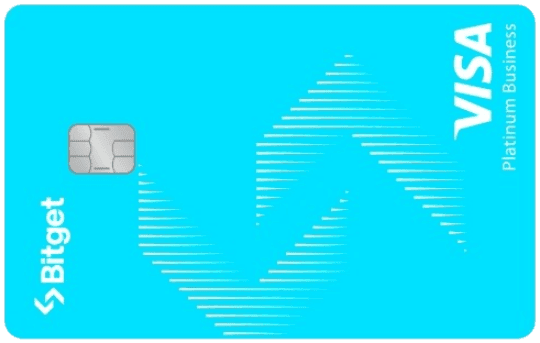 |  |
|---|---|---|
| Max Cashback | 8%Highest | 5% |
| Annual Fee | FreeBest | FreeBest |
| FX Fee | 0% | 0% |
| Custody Model | Custodial | Custodial |
| Network | VISA | MASTERCARD |
| Regions | EEAAPAC | EEAAPAC |
| Supported Assets | 1+ assets USDT | 6+ assets OKBUSDTUSDCBTCETHSOL |
| Cashback | Yes | Yes |
| Staking | No | No |
| Points | No | No |
| Airdrops | No | No |
| Lounge access | No | No |
| Subscription rebates | No | No |
| Metal card | No | No |
| Virtual Cards | Yes | No |
| Physical Cards | No | No |
| Visa | No | No |
| Mastercard | No | No |
| Apple Pay | No | Yes |
| Google Pay | Yes | Yes |
| Self-custody spend | No | No |
| Stablecoin spend | No | No |
| No annual fee | Yes | Yes |
| No FX fee | Yes | Yes |
| ATM free allowance | No | No |
| No KYC | No | No |
| Virtual vs Physical | Yes | No |
| Debit vs Prepaid | No | No |
| Best For | Best for Cashback | Good for Rewards |
Note: All data verified as of February 2026. Rewards and fees may vary based on your spending tier and region. Check each card's detailed page for complete terms.
Bitget vs OKX: Key Differences
A genuine head-to-head in the EEA and APAC. Both exchange cards charge identical 0.9% transaction fees, [0% FX](/crypto-cards/no-fx-fee/), and [$0 annual fees](/crypto-cards/no-annual-fee/), with token-tiered [cashback](/crypto-cards/cashback/) scaling by exchange-native holdings. [Bitget's](/crypto-cards/bitget-card/) ceiling is higher (8% BGB versus [OKX's](/crypto-cards/okx/) 5% OKB), but its base tier (0.5%) loses money after fees while OKX's base (approximately 1%) at least breaks even. The practical gap - 6 spendable assets versus 1, Apple Pay versus no Apple Pay, $2 ATM versus $4.65 ATM - favors OKX for daily use.
The right choice depends on your priorities: cashback rates, regional availability, custody model, and which ecosystem you already use. Below, we break down who should choose each card.
One of the Few True Head-to-Heads
Unlike most comparisons on SpendNode where geography eliminates one option, both OKX and the Bitget Card are available in the EEA and APAC. Both target the same audience: exchange users who want to spend their trading balances directly.
Both charge $0 annual fees and 0% FX fees. Both charge a 0.9% per-transaction fee (OKX calls it "crypto conversion," Bitget calls it "transaction fee" - functionally identical). Both tier their cashback rates by exchange token holdings. These structural similarities make the differences that much more important.
OKX operates on Mastercard, Bitget Card operates on Visa. Both networks have near-universal acceptance in Europe and Asia-Pacific. OKX supports Apple Pay and Google Pay. The Bitget Card supports Google Pay only (no Apple Pay). For iPhone users, this is a meaningful daily-use gap.
Banned countries: OKX is banned in 7 countries (India, Malaysia, Philippines, Thailand, Singapore, Japan, Canada). Bitget is banned in France (AMF blacklist) and Philippines. French EEA users can only access OKX. Indian and Singaporean users can only access Bitget. In most EEA countries, both are available.
Bitget also offers a second product, the Bitget Wallet Card, which is a Mastercard prepaid for stablecoin spending with a $400/month zero-fee quota and no cashback. OKX has no equivalent. This gives Bitget users an option for fee-free small purchases without any token holdings.
Net Returns After Identical Fees
Both cards charge 0.9% per transaction. The cashback rate determines everything.
| Scenario | OKX Base (approx. 1%) | OKX Mid (3%) | OKX Max (5%) | Bitget Base (0.5%) | Bitget Mid (2%) | Bitget Max (8%) |
|---|---|---|---|---|---|---|
| Casual ($1,000/mo) | $1 (0.1% net) | $21 (2.1% net) | $41 (4.1% net) | -$4 (-0.4% net) | $11 (1.1% net) | $71 (7.1% net) |
| Active ($2,000/mo) | $2 | $42 | $82 | -$8 (net loss) | $22 | $142 |
| Power ($3,000/mo) | $3 | $63 | $123 | -$12 (net loss) | $33 | $213 |
| Annual ($3,000/mo) | $36 | $756 | $1,476 | -$144 (net loss) | $396 | $2,556 |
At base tier, Bitget is worse than OKX - and worse than not using a card at all. The 0.5% cashback minus 0.9% fee produces a -0.4% net loss. A user spending $3,000/month at base tier loses $144/year. OKX's base tier at approximately 1% minus 0.9% nets 0.1% ($36/year) - barely positive, but at least not negative.
The crossover occurs around the 2% tier. Bitget at 2% nets 1.1% ($396/year), matching the practical return of OKX's mid-tier at 2.1% on lower spending. At 3%+ tiers, Bitget's higher ceiling pulls ahead.
At maximum tiers, Bitget's net 7.1% ($2,556/year on $3,000/month) is 73% higher than OKX's net 4.1% ($1,476/year). For committed exchange traders at top tier, that is an $1,080/year advantage in Bitget's favor. But the token commitment to reach that tier is substantially different.
Token Tier Risk: OKB vs BGB
Both cards require holding exchange-native tokens for higher cashback. The required commitment and associated risk differ significantly.
OKX (OKB): Tiers scale with 30-day average OKB balance and trading volume. OKB has a larger market cap and higher daily trading volume than BGB, making large positions easier to enter and exit with lower slippage. Maximum tier (5%) requires significant OKB but less concentrated risk relative to Bitget's requirement.
Bitget (BGB): Tiers based on 30-day average BGB holdings. Maximum 8% tier requires 20,000+ BGB tokens. At early 2026 BGB prices (approximately $4), that is roughly $80,000 in concentrated exchange-token exposure.
The hidden cost of BGB concentration: If BGB declines 25% while holding 20,000 tokens, the $20,000 capital loss exceeds seven years of cashback at 7.1% net on $3,000/month spending ($2,556/year). A 50% BGB decline ($40,000 loss) would require over 15 years of maximum cashback to recover. OKX's lower ceiling means less token exposure needed to reach maximum tier, producing better risk-adjusted returns for most users.
Both tokens add volatility to realized rewards: OKX pays in OKB, Bitget pays in BGB. A 30% decline in either token effectively cuts realized cashback by 30%. The difference is the magnitude of required holdings - Bitget's 20,000 BGB requirement amplifies this risk.
Asset Support: 6 vs 1
OKX: 6 spendable assets (OKB, USDT, USDC, BTC, ETH, SOL). Users holding BTC, ETH, or SOL can spend directly without converting first.
Bitget Card: 1 spendable asset (USDT only). Every non-USDT holding must be converted to USDT before spending, creating additional exchange steps, potential slippage, and taxable conversion events.
For a user holding a diversified portfolio (BTC + ETH + SOL + stablecoins), OKX eliminates 5 conversion steps that Bitget requires. Each forced conversion is a taxable disposal in most jurisdictions - meaning Bitget users pay capital gains tax twice: once on the conversion to USDT, and once when USDT is spent at point of sale.
Spending Limits and ATM Access
Spending limits:
- OKX: $30,000/month (fixed)
- Bitget Card: $50,000/month (Level 1) to $3,000,000/month (Level 4, VIP status)
Bitget's tiered limit system accommodates high-volume institutional spenders. For typical retail users spending under $30,000/month, both cards are adequate. For whales, Bitget's $3M/month ceiling is unmatched in the exchange card category.
ATM access:
- OKX: 1% fee, $500/day limit
- Bitget Card: 2% + $0.65 flat fee per withdrawal
A $200 ATM withdrawal costs $2 on OKX versus $4.65 on Bitget. A $500 withdrawal costs $5 on OKX versus $10.65 on Bitget. For monthly $500 ATM users, OKX saves approximately $68/year in ATM fees.
Both cards are custodial debit models. Every transaction creates a taxable disposal event. The tax treatment is identical between the two exchange cards.
Common Mistakes When Choosing
Using the Bitget Card at base tier and assuming it earns cashback. At 0.5% cashback minus 0.9% transaction fee, every purchase is a -0.4% net loss. A user spending $2,000/month at base tier loses $96/year by using the card instead of cash or another payment method. This makes Bitget one of only two exchange cards (alongside KuCoin) that cost money to use at base tier. How to avoid it: Before activating the Bitget Card for daily spending, verify your BGB holding tier. If your cashback rate is below 1%, every purchase loses money. At 1%, you net 0.1% (barely positive). Only at 2%+ does the card deliver meaningful returns. If you do not hold BGB, use the Bitget Wallet Card for under $400/month fee-free spending instead.
Choosing Bitget for the 8% headline without calculating the risk-adjusted return against OKX's 5%. The 3% headline gap (8% vs 5%) looks decisive, but reaching Bitget's maximum requires roughly $80,000 in BGB exposure. A 25% BGB price decline ($20,000 loss) erases 7+ years of the cashback advantage over OKX at maximum tier ($1,080/year gap). OKX's lower ceiling with lower token requirements often produces better risk-adjusted returns. How to avoid it: Compare the total capital at risk (BGB holdings required for 8% tier) against the annual cashback advantage over OKX ($1,080/year at $3,000/month). If the required BGB position exceeds 5-7 years of the cashback differential, the concentration risk may not justify the higher rate.
Decision Shortcut
For most EEA/APAC users: OKX is the safer default. Six spendable assets, Apple Pay, lower ATM fees, positive base-tier returns, and lower token concentration risk. The 4.1% net maximum is excellent without requiring an $80,000 token position.
For committed Bitget traders already holding BGB: The Bitget Card at 3%+ tier outperforms OKX at every spending level. At the 8% tier, $2,556/year in net cashback on $3,000/month is the highest exchange card return in Europe.
For stablecoin spenders under $400/month: The Bitget Wallet Card provides fee-free spending that OKX cannot match. No cashback, but zero cost within the quota.
For French users: OKX is the only option (Bitget banned by AMF). For Indian/Singaporean users: Bitget is the only option (OKX banned in both countries).
Outlook: Both cards charge identical 0.9% transaction fees, making the competition purely about cashback tiers and ecosystem features. Bitget's BGB tier system is still rolling out in some regions - full availability would strengthen its position for traders. OKX could increase its 5% maximum to compete with Bitget's 8% ceiling, or add Apple Pay support to the Bitget Card ecosystem. The key watch item for 2026 is whether either exchange reduces or eliminates the shared 0.9% transaction fee to match zero-fee competitors like Kraken and Crypto.com.
Fee Breakdown
| Fee | Bitget | OKX |
|---|---|---|
| FX Fee | 0% | 0% |
| Annual Fee | Free | Free |
| ATM Fee | 2% | 1% |
Fees pulled from issuer documentation. Verify on the official site before applying.
Who Should Choose Bitget
The Bitget Card is best suited for users who:
- Want up to 8% cashback on spending
- Need zero FX fees for international transactions
- Prefer a card with no annual fee
- Are based in EEA, APAC
Who Should Choose OKX
The OKX Mastercard Debit is best suited for users who:
- Want up to 5% cashback on spending
- Need zero FX fees for international transactions
- Prefer a card with no annual fee
- Are based in EEA, APAC
Our Verdict
**OKX is the better default for most users.** At base tier, OKX nets approximately 0.1% (positive) while Bitget nets -0.4% (a loss on every purchase). OKX supports 6 spendable assets versus Bitget's USDT-only, offers [Apple Pay](/crypto-cards/apple-pay-google-pay/) support, and has lower ATM fees. Bitget's 8% ceiling beats OKX's 5% at top tier (7.1% net versus 4.1% net), but reaching it requires 20,000+ BGB tokens with concentrated exchange-token risk. For committed Bitget traders already holding large BGB positions, the higher cashback ceiling justifies the card. For everyone else - including new users, casual spenders, and diversified portfolio holders - OKX delivers a more practical and lower-risk daily spending experience. Bitget's separate Wallet Card (fee-free [stablecoin](/crypto-cards/stablecoin/) spending under $400/month, no cashback) fills a niche OKX does not address.
Frequently Asked Questions
Which has better cashback, Bitget or OKX?
Bitget offers up to 8% cashback compared to OKX's 5%. Actual rates depend on your spending tier and card variant.
Which card has lower fees?
Both charge 0% FX fee. Neither charges an annual fee.
Is Bitget or OKX better for self-custody?
Both use custodial models. If self-custody is important, consider providers like Gnosis Pay or ether.fi.
Which card is available in more regions?
Both are available in 2 regions. Check the issuer's website for current eligibility.