
Bitget vs Bybit
Side-by-side comparison of Bitget and Bybit crypto cards. Data sourced from official issuer documentation and verified by SpendNode.
Comparing 2 Cards
Side-by-side comparison of features and benefits
| Attribute | 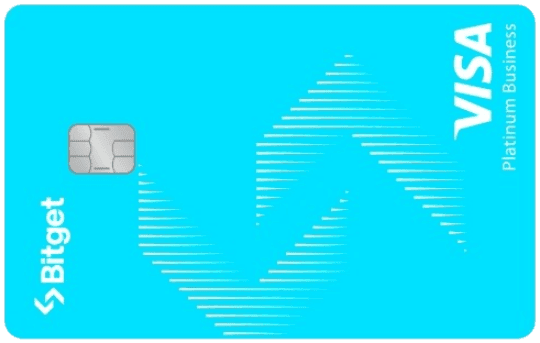 | 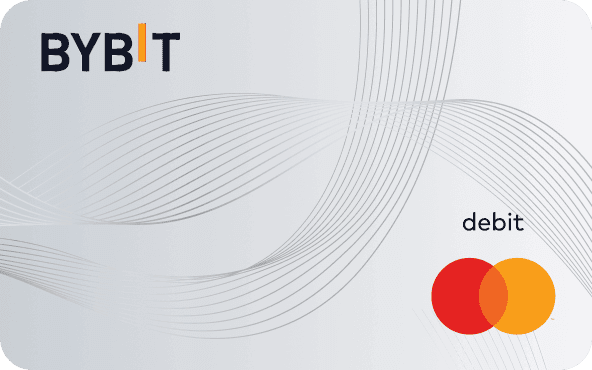 |
|---|---|---|
| Max Cashback | 8% | 10%Highest |
| Annual Fee | FreeBest | FreeBest |
| FX Fee | 0% | 0.5% |
| Custody Model | Custodial | Custodial |
| Network | VISA | MASTERCARD |
| Regions | EEAAPAC | EEAUKLATAMAPACAUS |
| Supported Assets | 1+ assets USDT | 5+ assets USDTUSDCBTCETHXRP |
| Cashback | Yes | No |
| Staking | No | No |
| Points | No | No |
| Airdrops | No | No |
| Lounge access | No | Yes |
| Subscription rebates | No | Yes |
| Metal card | No | No |
| Virtual Cards | Yes | No |
| Physical Cards | No | No |
| Visa | No | No |
| Mastercard | No | No |
| Apple Pay | No | No |
| Google Pay | Yes | No |
| Self-custody spend | No | No |
| Stablecoin spend | No | No |
| No annual fee | Yes | Yes |
| No FX fee | Yes | No |
| ATM free allowance | No | No |
| No KYC | No | No |
| Virtual vs Physical | Yes | No |
| Debit vs Prepaid | No | No |
| Best For | Best for No FX Fees | Best for Cashback |
Note: All data verified as of February 2026. Rewards and fees may vary based on your spending tier and region. Check each card's detailed page for complete terms.
Bitget vs Bybit: Key Differences
Two exchanges battling for the same European and Asian trader audience with different card architectures. [Bybit](/crypto-cards/bybit-card/) runs a proven two-tier system (Standard 2% and Supreme 10%) with USDT-convertible points rewards and 8% APR on idle balances. [Bitget](/crypto-cards/bitget/) split into two separate products: an exchange [Bitget Card](/crypto-cards/bitget-card/) with up to 8% BGB [cashback](/crypto-cards/cashback/) (USDT-only, Visa) and a [Wallet Card](/crypto-cards/bitget-wallet-card/) for fee-free [stablecoin spending](/crypto-cards/stablecoin/) under $400/month (no cashback, Mastercard). Bybit wins at both base and top tier on pure returns.
The right choice depends on your priorities: cashback rates, regional availability, custody model, and which ecosystem you already use. Below, we break down who should choose each card.
Two Products vs Two Tiers
Bybit uses a two-tier system within one Mastercard product: Standard (2% rewards, available to all users) and Supreme VIP (10% rewards, requiring high asset balance and trading volume). Both tiers share the same infrastructure: 0.5% FX fee on cross-currency, 0.9% conversion fee, Apple Pay and Google Pay support, 5 spendable assets (USDT, USDC, BTC, ETH, XRP).
Bitget split into two entirely separate products in 2025. The Bitget Card (Visa debit) links to the exchange account with BGB-tiered cashback from 0.5% to 8%, a 0.9% transaction fee, 0% FX, USDT-only spending, and Google Pay only (no Apple Pay). The Bitget Wallet Card (Mastercard prepaid) is a stablecoin off-ramp with a $400/month zero-fee quota, no cashback, Apple Pay/Google Pay/WeChat Pay/Alipay support, and USDC/USDT spending.
This structural difference penalizes casual Bitget users. A Bybit user always earns rewards from their first transaction (2% at base). A Bitget user must choose between the exchange Card (which loses money at base tier) or the Wallet Card (which earns nothing but is fee-free under $400/month). There is no single Bitget product that works for both scenarios.
Net Returns After All Fees
Both exchange cards charge 0.9% per transaction. Bybit adds 0.5% FX on cross-currency spending. Bitget charges 0% FX. The net math:
| Scenario | Bybit Standard (cross-currency) | Bybit Standard (same-currency) | Bybit Supreme (same-currency) | Bitget Card (0.5% base) | Bitget Card (2% tier) | Bitget Card (8% max) |
|---|---|---|---|---|---|---|
| Casual ($1,000/mo) | $6 (0.6% net) | $11 (1.1% net) | $91 (9.1% net) | -$4 (-0.4% net) | $11 (1.1% net) | $71 (7.1% net) |
| Active ($2,000/mo) | $12 | $22 | $182 | -$8 (net loss) | $22 | $142 |
| Power ($3,000/mo) | $18 | $33 | $273 | -$12 (net loss) | $33 | $213 |
| Annual ($3,000/mo) | $216 | $396 | $3,276 | -$144 (net loss) | $396 | $2,556 |
At base tier, Bybit earns $6-11 per $1,000 while Bitget loses $4. The 0.5% Bitget base cashback cannot cover the 0.9% transaction fee. Users need at least a 1% BGB tier before the Bitget Card breaks even, and a 2% tier (1.1% net same-currency) to match Bybit Standard's same-currency returns.
At maximum tiers, Bybit Supreme's net 9.1% (same-currency) still beats Bitget's net 7.1% by 2 percentage points. On $3,000/month, that is $3,276/year versus $2,556/year - a $720/year gap at the top. Even on cross-currency spending, Bybit Supreme at 8.6% net ($3,096/year) exceeds Bitget's maximum.
Bybit wins at the bottom (positive vs negative) and at the top (9.1% vs 7.1%). The only level where Bitget matches Bybit is the middle: Bitget at 2% tier (1.1% net) equals Bybit Standard same-currency (1.1% net).
Points vs Tokens: Reward Currency Risk
This is one of the most underappreciated differences between exchange cards.
Bybit pays rewards as Card Points convertible to USDT at a stable rate. Your 2% cashback is worth exactly 2% in dollar terms the moment you earn it. There is zero price risk on the reward itself.
Bitget pays rewards in BGB tokens. BGB fluctuates with market conditions, making realized cashback unpredictable. SpendNode's 2026 comparison reflects the volatility gap: a 30% BGB decline reduces effective 8% cashback to 5.6% in realized value. A 50% decline drops it to 4% realized - below Bybit Supreme's stable 9.1%.
Quantified example at $3,000/month, 8% Bitget tier:
- BGB stable at $4: $213/month realized ($2,556/year)
- BGB drops 30% to $2.80: $149/month realized ($1,789/year)
- BGB drops 50% to $2: $107/month realized ($1,278/year)
- Bybit Supreme (stable points): $273/month realized ($3,276/year) - always
Exchange tokens regularly experience 20-40% swings during market volatility. Bybit's USDT-denominated points eliminate this variance entirely. For users who actively trade BGB and have conviction in its price trajectory, the token exposure could amplify returns during rallies. For everyone else, it adds unnecessary risk to an already-complex fee calculation.
Regional Coverage and Ecosystem
Bybit serves 5 regions: EEA, UK, LATAM, APAC, and Australia. Banned in 6 countries (France, Malaysia, Philippines, Thailand, Japan, Singapore). As of January 2026, EEA users must migrate to Bybit EU accounts for MiCA compliance (features unchanged).
Bitget Card serves 2 regions: EEA and APAC. Bitget Wallet Card serves 4 regions: EEA, UK, LATAM, APAC. Banned in France (AMF blacklist) and Philippines.
For UK users, Bybit offers cashback-earning card access while Bitget offers only the Wallet Card (no cashback). For LATAM users, the same applies. For Australian users, only Bybit is available.
Bybit Supreme VIP exclusive perks:
- TradingView reimbursement (approximately $15/month value)
- ChatGPT Plus rebate (approximately $20/month value)
- 0% ATM fees with $5,000/day limit
- $250,000/month spending capacity
- 8% APR on idle USDT via Bybit Earn
Bitget offers no equivalent professional tool rebates, no idle yield product integrated with the card, and lower spending limits ($50K/month at Level 1). The Bitget Wallet Card's WeChat Pay and Alipay integration is unique for APAC users, but it is a no-cashback product.
Asset support: Bybit supports 5 assets (USDT, USDC, BTC, ETH, XRP). The Bitget Card supports 1 asset (USDT only). A Bybit user holding BTC can spend directly; a Bitget user must convert to USDT first, creating a taxable event and exchange friction.
Both cards are custodial debit models. Every transaction creates a taxable disposal event. The tax treatment is identical.
Common Mistakes When Choosing
Choosing the Bitget Card for its 8% headline without comparing to Bybit Supreme's 10%. Bitget's 8% max (7.1% net) is impressive in isolation but lower than Bybit Supreme's 10% max (8.6-9.1% net). Additionally, Bybit's rewards are in stable USDT-convertible points while Bitget's are in volatile BGB. A 30% BGB decline would reduce Bitget's effective return to 5.6% net - below Bybit's stable 8.6% net. A user spending $3,000/month earns $720/year more on Bybit Supreme than Bitget max tier even before accounting for BGB volatility. How to avoid it: Compare net returns after fees (not headlines) and factor in reward currency stability. Bybit's 9.1% in stable points beats Bitget's 7.1% in volatile BGB at the top tier. The only scenario where Bitget wins is if BGB appreciates significantly after earning rewards.
Using the Bitget Card without BGB holdings, assuming it functions like other exchange cards. At the 0.5% base tier, every purchase is a net loss (-0.4% after the 0.9% fee). A user spending $2,000/month without BGB loses $96/year by using the card. Bybit Standard at the same spending earns $144-264/year (positive). The gap between starting a new Bitget Card (-$96/year) versus starting a new Bybit Card (+$264/year same-currency) is $360/year. How to avoid it: If you do not hold BGB, use either Bybit (positive returns from day one) or the Bitget Wallet Card (zero-fee under $400/month, but also zero cashback). The Bitget exchange Card only makes financial sense at 2%+ BGB tier.
Decision Shortcut
For most EEA/APAC users: Bybit is the stronger choice at every tier. Higher net returns at base (1.1% vs -0.4%) and top (9.1% vs 7.1%), stable reward currency, Apple Pay support, 5 spendable assets, 5-region coverage, and integrated 8% APR yield on idle USDT.
For committed Bitget traders with large BGB positions: The Bitget Card at 3%+ BGB tier delivers solid returns if you already hold BGB and want to avoid moving assets to Bybit. But verify that your BGB position's price risk is acceptable relative to the cashback advantage.
For stablecoin-focused small spenders: The Bitget Wallet Card provides $400/month fee-free spending with WeChat Pay and Alipay support that Bybit cannot match. Use it alongside a cashback-earning card for larger purchases.
Outlook: Bybit's Supreme tier and integrated Earn product (8% APR) set the benchmark for exchange cards in 2026. Bitget's dual-card strategy is still maturing - full BGB tier rollout across all regions would strengthen its position for traders. The key watch item is Bitget's reward currency: a shift from BGB to stablepoint-denominated rewards (matching Bybit's approach) would eliminate the volatility disadvantage. Bybit's January 2026 EU migration under MiCA is complete, while Bitget faces ongoing regulatory challenges in France. Watch for potential Bitget Apple Pay support on the exchange Card, which would close one of the most visible practical gaps.
Fee Breakdown
| Fee | Bitget | Bybit |
|---|---|---|
| FX Fee | 0% | 0.5% |
| Annual Fee | Free | Free |
| ATM Fee | 2% | 0% |
Fees pulled from issuer documentation. Verify on the official site before applying.
Who Should Choose Bitget
The Bitget Card is best suited for users who:
- Want up to 8% cashback on spending
- Need zero FX fees for international transactions
- Prefer a card with no annual fee
- Are based in EEA, APAC
Who Should Choose Bybit
The Bybit Supreme VIP Card is best suited for users who:
- Want up to 10% cashback on spending
- Prefer a card with no annual fee
- Are based in EEA, UK, LATAM, APAC, AUS
Our Verdict
**In SpendNode's head-to-head, Bybit outperforms Bitget at every tier level with less complexity.** At base tier, Bybit nets 0.6-1.1% (positive) while Bitget nets -0.4% (a loss on every transaction). At maximum tier, Bybit Supreme's 8.6-9.1% net beats Bitget's 7.1% net. Bybit also pays rewards in stable USDT-convertible points rather than volatile BGB tokens, supports 5 spendable assets versus Bitget's 1 (USDT only), offers [Apple Pay](/crypto-cards/apple-pay-google-pay/) support (Bitget Card does not), serves 5 regions versus 2, and bundles [subscription rebates](/crypto-cards/rebates/) plus 8% APR on idle USDT for Supreme VIPs. Bitget's only structural advantage is the separate Wallet Card for fee-free stablecoin spending under $400/month - a product Bybit does not offer.
Frequently Asked Questions
Which has better cashback, Bitget or Bybit?
Bybit offers up to 10% cashback compared to Bitget's 8%. Actual rates depend on your spending tier and card variant.
Which card has lower fees?
Bitget charges 0% FX fee vs Bybit's 0.5%. Neither charges an annual fee.
Is Bitget or Bybit better for self-custody?
Both use custodial models. If self-custody is important, consider providers like Gnosis Pay or ether.fi.
Which card is available in more regions?
Bybit is available in 5 regions (EEA, UK, LATAM, APAC, AUS) compared to Bitget's 2 regions (EEA, APAC). Always verify eligibility on the issuer's website.