
CASHBACK
Verified

GOOGLE PAY
Verified

NO ANNUAL FEE
Verified
Our Official Verdict
Trade and Spend: Up to 8% BGB Cashback for Bitget Traders
The Bitget Card is built for active Bitget exchange users who want to spend directly from their trading balance. The 0.9% per-transaction fee matches industry standard for exchange cards ({{link:binance|Binance}} and {{link:bybit|Bybit}} charge the same). The 8% BGB cashback ceiling is competitive but requires significant BGB holdings.
Fees & Charges
Annual Fee
Free
FX Fee
0%
ATM Fee
2%
Requirements
Supported Regions
EEA, APAC
Spendable Assets
USDT
Bitget Card Review
The Bitget Card is a Visa debit card linked to your Bitget exchange account, enabling direct crypto-to-fiat spending from your trading balance with a 0.9% transaction fee on all purchases, BGB cashback tiers ranging from 0.5% (base) to 8% (20,000+ BGB holdings), $0 annual fee, 0% additional FX fee, four spending levels up to $3,000,000/month based on VIP status, and USDT-only asset support, available in the EEA and select Asia-Pacific countries.
The Trader's Off-Ramp From Exchange to Merchant
In this review, we cover the BGB tier economics and real spending costs. The Bitget Card solves a specific problem for active Bitget exchange users: spending your trading balance without manual withdrawals. Instead of converting crypto to fiat, withdrawing to a bank account, waiting 1-3 business days, and then spending, you tap your card and the exchange handles real-time USDT-to-fiat conversion.
The cost of this convenience is a 0.9% transaction fee on every purchase - the same rate that Binance and Bybit charge on their exchange cards. This is not an FX fee. It applies to domestic and international transactions equally. Every time you tap, 0.9% goes to Bitget.
Whether the BGB cashback tiers make the 0.9% fee worthwhile depends entirely on your BGB holdings. At the base 0.5% tier, you lose money on every transaction. At 2%+ tiers, the cashback more than covers the fee. Our break-even analysis of this dynamic is critical.
Card Specs: What You Are Actually Getting
Physical and Virtual Cards
- Virtual card: Instant issuance through the Bitget exchange app
- Physical card: Available upon request in supported regions
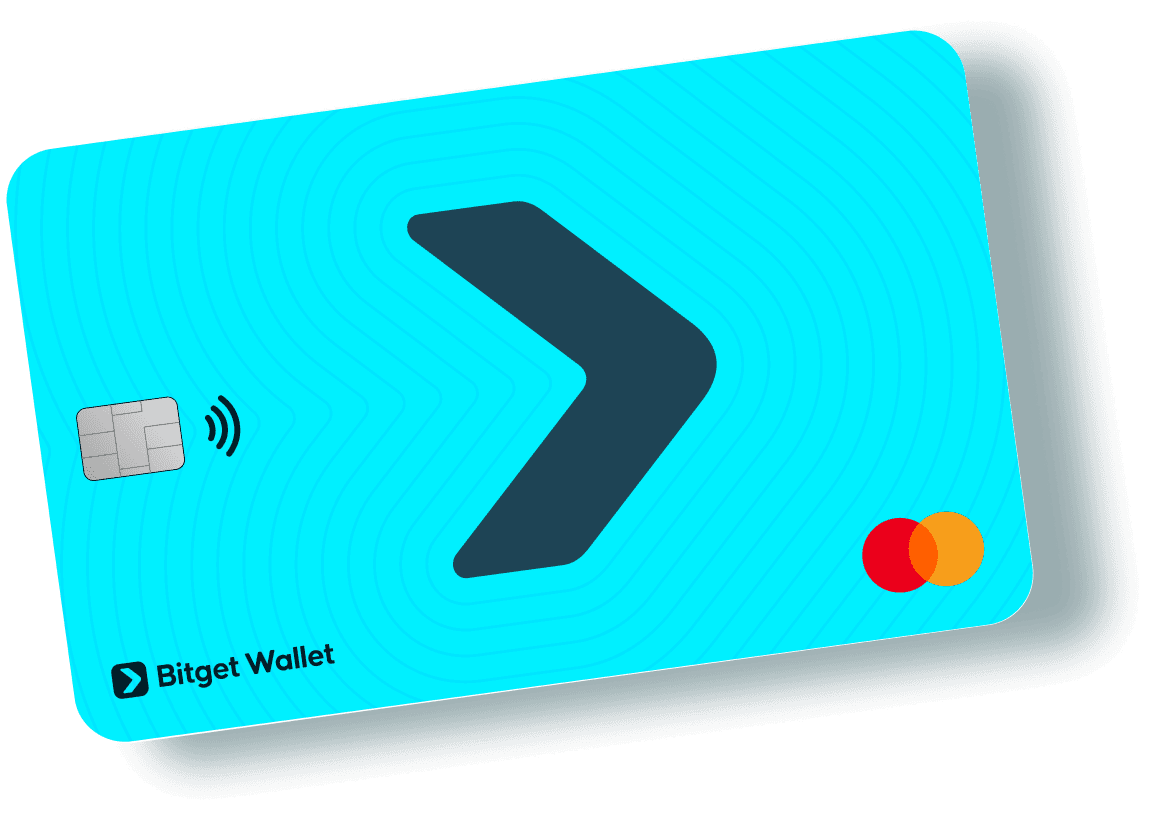
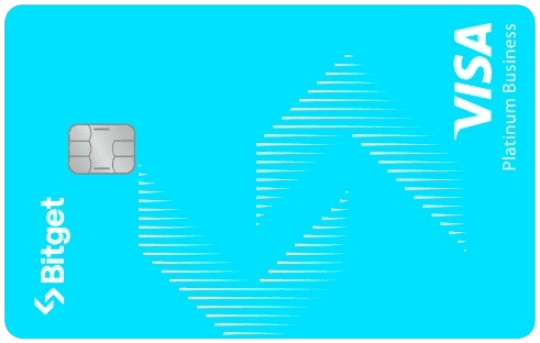
- Design: Standard Bitget-branded Visa debit
Payment Network
- Network: Visa
- Acceptance: 100M+ merchant locations globally
- Contactless: Yes (NFC)
- Mobile wallets: Google Pay (Apple Pay not confirmed)
- Card type: Debit (spends directly from Bitget exchange balance)
Security Features
- Exchange-level security: Bitget's institutional security infrastructure (cold storage, multi-sig)
- Card controls: Freeze/unfreeze via Bitget app
- Transaction notifications: Real-time push alerts
- Visa zero liability: Standard Visa fraud protection
- Spending limits: Configurable per card
How Spending Works: Transaction Flow
Example: EUR 200 dinner in Berlin (card funded from Bitget USDT balance)
Step 1: Check your USDT balance on Bitget
- Keep USDT in your Bitget exchange account (spot wallet)
- No separate "card balance" to manage - spends directly from your trading balance
Step 2: Pay at the restaurant
- Tap your Bitget Card or use Google Pay
- Restaurant charges EUR 200
Step 3: Real-time conversion
- Bitget converts USDT to EUR at the prevailing rate
- Conversion happens instantly at point of sale
- No FX markup from Bitget (0% additional FX fee)
Step 4: Fees applied
- Transaction fee: 0.9% of EUR 200 = EUR 1.80
- FX fee: 0% (Visa network rate applies, approx. 0.2-0.4%)
- Total fees: approximately EUR 2.20 (1.1% effective)
Step 5: BGB cashback calculated
- Your BGB tier determines the cashback rate
- At Tier 3 (1,000+ BGB, 2% rate): EUR 200 x 2% = EUR 4.00 in BGB
- Net on this transaction: +EUR 1.80 profit (EUR 4.00 cashback minus EUR 2.20 in fees)
- At base tier (0.5%): EUR 200 x 0.5% = EUR 1.00 in BGB. -EUR 1.20 loss
The exchange integration: Your USDT sits in the same account where you trade. You can move funds between spot, futures, and card spending with zero friction. For active traders, this eliminates the separation between "trading capital" and "spending capital."
BGB Cashback Tiers: The Economics
Cashback is determined by your 30-day average BGB holdings on the Bitget exchange.
| Tier | BGB Required | Cashback Rate | Approx. BGB Value (Feb 2026) |
|---|---|---|---|
| Base | 0 | 0.5% | $0 |
| Tier 2 | 100-999 | 1% | $85-$850 |
| Tier 3 | 1,000-4,999 | 2% | $850-$4,250 |
| Tier 4 | 5,000-19,999 | 4% | $4,250-$17,000 |
| Tier 5 | 20,000+ | 8% | $17,000+ |
Important disclaimer: BGB cashback tiers may still be rolling out in some regions. Verify current availability at bitget.com/cards before relying on specific tier rates.
Net Return After 0.9% Transaction Fee
| Tier | Cashback | Transaction Fee | Net Per Purchase | Annual Net ($3K/mo) |
|---|---|---|---|---|
| Base (0.5%) | 0.5% | -0.9% | -0.4% (loss) | -$144 |
| Tier 2 (1%) | 1% | -0.9% | +0.1% | +$36 |
| Tier 3 (2%) | 2% | -0.9% | +1.1% | +$396 |
| Tier 4 (4%) | 4% | -0.9% | +3.1% | +$1,116 |
| Tier 5 (8%) | 8% | -0.9% | +7.1% | +$2,556 |
Critical finding: After reviewing every tier, at the base tier (0 BGB), you lose 0.4% on every transaction. You must hold at least 100 BGB (Tier 2) to break even. The card only generates meaningful profit from Tier 3 (1,000 BGB, approx. $850) onwards.
ROI Including BGB Holding Cost
Holding BGB has opportunity cost. That $850 for Tier 3 could earn yield elsewhere.
| Tier | BGB Value | Annual Net (at $3K/mo) | BGB Opp. Cost (5% yield) | True Annual Return |
|---|---|---|---|---|
| Tier 2 | $85 | $36 | -$4.25 | +$31.75 |
| Tier 3 | $850 | $396 | -$42.50 | +$353.50 |
| Tier 4 | $4,250 | $1,116 | -$212.50 | +$903.50 |
| Tier 5 | $17,000 | $2,556 | -$850 | +$1,706 |
Even accounting for opportunity cost, Tier 3+ generates strong returns. Tier 5 requires $17,000+ in BGB (significant exposure to a single exchange token) but produces $1,706/year net at $3,000/month spending.
Fee Deep Dive: The Real Cost
| Fee | Amount | Notes |
|---|---|---|
| Annual fee | $0 | No subscription |
| Transaction fee | 0.9% | On ALL purchases (domestic and international) |
| FX fee | 0% | No additional FX markup from Bitget |
| ATM withdrawal | $0.65 + 2% | Per withdrawal |
| Inactivity fee | $1/month | After 12 months of no activity |
| Card replacement | Varies | Contact support |
ATM Economics: Avoid Entirely
A $200 ATM withdrawal costs:
- Flat fee: $0.65
- Percentage fee: $200 x 2% = $4.00
- Total: $4.65 (2.3% effective)
Plus the 0.9% transaction fee may apply depending on how ATM withdrawals are classified. At $4.65+ per withdrawal, ATMs are prohibitively expensive. Use tap-to-pay for all purchases.
The Inactivity Trap
After 12 months of no card activity, Bitget charges $1/month. This silently drains your account if you stop using the card without closing it. If you abandon the card, either close the account or make one small transaction per year.
Spending Levels
| Level | Monthly Limit | Determined By |
|---|---|---|
| Level 1 | $50,000 | Default |
| Level 2 | $200,000 | Bitget VIP status |
| Level 3 | $1,000,000 | High VIP |
| Level 4 | $3,000,000 | Top VIP |
For active traders with Bitget VIP status, the spending limits scale to accommodate high-volume off-ramping.
Limits and Restrictions
| Limit | Amount |
|---|---|
| Monthly spending (Level 1) | $50,000 |
| Monthly spending (Level 4 max) | $3,000,000 |
| ATM fee | $0.65 + 2% |
| Inactivity fee | $1/month after 12 months |
| Supported assets | USDT only |
Availability
- EEA: 30 countries
- Asia-Pacific: Select countries
- Not available: US, UK, Canada, Latin America
- KYC: Full Bitget exchange verification required
Notable Limitations
- USDT only - significantly more limited than Binance (20+ assets) or Bybit (12+ assets)
- 0.9% on all transactions - there is no way to avoid this fee
- Google Pay only - Apple Pay support not confirmed (compared to competitors who support both)
- Narrower availability than the Bitget Wallet Card, which also covers UK, LATAM, and more APAC markets
What Happens If Bitget Goes Down?
Your USDT on Bitget:
- Custodial. Your trading balance and card spending balance are the same pool - all held by Bitget
- Bitget publishes proof of reserves (Merkle tree verification). As of early 2026, reserves exceed liabilities
- In a Bitget failure, your funds are subject to exchange creditor proceedings
- Mitigation: Keep only trading and spending capital on Bitget. Self-custody long-term holdings
Your BGB holdings (for cashback tiers):
- BGB is Bitget's native exchange token. If Bitget fails, BGB likely goes to zero
- Your cashback tier qualification disappears with BGB's value
- Mitigation: Only hold BGB you can afford to lose. Consider it a "cost" of the cashback program, not an investment
Your card functionality:
- The card is issued by a Bitget partner (not disclosed in detail). If Bitget fails, the card likely ceases functioning
- Outstanding transactions may be disrupted during a failure event
Risk comparison:
| Card | Exchange Risk | Token Risk | Fund Protection |
|---|---|---|---|
| Bitget Card | Bitget (PoR published) | BGB (exchange token) | Custodial, PoR |
| Binance Card | Binance (PoR published) | BNB (largest exchange token) | Custodial, PoR |
| Bybit | Bybit (PoR published) | None (no token requirement) | Custodial, PoR |
Assessment: Medium risk. Similar to all exchange-linked cards. The BGB holding requirement adds token-specific risk on top of exchange custodial risk. Bitget's published proof of reserves provides some transparency. The key risk is BGB: if the token drops 80%, your cashback economics collapse and you lose the holding value.
Real User Scenarios
Scenario 1: Wei (Singapore Crypto Trader, $5,000/month spending)
Setup:
- Bitget Card at Tier 3 (holds 2,000 BGB, approx. $1,700)
- Active Bitget futures trader, keeps $50K+ in USDT on exchange
- Spends directly from trading balance
- 70% SGD domestic, 30% international
Results after 12 months:
- Total spending: $60,000
- Transaction fees (0.9%): -$540
- BGB cashback (2%): +$1,200
- Net cashback after fees: $660
- BGB price change (assume flat): $0
- Net annual value: $660
His verdict: "The convenience is the real value. I trade on Bitget daily and keeping my spending on the same platform eliminates withdrawal delays. The 0.9% transaction fee is annoying but the 2% cashback at Tier 3 more than covers it. I hold 2,000 BGB specifically for the tier - I consider the $1,700 as a cost of doing business. If BGB pumps, great. If it dumps, I lose the tier qualification and maybe switch to Bybit which requires no token holding."
Scenario 2: Anna (Munich DeFi Researcher, EUR 2,000/month spending)
Setup:
- Bitget Card at Tier 4 (holds 8,000 BGB, approx. $6,800)
- Receives research income in USDT on Bitget
- Spends primarily in EUR (90% domestic)
- Evaluated against Binance and Bybit cards
Results after 12 months:
- Total spending: EUR 24,000
- Transaction fees (0.9%): -EUR 216
- BGB cashback (4%): +EUR 960
- Net cashback after fees: EUR 744
- BGB holding opportunity cost (5% yield on $6,800): -EUR 340
- True annual return: EUR 404
Her verdict: "At Tier 4, the math works clearly. EUR 960 in BGB cashback minus EUR 216 in fees gives me EUR 744 net. Even accounting for the opportunity cost of holding 8,000 BGB, I am ahead by EUR 404. The question is BGB risk. I bought BGB at $0.85 and it is currently $0.85 - flat. If it drops 50%, I lose $3,400 on holdings plus my tier drops. That risk is why I am considering Bybit - 2% cashback with no token requirement."
Scenario 3: Kenji (Tokyo Part-Time Trader, $1,500/month spending)
Setup:
- Bitget Card at base tier (0 BGB, 0.5% cashback)
- Casual trader who keeps some USDT on Bitget
- Uses card for convenience, not optimization
- 100% JPY domestic spending
Results after 12 months:
- Total spending: $18,000
- Transaction fees (0.9%): -$162
- BGB cashback (0.5%): +$90
- Net annual return: -$72 (loss)
His verdict: "I realized after 6 months that I was losing money on every transaction. At 0.5% cashback and 0.9% fee, every purchase costs me 0.4% net. That is $72/year in pure loss. I either need to buy 100 BGB ($85) to reach Tier 2 and break even, or stop using the card entirely. I am switching to the Bitget Wallet Card for the first $400/month (zero fees) and using a traditional card for the rest."
How the Bitget Card Compares: Exchange Card Showdown
| Feature | Bitget Card | Binance Card | Bybit |
|---|---|---|---|
| Max cashback | 8% (20K BGB) | 8% (600 BNB) | 2-10% (region-dependent) |
| Realistic mid-tier | 2% (1K BGB = $850) | 2% (8 BNB = $3,200) | 2% (base tier) |
| Transaction fee | 0.9% | 0.9% | 0.9% |
| FX fee | 0% | 0.9% | 0% |
| Assets | USDT only | 20+ | 12+ |
| Network | Visa | Visa | Mastercard |
| Regions | EEA, APAC | EEA, LATAM, APAC | EEA, APAC |
| Token requirement | BGB (for cashback) | BNB (for cashback) | None (trading VIP) |
Bitget wins on:
- Lowest entry barrier for meaningful cashback ($850 for 2% vs $3,200 for Binance's 2%)
- 0% FX fee (Binance charges 0.9% on top of 0.9% transaction fee)
- Competitive spending limits ($50K-$3M/month)
Bitget loses on:
- USDT only (most limited asset support among exchange cards)
- No Apple Pay (most competitors support both Apple Pay and Google Pay)
- Narrower availability (no UK, no LATAM - use Bitget Wallet Card for those regions)
- BGB token risk (smaller market cap than BNB, higher volatility)
The Verdict: Is the Bitget Card Worth It in 2026?
Use the Bitget Card if:
- You are an active Bitget exchange user who wants to spend directly from your trading balance
- You are willing to hold 1,000+ BGB (approx. $850) for the Tier 3 2% cashback that covers the 0.9% fee
- You are in the EEA or select APAC markets where the card is available
- You value the convenience of unified trading and spending on one platform
Skip the Bitget Card if:
- You do not already use Bitget - there is no reason to open a Bitget account just for this card
- You refuse to hold BGB - at the base 0.5% tier, you lose money on every transaction
- You want multi-asset spending - USDT only is far more limited than Binance (20+) or Bybit (12+)
- You are in the UK, US, or LATAM - the card is not available. Use the Bitget Wallet Card instead
- You want self-custody - this is 100% custodial. Consider ether.fi or Gnosis Pay
Final verdict: Our methodology confirms the Bitget Card is a solid exchange-linked spending card for existing Bitget users at Tier 3 or above. The 2% net return (after 0.9% fee) at Tier 3 competes with Bybit's free-tier offering, and the 0% FX gives it an edge over Binance which charges 0.9% FX on top of 0.9% transaction fee. The critical mistake is using it at the base tier - you will lose money on every swipe. Hold at least 1,000 BGB or do not bother. At Tier 4-5 (4-8% cashback), the economics become compelling, but the BGB holding requirement ($4,250-$17,000) adds significant exchange-token risk. For traders who already hold BGB as part of their Bitget ecosystem engagement, the card is a natural extension. For everyone else, Bybit offers similar convenience with no token requirement for the base tier.
Sources and Verification
All card specs, fees, and limits verified from:
FAQ
How do you choose Bitget Card crypto cards?
We compare verified issuer sources, fees, and eligibility. Availability can change, so confirm with the issuer before applying.
Do all cards in this list offer the same benefits?
No. Each issuer defines its own program terms. Review the sources on each card profile.
Are these rankings or recommendations?
No. Lists are filtered views of cards in our database and do not imply rankings.
This is a debit card. Some merchants with pre-authorization holds (hotels, car rentals) may temporarily hold funds beyond the transaction amount.
Your funds are held by Bitget. If the provider faces insolvency, your balance may be at risk. This card does not offer self-custody protection.
Fees shown above are the card's disclosed fees. Additional costs may apply: Visa/Mastercard network spread (typically 0.5-0.9%), crypto-to-fiat conversion spread at point of sale, and blockchain gas fees for on-chain top-ups.
Found any issues?