From 10 to 15 in 24 Hours
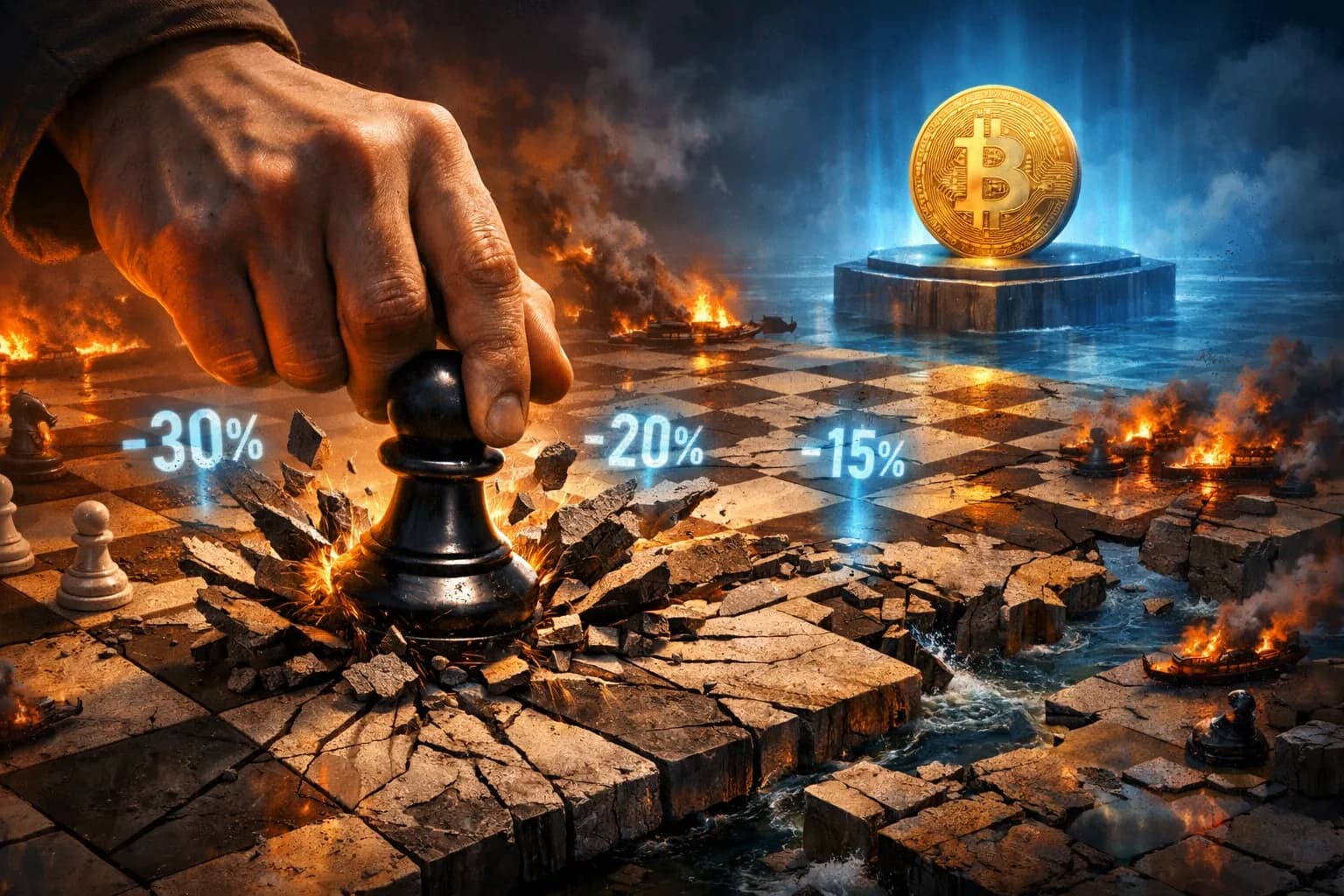
President Trump announced on Saturday, February 21, 2026, that he will raise his global tariff from 10 percent to 15 percent, hitting the legal maximum allowed under Section 122 of the Trade Act of 1974. The move came barely 24 hours after he signed the original 10 percent order on February 20, which itself was a rapid response to the Supreme Court's 6-3 ruling that struck down his earlier IEEPA-based tariffs as unconstitutional.
In a social media post, Trump wrote that he would be "raising the 10% Worldwide Tariff on Countries...to the fully allowed, and legally tested, 15% level," according to Bloomberg. The escalation means the administration has burned through its entire Section 122 headroom in a single weekend, leaving zero room for further increases without congressional action.
As of the time of writing on February 21, Bitcoin is trading near $68,000, roughly where it sat before the announcement. The CoinDesk 20 Index gained 2.5% over the prior 24 hours, and altcoins including DOGE, SOL, and ADA posted 3 to 4 percent gains.
The Section 122 Playbook Has a Built-In Expiration Date
Section 122 is a narrow tool with hard limits. The statute authorizes the president to impose tariffs of up to 15 percent for a maximum of 150 days to address "large and serious" balance-of-payments deficits. It does not require an interagency investigation, a formal finding from the Commerce Department, or congressional approval to initiate. But it does require the tariff to be applied uniformly across all countries, and it automatically expires unless Congress votes to extend it.
The administration's justification centers on the U.S. current account deficit, which reached negative 4.0 percent of GDP in 2024, roughly double pre-pandemic levels. The White House fact sheet argues that "the United States must import much of what it consumes, sending U.S. dollars out of our own economy."
The original 10 percent order included significant carve-outs: critical minerals, energy products, agricultural goods (beef, tomatoes, oranges), pharmaceuticals, most vehicles, aerospace products, USMCA-compliant goods from Canada and Mexico, and articles already covered by Section 232 steel and aluminum tariffs. Whether those exemptions survive the escalation to 15 percent remains unclear.
The 150-day clock started with the original February 20 signing. At 15 percent, the tariff is now at its statutory ceiling. If the administration wants any rate above 15 percent, or any extension beyond roughly July 20, 2026, it needs Congress.
Why $160 Billion in Refunds Changes the Math
The Supreme Court's February 20 ruling did more than block future tariffs under IEEPA. It also created a $160 billion refund liability. The Tax Foundation estimates that approximately $160 billion in duties were collected illegally under IEEPA authority before the court intervened. Had those tariffs survived through 2035, they would have generated roughly $1.4 trillion in revenue.
The case now returns to the Court of International Trade to determine refund procedures. That process could take months or years, but the fiscal impact is immediate: the federal government is staring at a potential $160 billion hole in revenue that was already spent or allocated.
For context, the new 15 percent Section 122 tariff, even at its maximum rate, will generate a fraction of what the IEEPA tariffs produced. The exemption list alone strips out most high-value trade categories. The Tax Foundation projects that remaining Section 232 tariffs (steel, aluminum, autos) will raise $635 billion over the next decade, but the Section 122 levy is capped at five months.
Bitcoin Is Learning to Ignore Washington
The crypto market's response to the tariff escalation has been remarkably muted. Bitcoin shrugged off the initial 10 percent tariff announcement on February 20, trading near $68,000 throughout the session. As of February 21, CoinDesk reported that BTC remained in the same range despite the escalation to 15 percent.
Paul Howard, director at Wincent trading firm, told CoinDesk: "We have seen a small rally for risk assets post-tariffs news as it leads into a narrative that tariffs are damaging for the macro environment." He cautioned that "volumes remain muted and we can expect crypto to maintain range bound trading" absent a significant macro or geopolitical shock.
The pattern is becoming familiar. When Trump first signed the 10 percent tariff under Section 122, crypto barely flinched. When the Supreme Court struck down the IEEPA tariffs, Bitcoin popped briefly but settled back. And when Goldman Sachs warned that tariffs were not over, the market yawned.
This is not apathy. It is pricing efficiency. Crypto markets have absorbed three major tariff shocks in a single week and concluded that Section 122 tariffs, with their five-month shelf life and extensive exemptions, do not fundamentally alter the macro picture. The real risk was always the IEEPA tariffs, which had no ceiling and no expiration. Those are now dead.
The Global Response Is Where the Risk Hides
While crypto markets may be right to shrug off the direct tariff impact, the second-order effects deserve attention. Al Jazeera reported that several countries are reconsidering trade agreements:
South Korea's government said it will "review the trade deal and make decisions in the national interest," potentially unwinding a November agreement that reduced tariffs from 25 to 15 percent in exchange for $350 billion in investments. India is expected to hold further negotiations pending the court's final ruling. China's embassy issued a muted response, noting that "trade wars benefit nobody," while analysts estimate China's overall tariff burden could fall from 36 to approximately 21 percent following the IEEPA ruling.
For crypto holders, the real variable is the dollar. An analyst cited by TheStreet warned that the tariff ruling could weaken the dollar over time, which historically correlates with Bitcoin strength. If the $160 billion refund obligation materializes alongside reduced tariff revenue, fiscal pressure could push the dollar lower, creating a tailwind for BTC.
Holders using crypto cards for international spending should monitor FX rates closely. A weaker dollar would reduce the real cost of foreign purchases for US-based spenders, while rising import costs could push domestic prices higher, reinforcing the inflation hedge narrative that has driven Bitcoin adoption during previous tariff cycles.
The 150-Day Clock Is the Real Story
The 15 percent rate is dramatic, but the expiration date is the detail that matters most. Section 122 tariffs expire around July 20, 2026, unless Congress acts. In a divided political environment where tariff policy has split both parties, extension is not guaranteed.
The S&P 500 gained 0.9 percent on Friday, and the Nasdaq 100 added 0.7 percent. Crypto-linked equities were mixed: Coinbase, Circle, and Strategy rose roughly 2 percent, while mining stocks dropped 3 to 6 percent. The divergence suggests equity markets are treating the tariff escalation as a short-term noise event rather than a structural shift.
For investors, the playbook is straightforward. The 150-day window creates a defined risk period. If Congress fails to extend, the tariff disappears entirely. If Congress does extend, it becomes a political story with months of lead time. Either way, the uncertainty has a deadline, and markets tend to price deadlines more calmly than open-ended threats.
Overview
Trump escalated his Section 122 global tariff from 10 to 15 percent on February 21, 2026, maxing out the statute's legal ceiling just one day after signing the original order. The move follows the Supreme Court's 6-3 ruling that struck down his broader IEEPA tariffs, creating a $160 billion refund liability. Bitcoin held near $68,000 through both announcements, with the CoinDesk 20 Index gaining 2.5 percent. The Section 122 tariff expires automatically around July 20 unless Congress extends it, giving markets a defined 150-day risk window rather than the open-ended uncertainty of the IEEPA regime.
Recommended Reading
- Trump Signs a 10 Percent Global Tariff Using a Law Never Invoked Before, and Crypto Markets Barely Flinch
- The Supreme Court Just Killed Trump's Emergency Tariffs in a 6-3 Ruling, and $175 Billion in Refunds Could Reshape the Macro Landscape for Crypto
- Goldman Sachs Says the Supreme Court Tariff Ruling Will Not End Trade Barriers as Trump Confirms a Backup Plan That Could Hit Crypto Markets Within Days