Payward Adds Magna to a Growing Arsenal
Payward, the parent company of cryptocurrency exchange Kraken, has acquired token management platform Magna in a deal announced on February 18, 2026. The acquisition, which closed the previous Friday, marks the sixth company Kraken has purchased in under a year as it accelerates preparations for a US initial public offering.
Financial terms were not disclosed, though PitchBook data shows Magna was last valued at $70 million in its most recent funding round. The Y Combinator graduate from the 2022 winter cohort has grown into the largest token vesting platform in crypto, serving over 160 teams and reaching a peak total value locked of $60 billion in 2025, as of the time of this announcement.
"If we do not build reliable lifecycle infrastructure, markets consolidate around whoever controls distribution and access," Arjun Sethi, co-CEO of Payward and Kraken, said in a statement.
Why Token Vesting Infrastructure Matters More Than It Sounds
Magna solves a problem that most retail traders never see but that every token-issuing project deals with daily. When crypto startups raise venture capital, they typically allocate tokens to investors, team members, and advisors on vesting schedules that can stretch years. As recipient lists grow and tokens begin trading on secondary markets, tracking ownership, managing cliff dates, handling claims, and executing distributions across multiple blockchains becomes an operational nightmare.
Magna handles all of it: vesting schedules, token claims, distributions, and related workflows for both onchain and offchain operations. The platform supports projects from the moment they design their tokenomics through the point where thousands of stakeholders are actively trading vested allocations.
For Kraken, the strategic logic is straightforward. By controlling the token lifecycle from issuance to liquidity, the exchange can court projects far earlier than the typical "list the token" relationship. Rather than waiting for a project to approach Kraken about listing a liquid token, the exchange can now embed itself in a project's infrastructure from day one.
"This acquisition accelerates Kraken's evolution into a platform where issuers, builders, and investors can rely on institutional-grade infrastructure," Calvin Leyon, Kraken's Head of Onchain, said in the same announcement.
The Six-Deal Streak That Built a Mini Conglomerate
The Magna deal is not happening in isolation. Kraken has been on a deliberate acquisition spree that reads like a vertical integration playbook:
- NinjaTrader ($1.5 billion): A US futures platform that gave Kraken immediate access to regulated derivatives infrastructure and a built-in user base of active traders.
- Small Exchange ($100 million): Another derivatives venue that deepened Kraken's options in the contracts space.
- Breakout: A proprietary trading firm that bolstered institutional trading capabilities.
- Backed Finance: A tokenized stock specialist and the issuer behind xStocks, pushing Kraken into the tokenized equities market.
- A sixth undisclosed acquisition: Details remain sparse, but the pattern is clear.
- Magna: Token lifecycle management, completing the circle from issuance to trading.
The common thread across all six deals is Kraken's push to become more than a spot exchange. Every acquisition extends the company's reach into a different financial vertical: futures, derivatives, tokenized stocks, proprietary trading, and now token issuance infrastructure.
This mirrors a broader trend among major exchanges. Coinbase has been building its own everything-exchange model through Base and its institutional products. OKX and Binance have expanded into Web3 wallets, DeFi aggregation, and payment cards. The exchange that controls the most of the value chain from token creation to end-user spending will likely capture the most revenue.
The $20 Billion IPO Runway
Behind every acquisition sits a single catalyst: Kraken's planned public listing. In November 2025, the exchange filed confidentially for an IPO with the SEC. The same month, it raised $800 million at a $20 billion valuation with backing from Citadel Securities, one of the largest market makers on Wall Street.
In February 2026, the company released its 2025 financial results, following the standard pre-IPO cadence of establishing a public reporting track record. When asked about a specific timeline, Sethi declined to comment, citing quiet period restrictions that limit what executives can say during the IPO process.
Kraken is far from the only crypto firm racing toward public markets. Gemini launched its IPO in 2025 but has struggled badly since listing, with its stock down 86 percent and its C-suite gutted. BitGo, Circle, and Bullish are also in various stages of their own IPO processes.
The contrast between Kraken's aggressive buildup and Gemini's post-IPO collapse highlights the risk. Going public gives an exchange access to capital markets and legitimacy, but it also exposes every weakness to public scrutiny. Kraken's strategy of bulking up through acquisitions before listing could either create a diversified revenue base that supports a strong stock price, or it could saddle the company with integration challenges that distract from core operations.
What This Means for Kraken Card Holders and Crypto Users
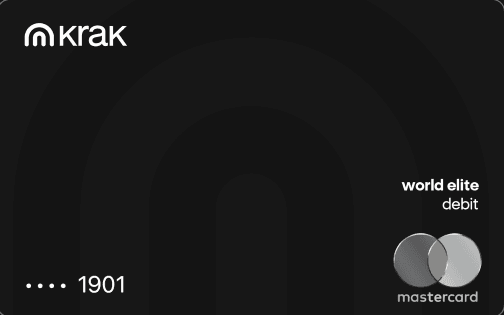
For everyday Kraken users, including those who hold the Kraken Card, the Magna acquisition is unlikely to change daily functionality in the short term. Magna will continue operating as a standalone platform while both teams focus on integration.
The longer-term implications are more interesting. As Kraken builds out token lifecycle infrastructure, it could eventually offer card holders early access to token distributions, streamlined airdrops, or integrated staking rewards from newly launched projects. The exchange's vertical integration strategy means that a single Kraken account could eventually handle everything from receiving vested tokens to spending them via a crypto card.
For the broader crypto market, the acquisition pattern signals that the era of pure-play exchanges is ending. The exchanges that survive the current consolidation cycle will be the ones that control multiple revenue streams: trading fees, card interchange revenue, derivatives margins, token listing fees, custody charges, and now token issuance infrastructure fees.
This has practical implications for users choosing between exchanges. An exchange like Kraken that controls more of the value chain has more levers to pull when setting card rewards, fee structures, and product features. It also has more reasons to keep users locked into its ecosystem, for better or worse.
The Crypto Exchange Rollup Is Accelerating
Kraken's sixth acquisition in under a year confirms a pattern that has been building across the industry. Major exchanges are no longer content to be marketplaces where tokens change hands. They want to be the infrastructure layer that supports every stage of a token's life, from minting and vesting through listing and spending.
Bruno Faviero, Magna's CEO, summarized it simply: "Joining Kraken gives us the resources to support existing and new clients with institutional-grade infrastructure, deeper liquidity, and global distribution."
The question is whether this strategy creates sustainable competitive advantages or simply front-loads complexity before a public listing. Kraken's IPO will eventually answer that question with hard numbers. Until then, each acquisition is another bet that controlling more of the crypto value chain is worth the price.
Overview
Kraken parent Payward acquired Magna, the largest token vesting platform in crypto, in a deal announced February 18, 2026. Magna serves over 160 teams with $60 billion in peak TVL and will continue operating standalone while integrating into Kraken's institutional product suite. The acquisition is Kraken's sixth in under a year as the $20 billion exchange, backed by Citadel Securities, prepares for a US IPO. The deal extends Kraken's vertical integration from futures and derivatives (NinjaTrader, Small Exchange) through tokenized stocks (Backed Finance) and now into token issuance infrastructure. Magna's CEO and team will join Kraken to build what the exchange calls "institutional-grade" lifecycle tools covering everything from early-stage fundraising to global token distribution. The broader signal is clear: major crypto exchanges are consolidating into full-stack financial platforms, and the IPO pipeline will test whether that strategy creates lasting value.