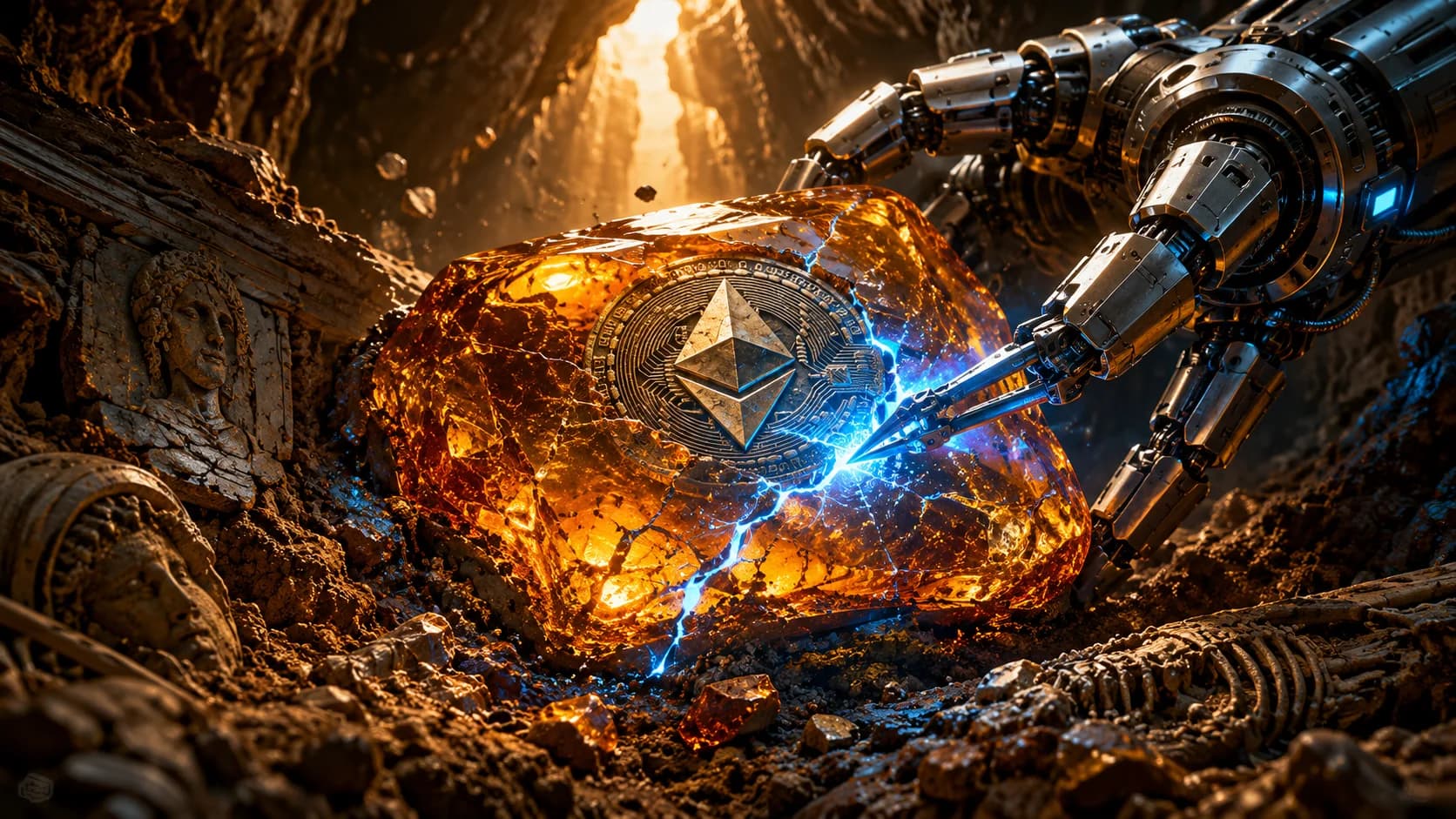
A developer who goes by Florent recovered 1,003 ETH, worth roughly $2 million, that had been locked inside a 2016 ICO smart contract for nine years. Cointelegraph reported the recovery on June 1, 2026, citing the developer's own account of the work. At ETH's price of about $2,002 as of June 1, 2026, the haul lands close to $2 million, though the dollar figure would have swung wildly across the nine years the coins sat idle.
The story is small in dollar terms next to the day's market data. It matters for a different reason: it is a clean example of how money behaves once it lives inside a contract rather than a bank.
A 2016 contract that outlived its project
The 2016 ICO boom produced thousands of token-sale contracts, many written quickly and abandoned soon after. Funds routinely got trapped in them. Sometimes a refund function had a bug. Sometimes the team disappeared with the admin keys. Sometimes the code simply had no path to move the balance out under the conditions that ended up occurring.
The 1,003 ETH here behaved the same way. It was not stolen and not burned. It sat at an address governed by code that, for nine years, no one had the right combination of access and understanding to operate. That distinction matters. On a blockchain, "lost" rarely means gone. It usually means locked behind logic that nobody has bothered to, or been able to, satisfy.
Recovering it took reading the contract closely enough to find a legitimate route to the balance. Cointelegraph's report frames the work as the developer's own, and that single account is the primary source for the recovery itself. We have not seen an independent on-chain breakdown of the exact method, so the mechanics beyond "a developer found a way to release the funds" should be treated as the developer's claim rather than confirmed detail.
Stuck funds are a standing feature of the chain
Ethereum carries a large, quiet pile of immobilized value. The Parity multisig freeze in 2017 alone locked hundreds of thousands of ETH. Mistyped addresses, contracts with no withdrawal path, and tokens sent to the zero address add to the total every year. None of it shows up as a loss on any balance sheet, yet none of it moves.
A nine-year recovery is a useful counterpoint to the assumption that trapped funds are permanently dead. Some are. The Parity ETH, for instance, has no known route out. But others wait on a person willing to audit old code line by line and a contract whose logic happens to leave a door open. The difference between the two cases is not luck. It is whether the original code left any reachable state that releases the balance.
This is the same property that makes spending from your own wallet both powerful and unforgiving. The code holds the funds, and the code decides the terms. There is no support desk to call, no manual override, no chargeback. A recovery like this one is the upside of that design. The frozen Parity wallets are the downside.
Reading for on-chain holders
The practical lesson is not that everyone should go hunting for lost ETH. It is that contract risk is real and specific, and it sits underneath every on-chain product, including the wallets that fund crypto cards.
When a card provider routes spending through a smart-contract vault rather than a custodial account, the user inherits exactly this kind of exposure. The funds are governed by code. If that code is sound and the keys are managed well, the user keeps full control. If the code has a flaw or an unreachable state, the funds can freeze with no counterparty to chase. That is the trade against custodial setups, where a company can move balances at will but can also fail, as the Gravity Bridge key compromise and earlier exchange collapses have shown.
For anyone interacting with an old contract, the takeaways are blunt. Treat any address you can no longer operate as locked, not lost, and document the exact conditions that would release it. Keep the original deployment code and ABI. Assume that recovering value from a dead contract is expensive, slow, and far from guaranteed. The nine-year wait here is the headline, but it is also the warning.
Overview
A developer known as Florent recovered 1,003 ETH, about $2 million at current prices, from a 2016 ICO smart contract after nine years, per a June 1, 2026 Cointelegraph report sourced to the developer. The single recovery is minor in size but a sharp reminder that funds held by code are stuck rather than gone, that some stuck funds are reachable and others are not, and that the same contract logic protecting on-chain balances is what can freeze them. For users of self-custodial wallets and the cards built on them, the event underlines that contract design, not goodwill, sets the terms of access.