Changpeng Zhao, the founder of Binance and one of the most influential figures in crypto, posted a blunt take on X today: the lack of privacy may be the single biggest barrier to crypto payments going mainstream. His argument was not abstract. He used a payroll example that anyone with a job can immediately understand.
The Payroll Problem Nobody Talks About
CZ's post laid out a scenario that most crypto payment optimists conveniently ignore. Imagine a company pays its employees in crypto. Because blockchain transactions are public by default, every employee can look up every other employee's wallet and see exactly what they earn.
That is not a hypothetical edge case. It is the default behavior of every major blockchain used for payments today: Ethereum, Polygon, Solana, BNB Chain, Base. Every USDC transfer, every USDT payroll batch, every stablecoin payment is permanently recorded on a public ledger with sender, receiver, and amount fully visible to anyone with a block explorer.
The post gathered 340 likes and 208 replies in under an hour, with engagement reaching 28,700 views. The reply section split predictably between privacy advocates saying "we told you so" and pragmatists arguing that this is a solvable engineering problem, not a fundamental flaw.
Why Transparency Becomes Toxic at Scale
Blockchain transparency was designed to solve a real problem: eliminating the need for trusted intermediaries. Anyone can verify that a transaction happened without trusting a bank. That principle works brilliantly for settlement, for audit trails, for proving reserves.
It breaks down completely for everyday payments.
Consider the chain of exposure. A single stablecoin payment reveals your wallet address. Once someone has your wallet address, they can see every transaction you have ever made on that chain. They can calculate your approximate net worth. They can see which merchants you pay, which DeFi protocols you use, which NFTs you hold, and how frequently you transact.
For individuals, this creates personal safety risks. In some regions, visible crypto holdings can make someone a target for physical theft or extortion. In others, it creates legal exposure, political risk, or simply social awkwardness. Nobody wants their landlord, their ex, or their employer seeing their complete financial history.
For businesses, the problem compounds. Suppliers can see exactly how much a company pays other suppliers, giving them leverage in negotiations. Competitors can reverse-engineer business relationships by analyzing on-chain payment flows. Payroll transparency, as CZ pointed out, makes salary secrecy impossible.
The Privacy Solutions That Exist Today
The crypto industry has not ignored this problem. Several approaches are already live or in development.
Privacy coins like Monero and Zcash offer native transaction privacy through ring signatures and zero-knowledge proofs respectively. The total market cap for privacy-focused assets crossed $24 billion in early 2026. But privacy coins face regulatory headwinds: multiple exchanges have delisted them, and several jurisdictions have effectively banned their use.
Stealth addresses allow a recipient to generate a one-time address for each transaction, preventing anyone from linking payments to a single wallet. Ethereum's ERC-5564 standard formalizes this approach, though adoption remains early.
Zero-knowledge proofs are the most promising path forward. Protocols like Aztec Network, which launched its token in February 2026 as Ethereum's first privacy-focused Layer 2, and Aster Chain, which is targeting a privacy-first Layer 1 mainnet in March, are building infrastructure where transactions can be verified without revealing their contents.
Confidential transactions hide the transfer amount while keeping the sender and receiver visible (or vice versa). This middle ground may satisfy regulatory requirements while providing meaningful privacy for payment use cases.
The challenge is that none of these solutions have achieved the combination of usability, regulatory compliance, and scale needed for mainstream payment adoption.
What This Means for Crypto Card Users
If you spend crypto through a card, you are already using a partial privacy solution, whether you realize it or not. When you load a Binance card or top up an OKX card, the on-chain transaction goes to the card issuer's hot wallet. The merchant sees a normal Visa or Mastercard payment. They never see your wallet address, your on-chain balance, or your transaction history.
This is why custodial crypto cards have an unexpected advantage in the privacy debate. The card issuer acts as a privacy buffer between your on-chain identity and the real world. The merchant, the payment processor, and anyone watching the point-of-sale network only sees a fiat payment.
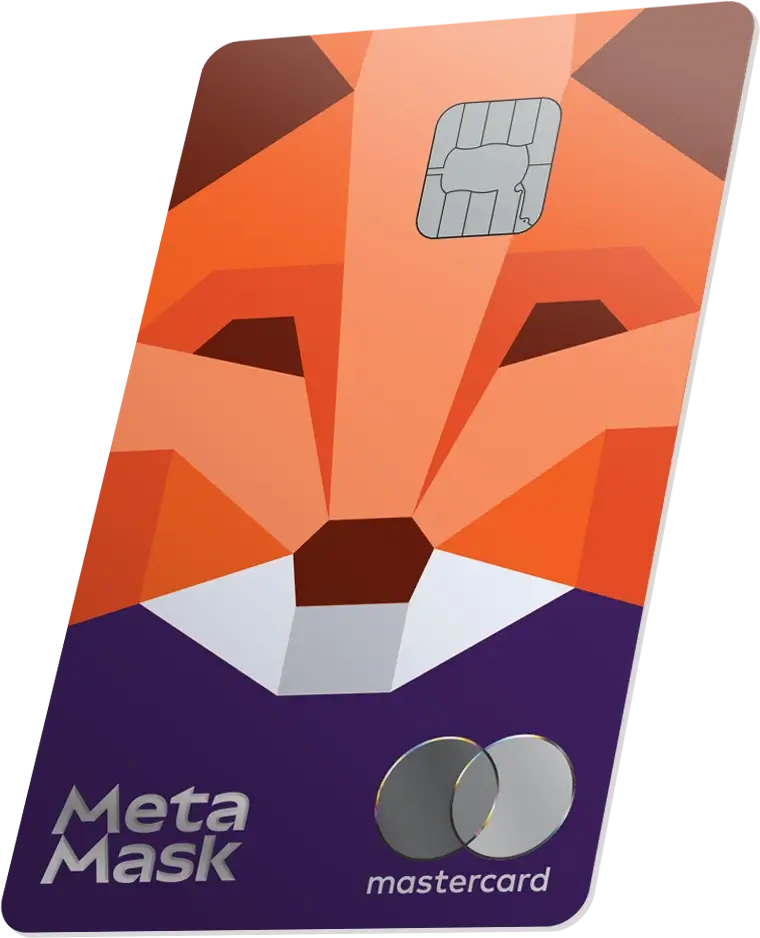
Self-custody cards face a different tradeoff. Products from Gnosis Pay or MetaMask spend directly from your wallet, which preserves your control over funds but keeps the on-chain payment fully transparent. If your employer pays you to that same wallet, the CZ payroll problem applies directly.
The emerging approach combines self-custody with privacy layers. A card that spends from a shielded pool, verified by zero-knowledge proofs, would give users both ownership and privacy. No production card offers this today, but the building blocks are falling into place.
The Bigger Picture: Privacy as Infrastructure, Not a Feature
CZ's comment came alongside a separate post about fee strategy, where he argued that halving fees doubles revenue by attracting more volume. Together, the two posts paint a picture of someone thinking deeply about what crypto payments need to cross from niche to mainstream: lower costs AND privacy.
This echoes what Vitalik Buterin said earlier this month about wanting Ethereum to power AI with ZK privacy payments rather than racing for AGI. It aligns with the Aztec and Aster launches building privacy at the protocol level. And it connects to the broader stablecoin debate, where USDC supply recently crossed $73 billion but most of that supply moves across fully transparent rails.
The privacy coin market has proven demand exists. The $24 billion in privacy-focused assets represents real capital from users who want financial confidentiality. But privacy coins exist in a regulatory gray zone that makes them impractical for payroll, merchant payments, or any use case that touches traditional finance.
What the market needs is privacy that is compliant, selective, and embedded at the protocol level. Users should be able to prove they paid taxes without revealing how much they earn. Businesses should be able to verify a payment happened without exposing their supplier network. Employees should receive crypto paychecks without broadcasting their salary to 8 billion people.
CZ did not announce a product or a protocol. He posed a question. But it is the right question, and the 28,000 people who viewed it in the first hour seem to agree: until crypto solves the privacy problem, payments adoption will remain stuck in the gap between what the technology can do and what normal people are willing to accept.
Overview
Binance founder CZ posted on X that the lack of privacy is the single biggest barrier to crypto payments adoption, using a payroll example where on-chain transparency would expose every employee's salary. The argument resonated with nearly 29,000 viewers and highlights a fundamental tension in blockchain design: the transparency that makes crypto trustless also makes it unsuitable for everyday payments. Current solutions range from privacy coins ($24B market cap) to zero-knowledge proof systems like Aztec Network, but none have achieved the combination of compliance, usability, and scale needed for mainstream payment use. Crypto card users already benefit from partial privacy since custodial cards shield on-chain details from merchants, but true payment privacy will require protocol-level changes. Until crypto solves this problem, adoption will remain limited to speculation and settlement rather than everyday spending.