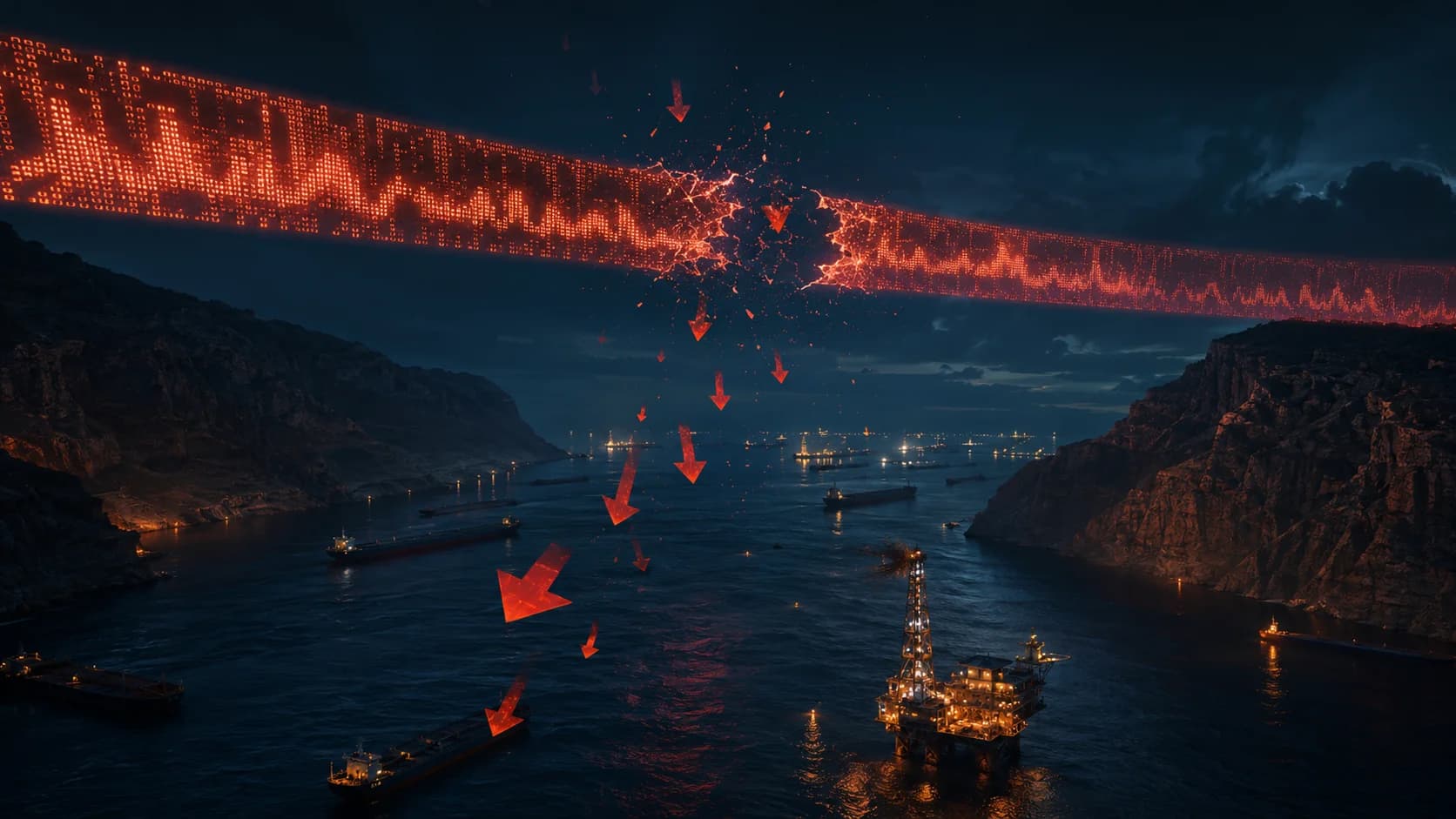
US forces struck Iran overnight after Iranian drones hit commercial ships in the Strait of Hormuz, according to a Wall Street Journal report posted late Wednesday. Oil jumped on the news. Crypto moved the other way, unwinding the rally that followed Secretary of State Marco Rubio's comments earlier this week about progress on the Hormuz standoff.
Bitcoin trades at $74,377 as of May 28, 2026, down 2.0% over the past 24 hours and 4.6% on the week, according to live CoinMarketCap data. Ether is at $2,022, off 2.7% on the day and 5.6% on the week. Solana is at $82.52 (-1.7%), XRP at $1.31 (-1.7%), and BNB at $647.64 (-1.5%). The Crypto Fear and Greed Index reads 34, back in Fear territory.
The trade that worked Monday no longer works
Earlier this week, crypto caught a sharp bid when Rubio cited progress on Iran around the Strait of Hormuz, and we covered that bounce in the Rubio Hormuz progress note. The setup was straightforward: lower geopolitical risk, lower oil, fewer reasons to discount risk assets. ETF flow data leaned the same way.
Wednesday night reversed it. CNBC reports oil jumped on Hormuz disruption fears after the strikes, and the WSJ confirms American forces conducted the action in response to the drone attacks on commercial shipping. The same logic that lifted BTC and ETH 48 hours ago is now working against them.
Volumes were already thin going in
This selloff lands on top of a weak tape. Bitcoin spot volume on the major exchanges has been down roughly 81% since October 2025 according to CryptoQuant. XRP order book depth on Binance hit a five-year low this week. When liquidity is that thin, headline-driven moves get amplified in both directions.
That is part of why a 2% intraday move on BTC and a 2.7% move on ETH look heavier than they would have in October. There are fewer market-maker bids to absorb the supply.
ETF flow context
US spot bitcoin ETFs have been bleeding for most of the past week. The six-day outflow streak has pushed 2026 year-to-date net flows close to neutral, with the cumulative number teetering on the edge of going negative for the year. Earlier in the week, BlackRock's IBIT printed a single $1.3 billion block trade that traders read as an exit rather than an entry.
A geopolitical risk-off session is not the kind of tape that pulls those flows back. If anything, the Hormuz reversal gives short-term holders one more reason to wait.
The Hormuz channel matters because oil matters
Around 20% of seaborne oil moves through the Strait of Hormuz. A live shipping disruption there does two things at once: it lifts oil and lifts term premia in US rates. Both are negative for long-duration risk assets like crypto, at least in the immediate window. Bitcoin's correlation to oil is loose over long horizons, but on intraday news shocks it tends to track the broader risk-off bid.
The wider rates picture has also been a headwind. We flagged earlier that bitcoin's hard-money thesis is running into 5% Treasury yields, and another oil spike does not help that math.
Three reads from here
Three concrete reads:
- Whether the Strait of Hormuz disruption stays a one-session event or becomes a multi-day shipping story. The first determines whether this is noise; the second changes the rates path.
- ETF flow data on Thursday. If the outflow streak extends through this session, the 2026 net-flow figure crosses into negative territory.
- Funding rates and open interest on perps after the Asia open. A spot-led selloff with collapsing OI is benign. A leveraged unwind is the version that runs further.
For card users and crypto spenders, the practical read is narrow: when stablecoin liquidity stays bid (Tether and USDC market caps did not flinch) and only volatile assets sell, the spending side of the stack keeps working. The cost basis on rewards balances denominated in BTC or ETH is what takes the hit.
Overview
Fresh US strikes on Iran after drone attacks on commercial ships in the Strait of Hormuz have unwound this week's risk-on bounce in crypto. Bitcoin is at $74,377 (-2.0%), ether at $2,022 (-2.7%), and Fear and Greed is back to 34. With spot volumes thin and ETF flows already weak, the next read is whether Hormuz disruption persists past one session.