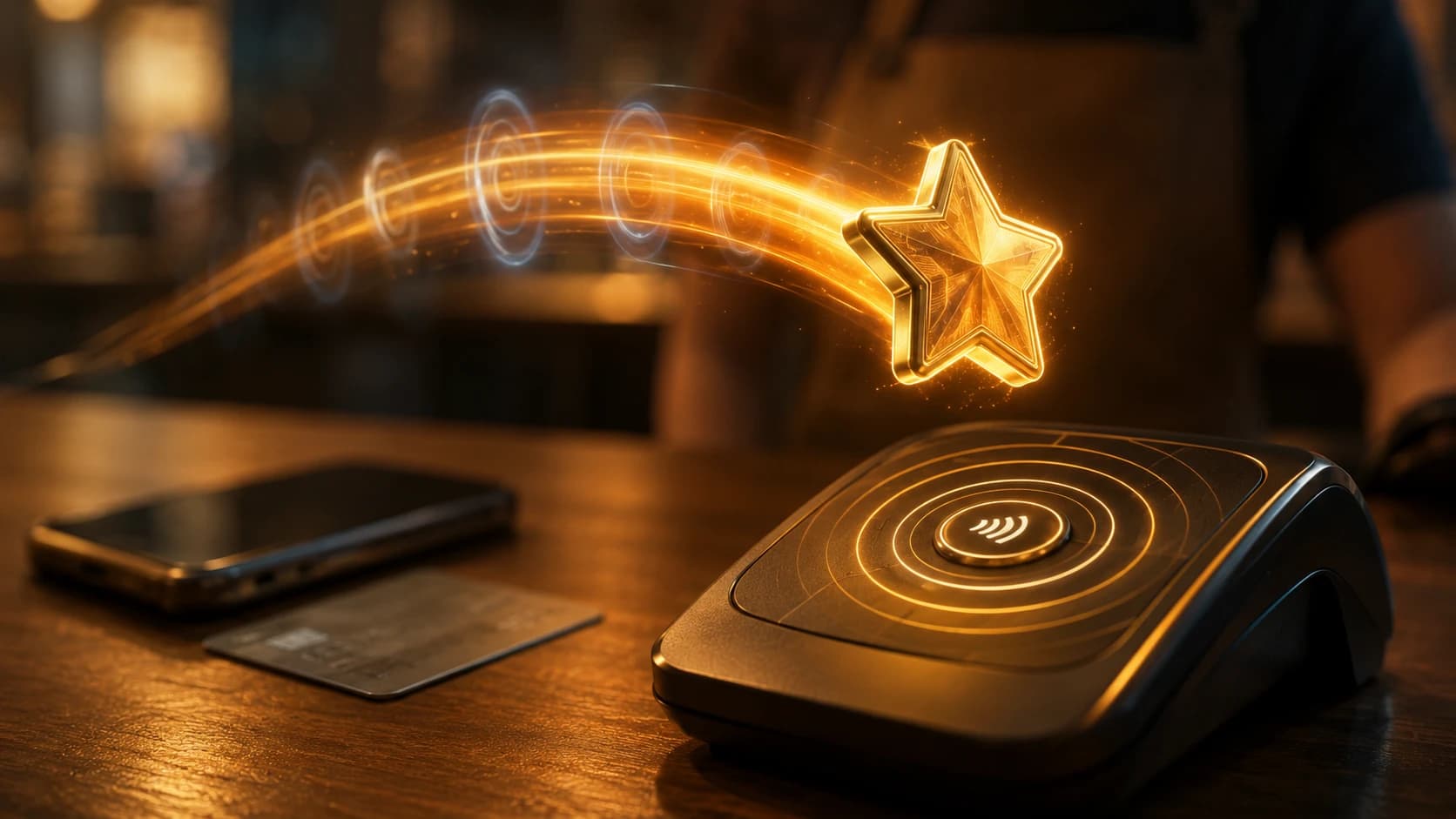
Cash App has launched the Cash App Wand, a star-shaped accessory with built-in NFC that lets users make contactless payments at the register. The product was announced on June 5, 2026 and surfaced through Cointelegraph, which described it as a tap-to-pay device meant to work "on the go." Cash App is the consumer payments arm of Block, the company led by Jack Dorsey.
The launch is small in dollar terms and large in signal. A dedicated physical object built only to tap and pay sits in an odd spot: between the plastic card people already carry and the phone wallets that were supposed to make cards disappear. That tension is the story.
A third object at the checkout
Most contactless payments today come from two places. A card with an embedded chip, or a phone running Apple Pay or Google Pay. The Cash App Wand adds a third: a small accessory that holds the NFC antenna and nothing else. You bring it to the reader, it taps, the payment clears.
The appeal is convenience for moments when pulling out a phone or fishing for a card is awkward. A run, a quick coffee, a transit gate. The skepticism, visible in the replies to the announcement, is the obvious one. Phones already tap. Cards already tap. A separate gadget has to earn its place in a pocket that is already full.
Cash App has not published pricing, the exact funding source, or whether the Wand draws only from a user's fiat Cash App balance. Those details matter, and we will update this piece once they are confirmed rather than guess at them now.
The crypto question sitting underneath
Cash App is one of the largest retail Bitcoin on-ramps in the United States. Millions of users buy and hold BTC inside the same app that powers the Cash App Card, a Visa-network debit product. That overlap is why a payments accessory from Cash App is worth a crypto reader's attention even when the device itself is not pitched as a crypto product.
The Cash App Wand, as announced, is a contactless payment tool. The announcement does not say it spends Bitcoin directly. For now the safe read is that it behaves like the Cash App Card: it moves money from a balance, and any Bitcoin in the account is a separate holding the user would sell or convert first. Direct BTC-at-the-register spending from the Wand is not something the launch confirmed.
Still, the form factor is the interesting part. Crypto card programs have spent years trying to reach the point of sale through the Visa and Mastercard networks, then through phone wallets. A wearable or pocketable payment token is the next surface. If Block decides the Wand should one day settle from a stablecoin or Bitcoin balance, the hardware to do it would already be in people's hands.
The same rail crypto cards already ride
Every crypto card that supports tap-to-pay does so through the same NFC contactless standard the Cash App Wand uses. There is no separate "crypto" tap rail. A card converts crypto to fiat in the background, then presents a normal contactless payment to the merchant. The Wand presents that same payment from a different object.
That is the practical takeaway for spenders. The competition is not crypto versus fiat at the register. It is which object you reach for. A card in a wallet, a phone in a pocket, or now a wand clipped to a bag. For most crypto card users in the United States, the phone wallet remains the path of least resistance because it already holds their card credentials and needs no extra purchase.
A new payment object only wins if it removes a real point of friction. Cash App has a large installed base to test that with, which is the one advantage a standalone accessory rarely gets.
Overview
Cash App, the payments product from Jack Dorsey's Block, launched the Cash App Wand on June 5, 2026: a star-shaped NFC accessory for contactless tap-to-pay. The device uses the same contactless rail as cards and phone wallets. Pricing, funding mechanics, and any link to a Bitcoin or stablecoin balance were not detailed at launch. For crypto card users, the Wand is less a crypto product and more a signal that Block keeps experimenting with how a payment reaches the register, on a network where one of the biggest US Bitcoin on-ramps sits one tap away.