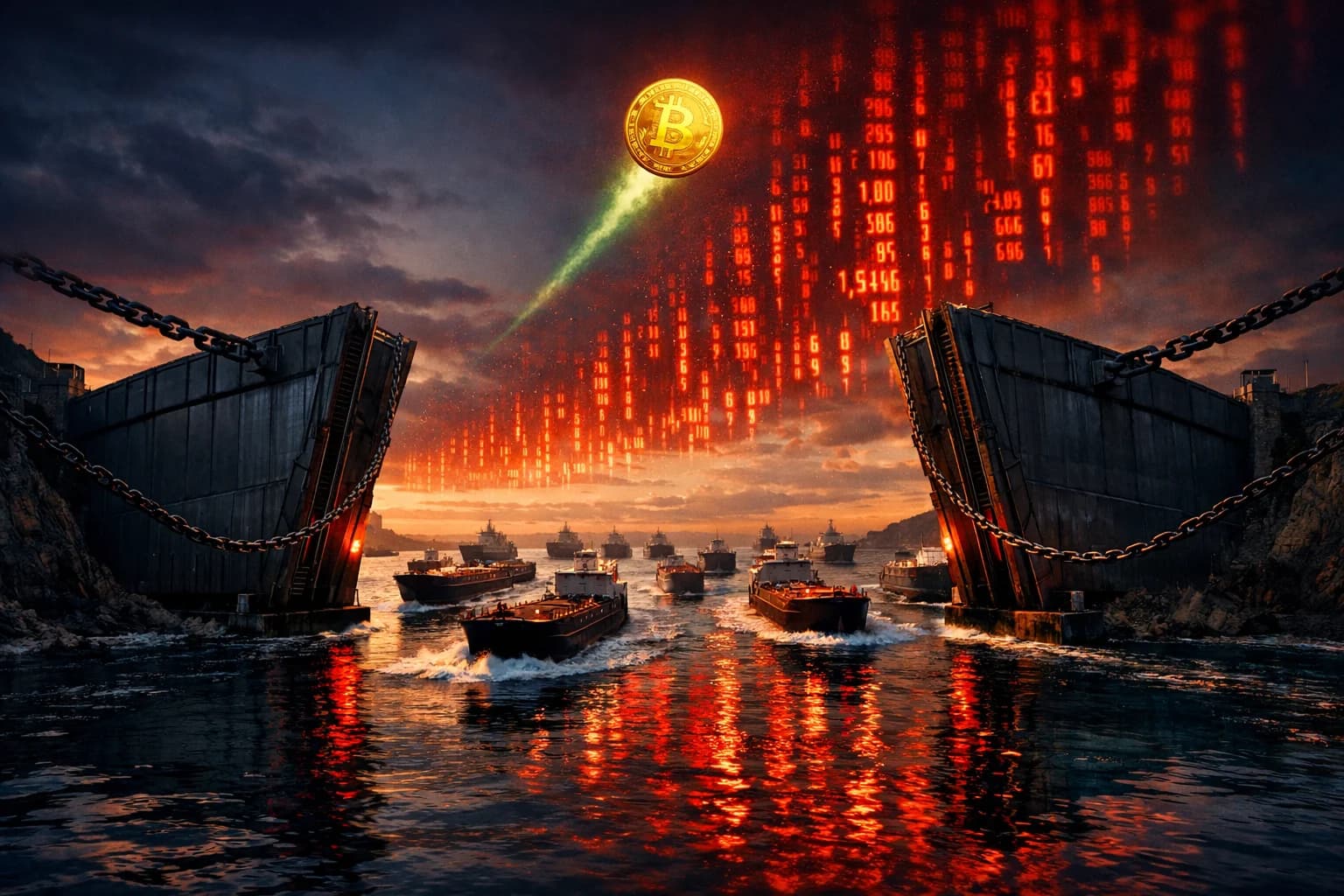
Bitcoin punched through $72,000 on April 8 after the United States and Iran formally agreed to a two-week ceasefire, ending weeks of speculation that had kept markets oscillating between fear bids and short squeezes. Brent crude collapsed below $100 per barrel, falling roughly 14% in a single session, the steepest one-day drop since mid-2020 according to Bloomberg.
As of April 8, 2026, BTC is trading at $71,942 (+4.4% in 24 hours, +6.0% on the week), ETH at $2,242 (+6.1%), SOL at $85.07 (+6.6%), and BNB at $618.45 (+3.1%). The Fear & Greed Index has climbed to 47 (Neutral), up from 37 (Fear) just two days ago when the ceasefire was still a rumor.
What the Deal Includes
The ceasefire framework requires Iran to halt the American-Israeli military campaign in exchange for Tehran reopening the Strait of Hormuz, the chokepoint through which roughly 20% of the world's traded oil passes. The Wall Street Journal reported that US stock futures surged immediately on the news, while oil prices posted their sharpest decline in nearly six years.
The two-week window is short. Markets are pricing in the relief rally now, but the expiration date means this could reverse fast if talks collapse. Iran's Supreme National Security Council accepted the terms, per CoinTelegraph, though the deal's durability depends on whether both sides use the pause to negotiate an extension or simply rearm.
Hormuz Reopens, and That Changes the Oil Math
We covered Iran's crypto toll system at the Strait three days ago: the IRGC was charging up to $2 million per tanker in stablecoins or yuan for safe passage, with over 320 tankers queued up. The ceasefire presumably suspends that toll regime, at least temporarily.
Brent crude dropped below $100, a level it had held since the conflict escalated in March. The 14% single-session drop is the kind of move that reshuffles portfolio allocations across every asset class. When oil falls this fast, it tends to pull inflation expectations down with it. Lower inflation expectations mean less pressure on central banks to hold rates high. That transmission chain is part of why BTC reacted as aggressively as it did: $71,942 is the highest level since mid-March, before the Hormuz blockade drove oil above $115 and risk assets into a defensive crouch.
From Ceasefire Hopes to Ceasefire Confirmation
Two days ago, BTC jumped from $66,634 to $69,350 on reports of a potential 45-day ceasefire framework, squeezing $197 million in shorts in the process. That move was driven by leaks and unnamed sources. This one is driven by an official agreement accepted by Iran's Supreme National Security Council.
The difference matters. The April 6 move was a positioning flush: over-leveraged shorts got wiped, but the rally stalled near $69,500 because traders could not verify the headlines. Now they can. BTC has added another $3,000 since confirmation, and the 24-hour volume across majors suggests real spot demand, not just derivative positioning. BTC's 24-hour volume sits at $45.4 billion, ETH at $22.7 billion.
The Two-Week Clock
The deal's weakness is its brevity. A two-week ceasefire is a pause, not a resolution. If the window expires without an extension, oil could snap back above $100, Hormuz tolls could resume, and every risk asset that rallied on the news would give it back.
For crypto holders, the next two weeks create a specific scenario: if you loaded stablecoins during the fear phase waiting for a better entry on BTC or ETH, the ceasefire confirmation is the catalyst many were waiting for. But the expiration risk is real. A 14-day countdown is already ticking.
ETH's +6.1% daily move is the largest among the top five by market cap, continuing a pattern where ETH outperforms BTC on geopolitical relief rallies. SOL's +6.6% edges it out in percentage terms, though on lower absolute volume. XRP at $1.37 (+3.6%) has lagged, consistent with its lower beta to macro events.
The Fear & Greed shift from 37 to 47 in 48 hours is worth noting. We went from solidly in Fear to the doorstep of Neutral on a single confirmed headline. That speed of sentiment recovery suggests the market's bearish positioning was more forced than convicted. Traders were short because the war was bad, not because fundamentals had changed. Remove the war premium, even temporarily, and the bid returns.
Overview
The US-Iran ceasefire moved from rumor to confirmed reality on April 8. BTC jumped to $71,942 (+4.4%), ETH to $2,242 (+6.1%), and oil crashed 14% in a session. The Strait of Hormuz is reopening, suspending Iran's $2 million-per-tanker crypto toll system. The deal is real but short: two weeks. Traders who waited in stablecoins through the fear phase have their catalyst. Those already positioned have a countdown.