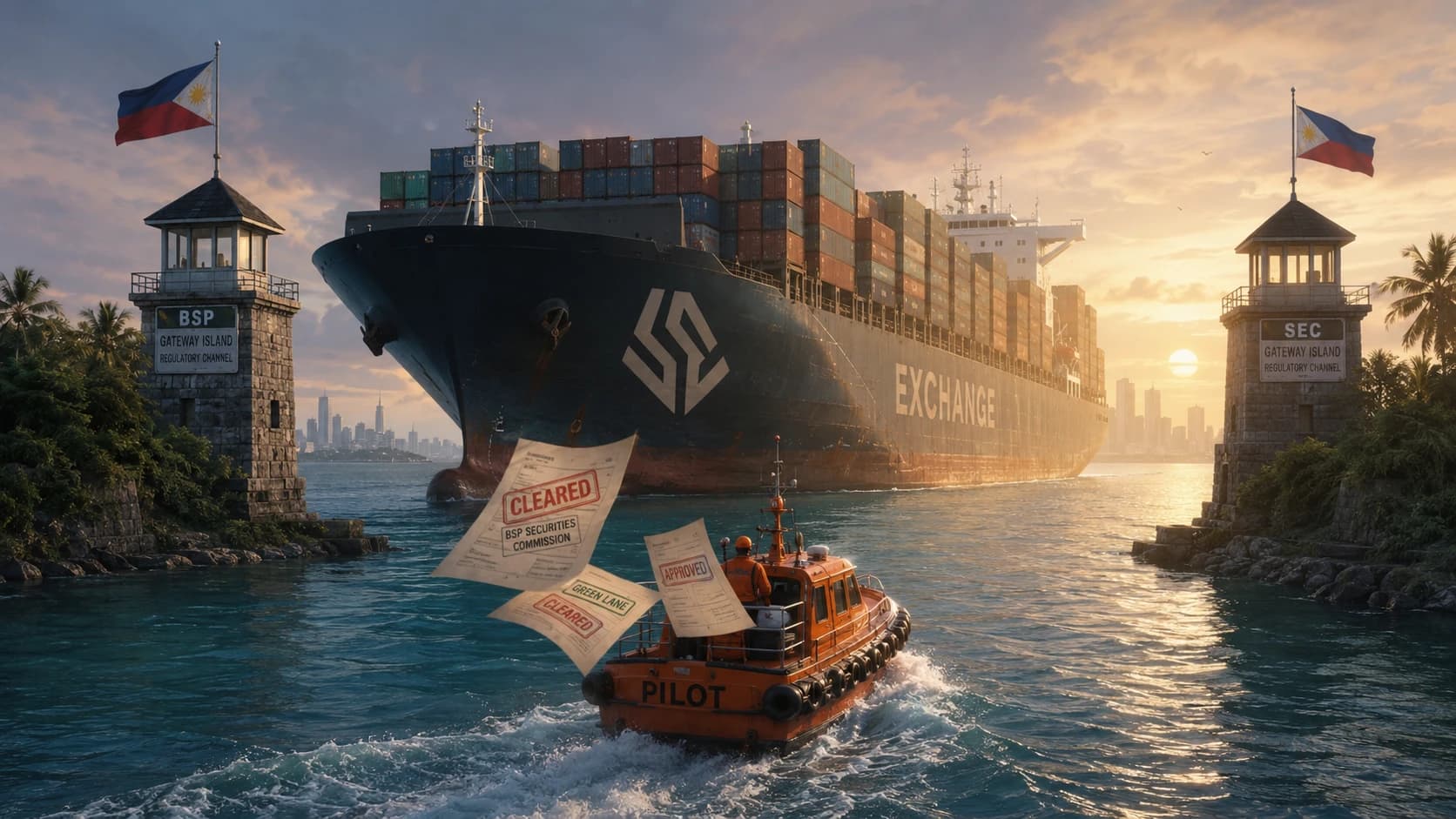
Binance is heading back into the Philippine market through a partnership with a local firm called BlockShoals, with the arrangement placed inside the Securities and Exchange Commission's regulatory sandbox. The news was reported by Cointelegraph on May 26, 2026, citing the exchange's sandbox-route re-entry.
The sandbox path is the key detail. Binance is not arriving with a full operating license. It is arriving as a supervised participant inside a framework Manila uses to test financial products from firms that do not yet meet the bar for permanent authorization.
The 2024 block was not a paperwork issue
The Philippine SEC ordered local internet service providers to restrict access to Binance and Binance Pay in March 2024, after warning the public for months that the exchange was operating without registration. The National Telecommunications Commission followed with site blocks, and Apple and Google removed the apps from local stores. Filipino users who already held balances were not forcibly liquidated, but the on-ramp into the platform from inside the country effectively closed.
A return via sandbox therefore matters because the regulator that previously kicked Binance out is now the regulator overseeing the re-entry. This is not a private commercial deal that bypasses the SEC. It is a deal that runs through it.
BlockShoals is the local face
The Cointelegraph report names BlockShoals as the partner carrying the relationship inside the sandbox. The structure follows a pattern used by other exchanges that needed a domestic counterparty to satisfy market-entry rules. The local entity holds the regulatory relationship and the customer-facing license bracket, while the foreign exchange supplies liquidity, technology, and the brand layer that users recognize.
This kind of structure is common in jurisdictions where direct foreign exchange registration is either unavailable or politically sensitive. It is also the structure most likely to clear a sandbox phase quickly, because the SEC is supervising a local company first, with the foreign partner sitting one step behind it.
The trade-off for Binance is that BlockShoals, not Binance, is the licensed operator for the Philippine perimeter of the service. The trade-off for the SEC is that the watchdog has a clear domestic point of accountability if anything inside the sandbox goes wrong.
Sandbox status is conditional
A regulatory sandbox is not a green light. It is a permission slip with time limits and scope restrictions, and the conditions are set by the supervisor. The Philippine SEC's framework allows live testing with real users under capped exposure, defined exit criteria, and reporting duties that exceed those of a fully licensed operator.
Users in the Philippines who plan to use the relaunched service should expect product limits while the sandbox runs. Caps on transaction sizes, restricted asset menus, and onboarding throttles are typical sandbox conditions. None of these have been confirmed for the BlockShoals partnership yet, but the sandbox category itself signals that the offering will be narrower than the global Binance app.
The sandbox also has an end date. A sandbox period concludes either with the firm graduating to a full license, exiting the market, or being asked to modify the model. The current announcement does not commit the SEC to any of those outcomes. It only confirms the entry point.
Practical read for users
For Filipino users who lost access in 2024, the sandbox return restores a regulated on-ramp that does not require VPN workarounds or offshore accounts. That has value beyond convenience. Routing through a domestically supervised channel keeps customer balances and identity documents inside a system the local SEC can reach in a dispute.
The Binance card program is a separate product line and was not mentioned in the announcement. Filipino users hoping for card eligibility should treat that as out of scope until the exchange or BlockShoals publishes specifics. The sandbox covers the exchange and pay rails first; spending products typically follow only after the licensed perimeter is stable.
The broader signal is that the Philippine SEC, which has spent the past two years tightening enforcement on offshore venues, is willing to bring large foreign exchanges back inside the regulated tent if the structure satisfies its accountability requirements. That is a different policy stance than an outright ban, and it leaves room for further sandbox-route returns from other foreign platforms that were blocked in the same enforcement cycle.
Overview
Binance is re-entering the Philippines through a partnership with BlockShoals, placed inside the SEC's regulatory sandbox. The route requires a local accountable counterparty, comes with scope limits, and runs only for the sandbox period before any full license decision is made. The 2024 access block is being replaced by a supervised channel, not a clean reinstatement.