
Binance vs Bybit
Side-by-side comparison of Binance and Bybit crypto cards. Data sourced from official issuer documentation and verified by SpendNode.
Comparing 2 Cards
Side-by-side comparison of features and benefits
| Attribute | 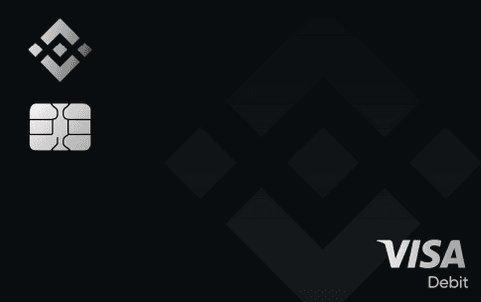 | 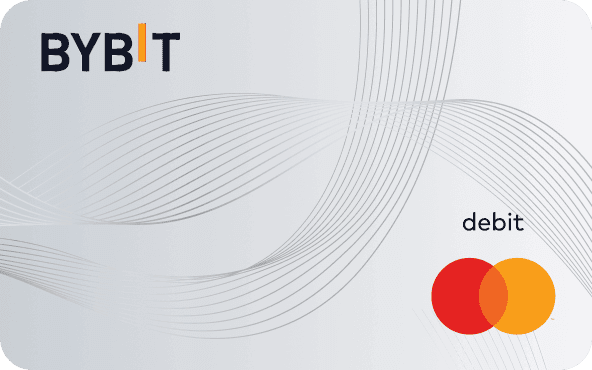 |
|---|---|---|
| Max Cashback | 2% | 10%Highest |
| Annual Fee | FreeBest | FreeBest |
| FX Fee | 2% | 0.5% |
| Custody Model | Custodial | Custodial |
| Network | MASTERCARD | MASTERCARD |
| Regions | Brazil | EEAUKLATAMAPACAUS |
| Supported Assets | 10+ assets BNBBTCETHUSDTUSDCFDUSDSOLADALINKXRP | 5+ assets USDTUSDCBTCETHXRP |
| Cashback | Yes | No |
| Staking | Yes | No |
| Points | No | No |
| Airdrops | No | No |
| Lounge access | No | Yes |
| Subscription rebates | No | Yes |
| Metal card | No | No |
| Virtual Cards | Yes | No |
| Physical Cards | Yes | No |
| Visa | No | No |
| Mastercard | No | No |
| Apple Pay | Yes | No |
| Google Pay | Yes | No |
| Self-custody spend | No | No |
| Stablecoin spend | No | No |
| No annual fee | Yes | Yes |
| No FX fee | No | No |
| ATM free allowance | No | No |
| No KYC | No | No |
| Virtual vs Physical | Yes | No |
| Debit vs Prepaid | No | No |
| Best For | Best for Yield | Best for Cashback |
Note: All data verified as of February 2026. Rewards and fees may vary based on your spending tier and region. Check each card's detailed page for complete terms.
Binance vs Bybit: Key Differences
[Binance](/crypto-cards/binance-card/) relaunched its card as a Brazil-only Mastercard in October 2025 with 2% BNB [cashback](/crypto-cards/cashback/) capped at 250 BRL/month. [Bybit](/crypto-cards/bybit-card/) runs a global Mastercard program with up to 10% for VIP holders across EEA, UK, APAC, and LATAM. After Binance discontinued its EEA Visa card in December 2023, these two cards no longer compete in any shared market.
The right choice depends on your priorities: cashback rates, regional availability, custody model, and which ecosystem you already use. Below, we break down who should choose each card.
Availability: Global vs Brazil-Only
Binance discontinued its Visa card in the EEA and UK in December 2023 and relaunched as a Brazil-only Mastercard prepaid in October 2025. If you are not in Brazil, Binance's card is not available.
Bybit covers the EEA, UK, LATAM, APAC, and Australia. As of January 2026, EEA Bybit users must migrate to Bybit EU accounts for MiCA compliance. The difference in reach is massive: Bybit serves most of the world while Binance serves a single country.
Bybit is restricted or banned in France, Malaysia, Philippines, Thailand, Japan, and Singapore. If you are in one of these markets, neither card may be available to you. Check the country pages for alternatives specific to your location.
Net Returns After Fees
Both cards charge conversion fees that reduce net returns from the headline rate. Binance charges 0.9% crypto-to-fiat conversion plus 1-2% FX on foreign currency transactions. Bybit charges 0.9% conversion plus 0.5% FX on all cross-currency spending (1.4% total).
| Scenario | Binance (2%, domestic BRL) | Binance (2%, cross-currency) | Bybit Standard (2%) | Bybit 4% Tier | Bybit Supreme (10%) |
|---|---|---|---|---|---|
| Casual spender ($1,000/mo) | $11 (1.1% net) | -$9 (net loss) | $6 (0.6% net) | $26 (2.6% net) | $86 (8.6% net) |
| Active spender ($2,000/mo) | $22 (near cap) | -$18 (net loss) | $12 | $52 | $172 |
| Power spender ($3,000/mo) | $22 (cap hit) | -$27 (net loss) | $18 | $78 | $258 |
| Annual total ($2,000/mo) | $264 | -$216 (annual loss) | $144 | $624 | $2,064 |
On cross-currency spending, Binance loses money: 2% cashback minus 0.9% conversion minus 2% FX = -0.9% net per transaction. A Brazilian traveler spending $1,000/month abroad loses $108/year on Binance. The same person earns $72-$1,032/year on Bybit depending on tier.
SpendNode's cost-at-spend model shows Binance's 250 BRL/month cap (approximately $45) limits domestic returns to about $264/year even at high spending. Bybit's cashback is uncapped at all tiers. At $2,000/month, Bybit at 4% earns $624/year versus Binance's $264/year - a $360 annual difference that only grows with spending volume.
Both cards use custodial models where crypto is sold at the point of sale, creating a taxable disposal event in most jurisdictions. The tax treatment is functionally identical between the two.
Exchange Ecosystem Lock-In
Both cards are extensions of their respective exchanges, creating ecosystem lock-in through card rewards.
Binance's 2% requires no commitment. The cashback rewards spending against your exchange balance with zero prerequisites. Binance supports 10 spendable assets (BTC, ETH, BNB, SOL, USDT, USDC, FDUSD, ADA, LINK, XRP) and offers Flexible Earn at up to 6.05% APR on idle balances. That APR means a $10,000 idle balance earns approximately $605/year in addition to card cashback.
Bybit's rewards scale with exchange activity. Higher tiers require trading volume and asset balances, creating a feedback loop: more trading improves your card tier, which incentivizes more trading on Bybit. Bybit additionally offers 8% APR on idle USDT through Bybit Earn and Apple Pay and Google Pay support. Binance also supports Apple Pay and Google Pay in Brazil.
Bybit's spending limits are significantly higher: $50,000/month Standard, $250,000/month Supreme VIP. Binance caps at 50,000 BRL/month (approximately $9,000). For high-volume spenders, Bybit's infrastructure handles larger amounts without hitting limits.
Fee Structure: Domestic vs International
For domestic BRL spending in Brazil, Binance's simpler fee structure (0.9% conversion, no FX) delivers a clean 1.1% net return. This is the one scenario where Binance matches Bybit's base tier on value: simple, predictable domestic spending without cross-border complexity.
Bybit charges 0.9% conversion plus 0.5% FX on all cross-currency spending. ATM withdrawals cost 2% for Standard ($1.50 flat fee) versus 0% for Supreme VIP. Binance offers 2 free ATM withdrawals per month ($1.50 each after), limited to 3,000 BRL/day. For cash-dependent Brazilian users, Binance's free ATM allowance is a minor advantage up to $1.50-$3.00/month in savings.
For any international spending, Bybit's total 1.4% cost is lower than Binance's 2.9% (0.9% conversion + 2% FX). A Brazilian traveler spending $1,000 abroad pays $29 in fees on Binance versus $14 on Bybit - a $180/year saving on international purchases alone.
Common Mistakes When Choosing
Using the Binance card for international purchases and assuming cashback covers the fees. The math does not work: 2% cashback minus 0.9% conversion minus 2% FX leaves you at -0.9% per transaction. On $1,000/month in cross-currency spending, that is $108/year in net losses - you are paying to spend. How to avoid it: Use Binance exclusively for domestic BRL purchases where the 1.1% net return is real. For any travel or cross-border spending, switch to Bybit or a 0% FX card like OKX or Gnosis Pay.
Comparing Bybit's headline 10% rate to Binance's 2% as if both are accessible. The 10% rate requires Supreme VIP status - a tier reserved for users with extremely high trading volume and asset balances on the exchange. Most new Bybit users start at the 2% base tier, identical to Binance's rate but with higher total fees on cross-currency (1.4% vs 0.9% domestic). The realistic comparison for most users is Bybit at 2% (0.6% net after fees) versus Binance at 2% (1.1% net domestic). How to avoid it: Check your actual Bybit VIP level before assuming you will earn more than 2%. The advantage only materializes above the 4% tier, which requires meaningful exchange engagement.
Decision Shortcut
Outside Brazil: Bybit is the only option between these two, available in the EEA, UK, APAC, LATAM, and Australia. If Bybit is banned in your country (France, Malaysia, Philippines, Thailand, Japan, Singapore), check OKX or Crypto.com instead.
In Brazil with low domestic spending (under $2,000/month): Binance at 2% with zero commitment and no VIP requirements is the simpler choice for BRL-only spending.
In Brazil with higher spending or international use: Bybit's uncapped cashback tiers and lower FX fees deliver significantly more value, even at the base 2% tier, once any cross-border spending is involved.
Outlook: Binance has not announced plans to expand its card beyond Brazil. Bybit faces growing regulatory pressure with bans in 6 countries as of early 2026 and is actively migrating EEA users to Bybit EU for MiCA compliance. The gap in availability is likely to narrow for Bybit (more restrictions) rather than widen for Binance (no expansion announced). Watch for Bybit's EEA transition completion and whether Binance re-enters any European or APAC markets in 2026.
Fee Breakdown
| Fee | Binance | Bybit |
|---|---|---|
| FX Fee | 2% | 0.5% |
| Annual Fee | Free | Free |
| ATM Fee | 0% | 0% |
Fees pulled from issuer documentation. Verify on the official site before applying.
Who Should Choose Binance
The Binance Mastercard is best suited for users who:
- Want up to 2% cashback on spending
- Prefer a card with no annual fee
- Are based in Brazil
Who Should Choose Bybit
The Bybit Supreme VIP Card is best suited for users who:
- Want up to 10% cashback on spending
- Prefer a card with no annual fee
- Are based in EEA, UK, LATAM, APAC, AUS
Our Verdict
**In SpendNode's head-to-head, Bybit is the only option for anyone outside Brazil.** For Brazilian users, Bybit still wins on rewards (up to 10% vs 2%), asset variety, and global usability. Binance's sole advantage is zero commitment: no staking, no VIP status required. But the 250 BRL/month cashback cap (approximately $45) limits its value to low-volume domestic spenders. The only scenario where Binance is the correct pick is a Brazilian user spending under $2,000/month exclusively in BRL who does not want to engage with Bybit's tier system.
Frequently Asked Questions
Which has better cashback, Binance or Bybit?
Bybit offers up to 10% cashback compared to Binance's 2%. Actual rates depend on your spending tier and card variant.
Which card has lower fees?
Bybit charges 0.5% FX fee vs Binance's 2%. Neither charges an annual fee.
Is Binance or Bybit better for self-custody?
Both use custodial models. If self-custody is important, consider providers like Gnosis Pay or ether.fi.
Which card is available in more regions?
Bybit is available in 5 regions (EEA, UK, LATAM, APAC, AUS) compared to Binance's 1 region (Brazil). Always verify eligibility on the issuer's website.