Warren and Kim Pull the CFIUS Trigger on World Liberty Financial
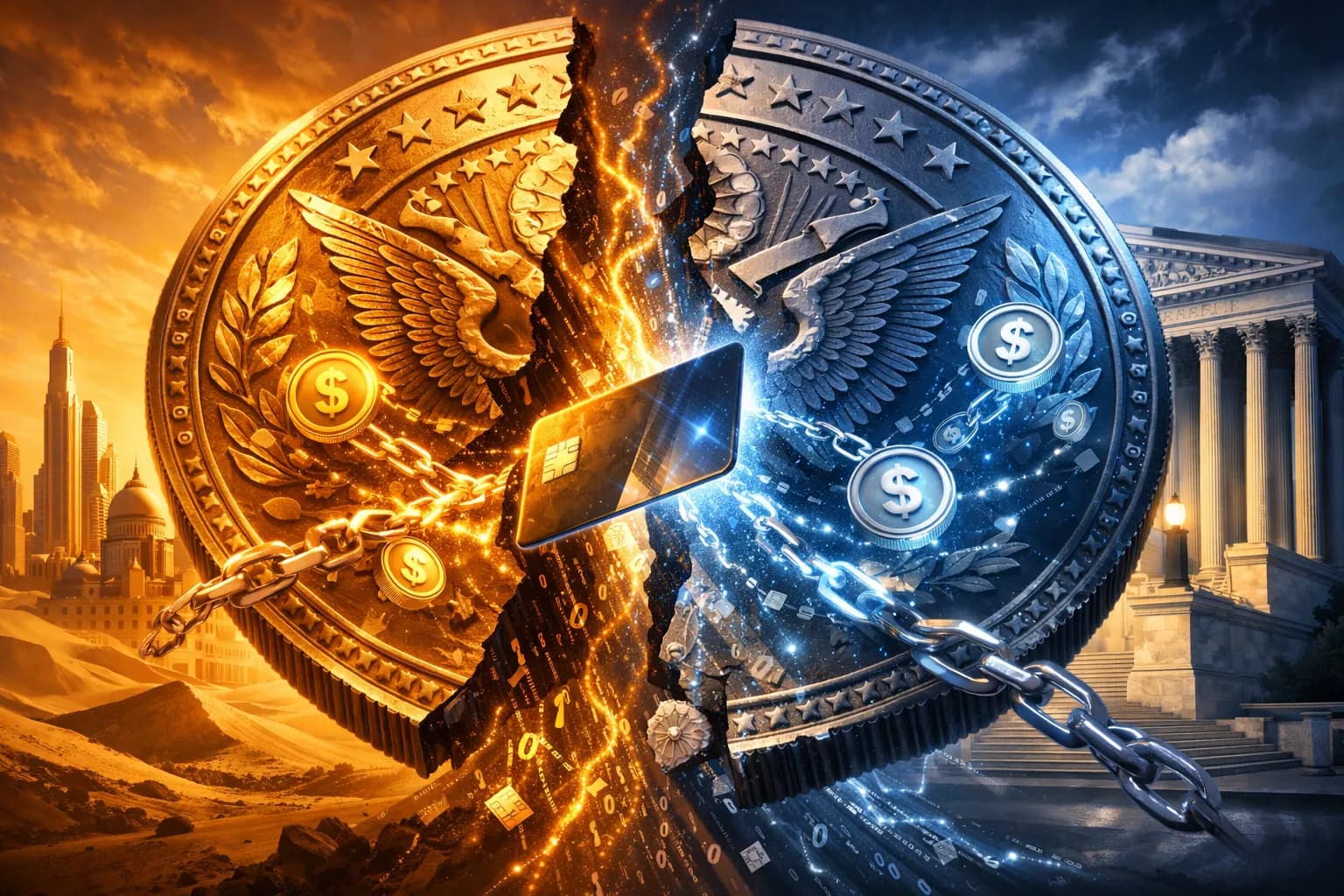
Two senior Democratic members of the Senate Banking Committee have formally asked Treasury Secretary Scott Bessent to determine whether a national security review is required for the reported $500 million investment by a United Arab Emirates-linked entity in World Liberty Financial, the crypto venture tied to the Trump family.
Senators Elizabeth Warren and Andy Kim sent the letter on Friday, requesting that Bessent, who chairs the Committee on Foreign Investment in the United States (CFIUS), conduct "a comprehensive, thorough and unbiased investigation" if the deal falls under the committee's jurisdiction. They gave Bessent a March 5 deadline to respond.
The request marks the most concrete legislative action yet in a saga that has simmered since The Wall Street Journal first reported the transaction in late January.
Half a Billion Dollars, 49% Control, and a Stablecoin
The deal in question saw G42, an Abu Dhabi-based AI and technology conglomerate backed by Sheikh Tahnoon bin Zayed Al Nahyan, acquire a 49% stake in World Liberty Financial. Sheikh Tahnoon is a member of the UAE royal family and manages the country's largest sovereign wealth fund.
The investment was structured through an entity called Aryam Investment 1 and signed by Eric Trump, according to the Journal's reporting. Of the $500 million total, $250 million was paid upfront. At least $187 million was directed to Trump family entities, with another $31 million flowing to entities affiliated with Steve Witkoff, Trump's special envoy to the Middle East and a co-founder of the firm.
World Liberty Financial was founded just two months before Trump's November 2024 election victory. The company operates USD1, a stablecoin pegged to the U.S. dollar and backed by short-term Treasury securities, dollar deposits, and cash equivalents. Trump and Witkoff are listed as co-founders emeritus.
The timing is what makes the deal politically explosive. G42 completed the acquisition days before Trump began his second term in January 2025, raising questions about whether a foreign sovereign-adjacent entity was effectively buying influence ahead of an inauguration.
What CFIUS Actually Does and Why It Matters Here
CFIUS is a Treasury-led interagency committee that reviews foreign investments in U.S. companies for national security risks. It includes officials from the Departments of Defense, State, Commerce, Homeland Security, and Justice. The committee has the authority to block transactions or require divestitures if it determines a deal threatens national security.
Warren and Kim's letter identifies two core concerns. First, they cite longstanding U.S. intelligence warnings that G42 "may have provided technology to assist China's military." The firm has historical ties to Chinese companies including Huawei and Beijing Genomics Institute, both of which are on various U.S. restriction lists. While G42 has publicly distanced itself from its Chinese partnerships in recent years, signing a major technology deal with Microsoft in 2024, the senators argue the intelligence community's prior assessments cannot be dismissed.
Second, the senators raise the question of whether the UAE or Chinese actors could gain access to personal information collected by World Liberty Financial's stablecoin platform. A 49% ownership stake in a company that handles user financial data and operates a dollar-pegged stablecoin is not a passive investment, they argue, but a potential vector for surveillance or data harvesting.
The senators also asked Bessent to confirm whether CFIUS had previously reviewed the deal and, if not, why not.
What Crypto Holders and Stablecoin Users Should Watch
The immediate impact is political rather than financial. USD1 continues to operate, and there is no indication that CFIUS action is imminent. But the probe request establishes a precedent that foreign investment in crypto companies, particularly those handling user data and operating stablecoins, can trigger national security scrutiny.
For stablecoin users, the question is straightforward: who owns the entity behind your stablecoin, and what jurisdiction governs their data handling? USDC is issued by Circle, a U.S.-regulated company. USDT is issued by Tether, domiciled in the British Virgin Islands. USD1 is now 49% owned by an entity linked to a foreign government's national security apparatus.
This does not mean USD1 is unsafe today. But it does mean that regulatory clarity around stablecoin ownership structures is no longer a theoretical exercise. If CFIUS concludes that the deal requires a formal review, it could force a restructuring or even a divestiture, creating uncertainty for anyone holding or transacting in USD1.
For the broader industry, the precedent matters. Crypto companies that accept foreign sovereign investment, whether from Middle Eastern wealth funds, Asian technology conglomerates, or European state-backed entities, may face increased scrutiny. Any crypto card issuer or fintech company accepting large foreign investment stakes should be watching this case closely.
The Bigger Picture: Crypto, Sovereignty, and Foreign Capital
The World Liberty Financial saga sits at the intersection of three trends that are reshaping the crypto landscape simultaneously.
First, the stablecoin regulatory debate in Congress remains unresolved. The GENIUS Act and the CLARITY Act are both stalled, partly over disagreements about stablecoin yield and bank lobbying. Adding a CFIUS dimension to the conversation could further complicate passage of either bill, as lawmakers may now demand foreign ownership disclosure requirements for stablecoin issuers.
Second, sovereign wealth funds are pouring money into crypto infrastructure globally. Abu Dhabi's Mubadala has disclosed Bitcoin ETF positions. Singapore's GIC has backed multiple blockchain ventures. Norway's Government Pension Fund holds indirect exposure through public equities. The question is whether these investments will be treated as routine capital allocation or as potential national security concerns.
Third, the political entanglement between the Trump family and crypto businesses creates a unique dynamic. Unlike a typical CFIUS case involving, say, a semiconductor company, this one involves a sitting president's family members. That political dimension could either accelerate the review (if Democrats push hard enough) or stall it entirely (if the administration declines to self-investigate).
The March 5 deadline will be the first real test. If Bessent responds with a commitment to review the deal, the crypto industry will have its first major CFIUS case. If he declines, expect the issue to become a persistent campaign talking point through 2026.
Overview
Senate Democrats Elizabeth Warren and Andy Kim have formally requested that Treasury Secretary Scott Bessent determine whether a CFIUS national security review is required for G42's $500 million acquisition of a 49% stake in World Liberty Financial, the Trump family's crypto venture. The deal, structured through an entity called Aryam Investment 1 and signed by Eric Trump, directed at least $187 million to Trump family entities and $31 million to entities linked to special envoy Steve Witkoff. The senators cite G42's historical ties to Chinese firms including Huawei as a national security concern, and question whether a foreign government-linked entity should control nearly half of a U.S. stablecoin issuer that collects user financial data. The March 5 response deadline will determine whether crypto gets its first major CFIUS case.