On March 26, 2026, Jupiter Global flipped a switch. The Solana DEX aggregator's virtual card, previously a zero-rewards USDC spending tool, now pays 4% cashback at the base tier. No annual fee. No staking requirement. Cashback accrues in JupUSD and converts on withdrawal, not in a volatile governance token.
That puts it among the highest-returning free crypto debit cards on the market. We ran the numbers against the full field to see whether the headline holds up, and where the cracks are.
What Jupiter Shipped on March 26
The cashback program is live with a four-tier structure based on referrals:
| Tier | Cashback Rate | Monthly Cap | Max Annual Return | Referrals Needed |
|---|---|---|---|---|
| Base | 4% | $100 | $1,200 | 0 |
| Level 2 | 5% | $200 | $2,400 | 20 |
| Level 3 | 8% | $500 | $6,000 | 50 |
| Level 4 | 10% | $1,000 | $12,000 | 100 |
Tier upgrades are permanent. Hit 20 referrals once and you stay at 5% forever, even if those referrals later go inactive.
The mechanics matter here. Cashback accrues as JupUSD in the Earn Balance after final transaction settlement. When you withdraw to your card balance, it converts 1:1 to USDC. Qualifying spend includes card purchases and QR merchant payments. ATM withdrawals, P2P transfers, refunds, and chargebacks do not qualify.
The card itself is a virtual Visa debit issued by Rain (Americas, Africa, Middle East, most of APAC) or DCS (Singapore, South Korea, Japan, and other select APAC markets). Rain cards carry a 1% FX fee on non-USD payments with no spending limits. DCS cards carry 1.8% FX with a $50,000 daily ceiling. Both have zero fees on USD transactions.
Deposits are USDC only, converted 1:1 to USD with no slippage and no fee.
Every Free Crypto Debit Card, Side by Side
Here is the full field for cards with $0 annual fee:
| Card | Cashback | Paid In | Monthly Cap | FX Fee | Catch |
|---|---|---|---|---|---|
| Jupiter Global | 4% | USDC | $100 | 1% / 1.8% | Virtual only, cap limits high spenders |
| Kolo | 5% | BTC | $200 | 0% on stablecoins | $5 per-transaction cap, BTC price risk |
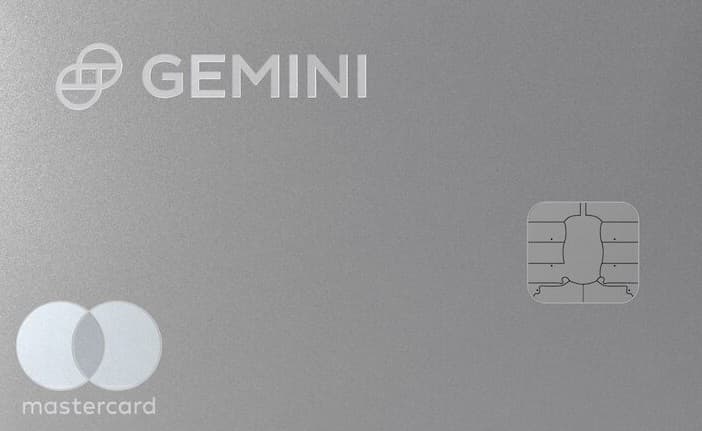
| Gemini Credit Card | up to 4% | Crypto of choice | None | 0% | US only, credit card, category-dependent rates |
| MetaMask Virtual | 1% | mUSD | None disclosed | 0% | US only |
| Ready Lite | 0.5% | STRK | N/A | 1% | EEA/UK only, STRK volatile |
| Crypto.com Midnight Blue | 0% | N/A | N/A | 0% | Zero cashback |
| Binance (base) | 0.1% | BNB | N/A | 0% | Functionally nothing |
| RedotPay Virtual | 0% | N/A | N/A | 1.2% | No rewards |
Jupiter's 4% ties Gemini's top dining category and ranks among the strongest free debit-card offers we track. But Gemini is a US-only credit card with category-tiered rates (4% dining, 3% groceries, 2% other categories, 1% everything else). Jupiter pays a flat 4% on qualifying purchases across a much broader geographic footprint. Different products entirely.
The closest debit competitor is Kolo. Higher headline rate at 5%, but Kolo caps each transaction at $5 of cashback. That changes the math depending on how you spend:
| Average Purchase | Kolo Effective Rate | Jupiter Rate |
|---|---|---|
| $50 | 5.0% | 4% |
| $100 | 5.0% | 4% |
| $200 | 2.5% | 4% |
| $500 | 1.0% | 4% |
If you make lots of small purchases, Kolo wins on rate. If your average transaction runs over $125, Jupiter returns more per dollar. Kolo also pays in BTC. Good if you are stacking sats, expensive if Bitcoin drops 30% the week after you earn it.
Jupiter vs. Paid Cards: The Math That Matters
Free vs. paid is the more telling comparison. Paid cards promise higher rates, but the annual fee eats into the return. Here is how Jupiter stacks up against the main contenders:
| Card | Annual Fee | Cashback | Paid In | Cap | Key Tradeoff |
|---|---|---|---|---|---|
| Jupiter Global | $0 | 4% | USDC | $100/mo | Virtual only |
| Tria Virtual | $20 | 1.5% | USDC | None | Needs TRIA staking for bonus, delayed payout |
| Tria Signature | $109 | 4.5% | USDC | None | Staking bonus, metal card, Visa perks |
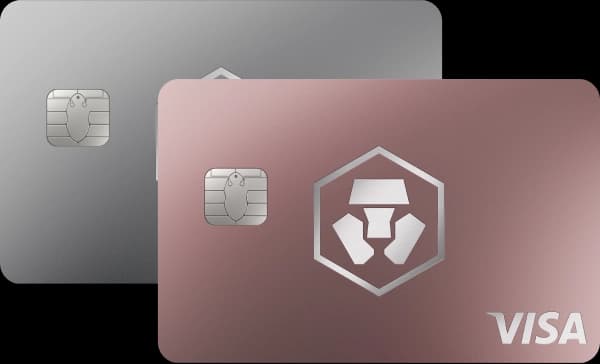
| Crypto.com Ruby Steel | $49.90 | 2% | CRO | None | CRO token risk, Spotify rebate |
| Crypto.com Royal Indigo | $299.90 | 3% | CRO | None | CRO staking lock, Netflix + Spotify |
| MetaMask Metal | $199 | 3% | mUSD | $10K/yr spend | US only, 1% after cap |
| Ready Metal | $120 | 3% | STRK | N/A | EEA/UK only, self-custody |
Three comparisons worth spelling out.
Jupiter ($0) vs. Tria Signature ($109/yr). Tria's 4.5% base is higher and has no monthly cap. But the $109 annual fee means Tria needs to return $109 more than Jupiter just to break even. On a 0.5% rate gap, that takes $21,800 in annual spending, roughly $1,817/month. Below that level, Jupiter returns more total cash despite the lower rate. Above it, Tria pulls ahead, assuming you spend enough to exceed Jupiter's $100/month ceiling.
There is another layer. Tria's bonus rates (up to +2% on top of the base) require buying and locking TRIA tokens. That adds price risk and capital lockup. The cashback itself also runs through Tria's staking and settlement process, which means you are not seeing that money back the same week you spend it. Jupiter's 4% requires nothing beyond swiping the card.
Jupiter ($0) vs. Crypto.com Ruby Steel ($49.90/yr). Jupiter pays double the rate (4% vs 2%) and costs nothing. Ruby's rewards land in CRO, a token that has dropped over 90% from its all-time high. Jupiter pays in USDC. Ruby's edge: physical card and a Spotify rebate worth $13.99/month if you use it. For pure cashback return, Jupiter comes out well ahead.
Jupiter ($0) vs. MetaMask Metal ($199/yr). MetaMask's 3% rate is lower, costs $199 annually, and caps at $10,000 in qualifying spend per year before dropping to 1%. Jupiter wins on rate, cost, and global reach. MetaMask's advantage is US physical card access with self-custody.
Three Things That Keep This From Being Perfect
1. The $100/month cap
At 4%, you hit the $100 cashback ceiling at $2,500 in monthly spending. Every dollar past that earns nothing.
| Monthly Spend | Monthly Cashback | Effective Rate |
|---|---|---|
| $1,000 | $40 | 4.0% |
| $2,000 | $80 | 4.0% |
| $2,500 | $100 | 4.0% |
| $5,000 | $100 | 2.0% |
| $10,000 | $100 | 1.0% |
For someone spending $1,000-2,000 per month, the cap never matters. They earn their full 4% and move on. For high spenders, this card works as a supplement but not a primary. Pair it with an uncapped card for spending above $2,500.
2. The referral wall is steep
Level 2 needs 20 referrals. Level 3 needs 50. Level 4 needs 100. These are not "share a link once" numbers.
For crypto influencers or community builders with an audience, 20-50 is realistic. For a regular person who heard about the card from a friend, the base tier at 4% is the honest expectation. That is still among the best free rates available, but the 5-10% tiers are marketing for most users, not an achievable target.
We think this is fine. The base tier is the product. The referral tiers are a growth engine for Jupiter. As long as the base stays at 4%, the structure works.
The strategy is transparent: Jupiter wants to onboard as many users as possible, and the referral program is the lever. It rewards both sides. Your cashback rate goes up with each tier, and the person you refer can earn a separate $100 reward if they signed up with a referral code and complete $1,000 in qualifying spend within 30 days of card activation. That is a strong incentive for both parties. If you want to try it, here is our referral code: YWQQ5GYL. You can apply at jupiter.global.
3. Virtual only, no physical card
No plastic. No ATM access. No gas station pumps, no vending machines, no merchants that need a physical card swipe. Jupiter says a physical card is planned but has not announced a date.
This also means pre-authorization merchants (hotels at check-in, car rentals, toll booths) may decline the card. That is a common limitation with virtual prepaid cards across the industry, not unique to Jupiter, but it constrains where you can use it.
SpendNode's Take
Jupiter just raised the bar for what a free crypto card should return. Before March 26, the free debit card market was a graveyard of 0-1% rates in volatile tokens. Jupiter landed at 4% cashback with zero fees on USD spending and zero capital requirements.
The cap limits high spenders. The referral tiers are out of reach for most people. The card is virtual only. All true.
But $1,200 per year in stable cashback on a card that costs nothing and requires no staking is a strong offer by any standard. Most crypto card users spend somewhere between $500 and $2,000 per month. At those levels, Jupiter's cap is irrelevant and the 4% rate does all the work.
We also think the stable-value reward structure is an underrated edge. Cashback paid in CRO, BTC, STRK, or PLU is a bet on token price. Sometimes that bet pays off. Often it does not. Jupiter's reward starts in JupUSD and converts on withdrawal, which is much closer to cash-equivalent value than a volatile token reward. For users who want rewards they can actually spend without checking a price chart, that distinction counts.
The bigger question is sustainability. Four percent cashback on a free card is aggressive. Jupiter has not disclosed the funding source. If the program runs on interchange revenue (typically 1.5-2.5% for Visa transactions), the math does not close at 4% without a subsidy. That likely means Jupiter is funding the gap from DEX revenue, its treasury, or JUP token reserves. If the subsidy runs dry, the rate could drop. We have seen this pattern before in crypto card rewards. It is not a reason to avoid the card. It is a reason to enjoy the rate while it lasts and not build your financial plan around it being permanent.
Who Should Get This Card
Get it if:
- You hold USDC on Solana and want to spend it at 150 million Visa merchants
- You spend under $2,500/month and want one of the highest free card cashback rates available
- You want stable-value rewards without token price exposure
- You are outside the US and need a globally available option (100+ countries)
Skip it if:
- You spend over $5,000/month and need uncapped rewards (look at Tria Signature or Plutus)
- You need a physical card for ATMs or offline merchants
- You are in a DCS region and the 1.8% FX fee erodes your 4% on non-USD purchases
- You want travel perks, lounge access, or insurance
For most people reading this, the answer is straightforward: get it as part of your card lineup. A free card paying 4% cashback is hard to beat if you are in the Solana ecosystem. Use it for daily spending up to $2,500/month. Keep a second card for everything above that threshold.
Overview
Jupiter Global launched 4% cashback on March 26, 2026, on a free card with no staking and no token risk. That puts it among the highest-returning free crypto debit cards available. The $100/month cap limits returns for high spenders, and the referral-gated tiers (5-10%) are out of reach for most users. But for anyone spending under $2,500/month in the Solana ecosystem, the base tier alone makes this one of the strongest free options we have reviewed. The card is virtual only, with a physical version pending. If you hold USDC and spend moderately, Jupiter Global deserves a spot in your card lineup for 2026.