Gemini, the Winklevoss-founded crypto exchange that went public on the Nasdaq in September 2025, parted ways with its Chief Operating Officer, Chief Financial Officer, and Chief Legal Officer on February 17, 2026. The departures are effective immediately. Shares of GEMI fell roughly 15% on the day to $6.47, as of the time of writing, extending a decline that has erased 86% of the exchange's value since its IPO at $28 per share. The company's market capitalization has shrunk from $4.4 billion at its public debut to approximately $760 million in just five months.
The three executives who left are Marshall Beard (COO), Dan Chen (CFO), and Tyler Meade (Chief Legal Officer). Beard also resigned from the board of directors. In an SEC filing, the company stated that his resignation "was not the result of any disagreement related to its operations, policies or practices." Whether or not that framing holds, the timing is impossible to separate from a broader restructuring that includes a 25% global workforce reduction and a full retreat from the United Kingdom, European Economic Area, and Australia.
Three Pillars of the C-Suite Gone in One Filing
Losing a single C-suite officer is a governance event. Losing three in a single SEC disclosure is a restructuring signal.
COO Marshall Beard had been with Gemini for over seven years, making him one of the longest-tenured executives outside the founding team. CFO Dan Chen oversaw the company's finances through the IPO itself. Chief Legal Officer Tyler Meade navigated the post-Earn settlement with the New York Department of Financial Services and the regulatory maneuvering that made the Nasdaq listing possible in the first place.
Replacing them: co-founder Cameron Winklevoss will absorb Beard's revenue-generating responsibilities, with no plans to hire a permanent COO. Danijela Stojanovic, who served as Chief Accounting Officer since May 2025, steps in as interim CFO. Kate Freedman, previously Associate General Counsel, becomes interim General Counsel. The word "interim" appears twice in a three-person replacement plan, which signals uncertainty about whether permanent external hires are coming or whether the Winklevoss brothers intend to consolidate control further.
From $4.4 Billion to $760 Million in Five Months
Gemini's September 2025 IPO raised $425 million at $28 per share, valuing the company at roughly $4.4 billion. That figure now looks like a high-water mark. At $6.47 per share, the market is pricing Gemini at a fraction of its debut valuation.
The financial picture behind the stock tells the same story. The company reported estimated net losses of $587 million to $602 million for 2025, with adjusted EBITDA losses between $257 million and $267 million. For a company that IPO'd mid-year, these are sobering numbers. Public market investors, unlike venture backers, reprice in real time, and they have been repricing aggressively.
Context matters: the broader crypto market has also pulled back, with Bitcoin trading well below its 2025 highs and Ethereum underperforming most major assets. But an 86% drawdown from IPO price outpaces the sector decline by a wide margin. This is company-specific destruction, not just macro headwinds.
The International Retreat: UK, EU, and Australia Abandoned
Perhaps the most consequential operational decision is Gemini's announcement that it will close all customer accounts in the United Kingdom, European Economic Area, and Australia, effective April 6, 2026. The exchange is pulling out of three of the world's most regulated and competitive crypto markets to refocus entirely on the United States.
For context, the UK alone has over 10 million crypto holders. The EEA, under the new MiCA regulatory framework, represents the largest unified crypto regulatory regime on earth. Australia's crypto market has been growing steadily with institutional interest from superannuation funds and retail platforms. Walking away from all three simultaneously is not a pivot. It is a concession that the company cannot compete profitably on multiple fronts.
The move directly affects users of the Gemini Credit Card, which is already US-only. But for international users who held assets on the exchange, the April deadline creates a forced migration. Gemini's "2.0 transformation" strategy, which the company says will leverage AI for efficiency and expand into prediction markets, is now a purely domestic bet.
What Gemini Cardholders and Users Should Watch
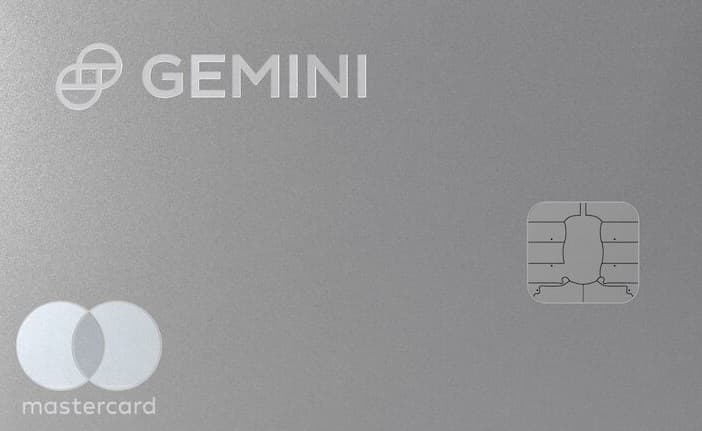
For holders of the Gemini Credit Card and the Gemini Solana Edition, the immediate operational impact is limited. Both cards are issued by WebBank, a US-chartered FDIC-insured institution, and function as traditional credit cards with crypto rewards. The credit line and card operations sit outside Gemini's exchange balance sheet.
However, there are indirect risks worth monitoring:
Reward redemption infrastructure. Crypto rewards earned on the Gemini card are deposited into users' Gemini exchange accounts. If Gemini's exchange operations face further distress, the reliability of reward deposits and withdrawals could be affected. This is not an imminent concern, but it is worth watching.
Card program continuity. The Gemini Credit Card is a partnership product. If Gemini's financial condition deteriorates further, WebBank or Mastercard could choose to wind down the program. Similar card programs have been paused or discontinued at other exchanges during periods of financial stress.
Customer support quality. A 25% workforce reduction inevitably affects support capacity. Users experiencing card disputes, fraud claims, or reward discrepancies may face longer resolution times.
For users who want to diversify their cashback rewards exposure beyond a single exchange, this is a reasonable moment to consider alternatives. The Coinbase Card offers a similar US-focused credit card with crypto rewards from a publicly traded exchange with a stronger financial position. For self-custody options that remove exchange counterparty risk entirely, cards like the Gnosis Pay Card or MetaMask Virtual Card let users spend directly from their own wallets.
A Cautionary Tale for Crypto Exchange IPOs
Gemini's post-IPO trajectory joins a growing pattern. Crypto companies that rush to public markets during bull cycles often face brutal repricing when the market turns. Coinbase, which went public in April 2021 at $381 per share, traded below $35 eighteen months later. The difference is that Coinbase had the scale and diversification to survive its drawdown. Whether Gemini, at $760 million in market cap and $600 million in annual losses, has the same runway is an open question.
The prediction market expansion that Gemini cites as a growth vector is also a competitive minefield. Kalshi holds regulatory advantages as a CFTC-regulated exchange. Polymarket dominates crypto-native prediction volume. Entering this space while simultaneously cutting 25% of staff and losing the executives who managed day-to-day operations is a tall order.
For the broader crypto ecosystem, the Gemini situation reinforces a core principle: the entity issuing your crypto card or holding your assets matters. Counterparty risk did not disappear with the FTX settlement. It simply moved to new balance sheets. Users who spend through custodial platforms should monitor the financial health of their provider, just as they would a traditional bank.
Overview
Gemini's simultaneous loss of three C-suite executives, 25% workforce reduction, and exit from three major international markets represent the most significant restructuring of a publicly traded crypto exchange since Coinbase's 2022 layoffs. The stock's 86% decline from its September 2025 IPO price to $6.47 reflects deep market skepticism about the company's ability to reach profitability on a US-only footprint. For Gemini Credit Card holders, the immediate impact is minimal, but the financial trajectory of the underlying company warrants ongoing attention. Users concerned about exchange counterparty risk should consider diversifying across providers or moving to self-custody spending options that eliminate platform dependency entirely.
Recommended Reading
- Dragonfly Closes $650 Million Fourth Fund While Crypto VCs Face What Its Own Partner Calls a Mass Extinction
- Bitcoin Has Lost Half Its Value Since October and VanEck Says Five Forces Are to Blame
- Nexo Returns to the US After Three Years of Regulatory Exile, Bringing $11 Billion in AUM and a Bakkt-Powered Trading Engine